







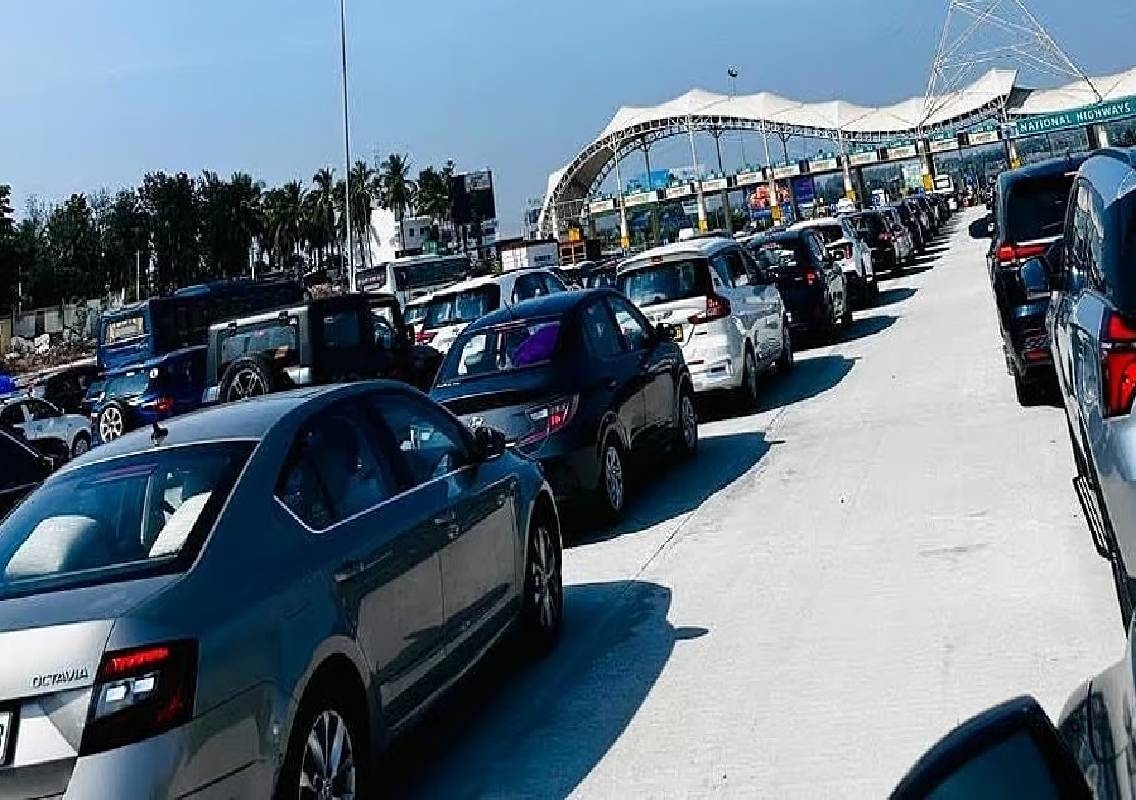


Bengaluru: Heavy festival traffic on the Bengaluru-Mysuru Highway led to long queues and severe congestion at toll plazas as motorists headed towards Mysuru for the extended Gowri-Ganesha festival weekend. The rush began early on Saturday, with a large number of vehicles taking the highway from Bengaluru.
Long queues at toll plazas
The Bengaluru-Mysuru Highway witnessed a sharp increase in traffic as people left Bengaluru for Mysuru and other destinations over the extended weekend. The congestion was particularly visible near the toll plazas, where vehicles moved slowly and motorists faced long waiting times.
The festival on Monday, combined with the weekend, encouraged many families and travellers to begin their journeys earlier. As a result, the highway experienced a substantial increase in outbound traffic from Bengaluru.
The Bengaluru-Mysuru corridor is one of the key routes connecting the State capital with Mysuru and towns along the route. The access-controlled highway has significantly reduced travel time between Bengaluru and Mysuru, but heavy traffic during weekends and festivals can still result in bottlenecks around toll collection points.
Festival weekend drives traffic surge
The Gowri-Ganesha festival falling on Monday created an extended holiday period for many residents. This prompted travellers to leave Bengaluru from Saturday morning, contributing to the traffic build-up.
Mysuru is a major destination during holiday periods, while the highway also serves motorists travelling towards destinations such as Kodagu and other parts of southern Karnataka.
The combination of festival travel and weekend movement placed additional pressure on the highway infrastructure. Motorists approaching toll plazas had to slow down considerably as traffic volumes increased.
Toll plazas become congestion points
The Bengaluru-Mysuru route has toll plazas including Kaniminike, Sheshagirihalli and Gananguru. Toll rates on the highway were revised earlier this year, with the latest revision taking effect in July. For cars and other light motor vehicles, the one-way toll on the Bengaluru-Nidaghatta stretch was revised to ₹185.
While electronic toll collection through FASTag has reduced the need for cash payments, high traffic volumes can still result in queues when thousands of vehicles reach tolling points within a short period.
The latest congestion has once again highlighted the challenge of managing traffic at toll plazas during peak travel periods.
Bengaluru-Mysuru highway sees heavy holiday movement
The access-controlled highway has become a preferred route for motorists travelling between Bengaluru and Mysuru because of its faster travel times compared with the older highway.
However, festival periods can create unusually high traffic volumes. Large numbers of vehicles entering the highway within a short period can overwhelm sections around toll plazas and entry and exit points.
Traffic conditions can also become more challenging when vehicles travelling to different destinations use the same corridor. Mysuru-bound travellers, tourists and motorists heading towards other southern Karnataka destinations all contribute to the overall traffic volume.
Plans for smoother toll collection
The congestion at toll plazas comes amid plans to introduce technology that could eventually reduce the need for vehicles to stop at conventional toll booths.
The National Highways Authority of India has been working towards a GPS-based toll collection system for the Bengaluru-Mysuru corridor. The proposed system would allow tolls to be collected electronically based on vehicle movement, reducing the need for vehicles to queue at physical toll booths.
If implemented effectively, such a system could help reduce congestion at toll plazas, particularly during weekends and festival periods when traffic volumes rise sharply.
However, the immediate challenge remains managing traffic during peak travel periods and ensuring smoother movement at existing toll points.
Motorists face delays during peak travel period
For motorists, the festival rush means longer travel times despite the highway’s access-controlled design. Traffic congestion at toll plazas can add considerable delays to journeys that would otherwise be relatively quick.
Travellers using the highway during the remaining festival weekend may therefore need to factor in additional travel time, particularly during periods of heavy outbound and return traffic.
The situation also highlights the importance of real-time traffic management, adequate lane management and efficient toll operations during major holidays.
Conclusion
The festival rush has once again exposed the pressure faced by toll plazas on the Bengaluru-Mysuru Highway during peak travel periods. With large numbers of motorists travelling during the extended Gowri-Ganesha weekend, managing congestion at key toll points remains crucial to ensuring smoother journeys between Bengaluru and Mysuru.