







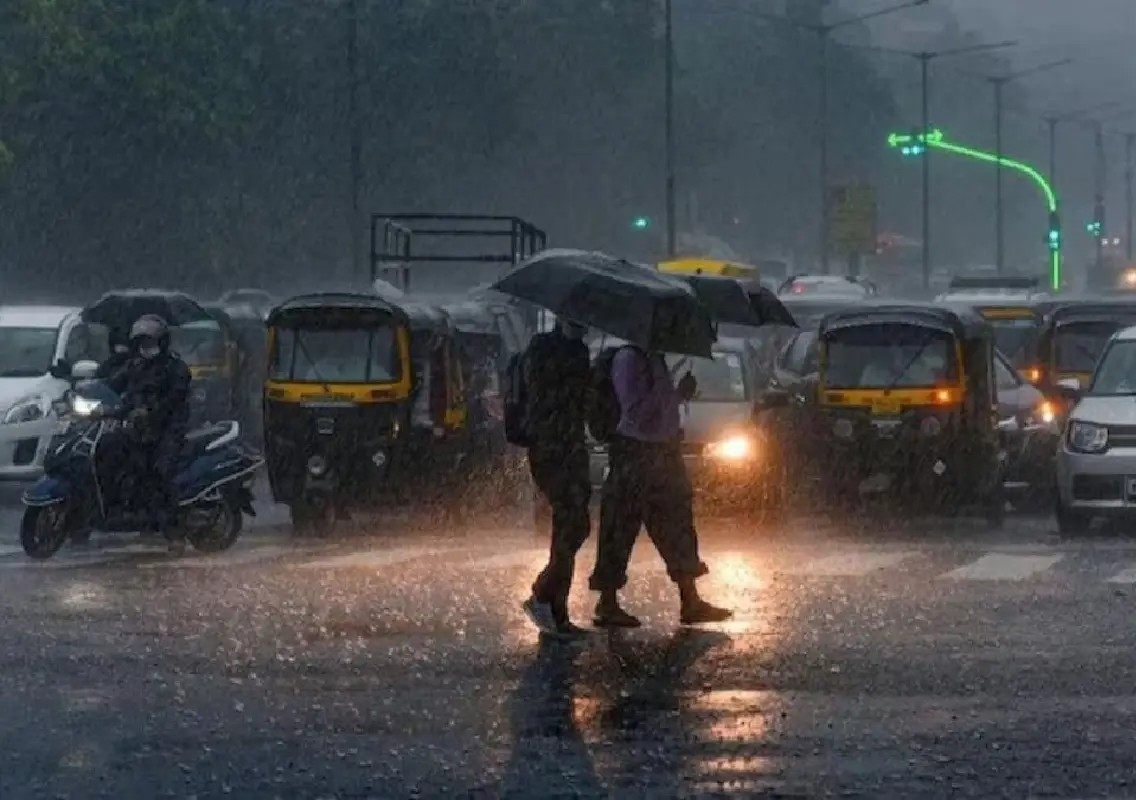


A developing cyclonic circulation over the Bay of Bengal has prompted the India Meteorological Department (IMD) to issue weather alerts across more than 20 states, warning of heavy rainfall, thunderstorms, lightning, hailstorms and strong winds over the coming days.
The weather system is expected to influence large parts of the country as the southwest monsoon continues its advance from the Arabian Sea to the Bay of Bengal.
Karnataka among the worst affected
Karnataka is expected to experience intense rainfall and thunderstorms between June 1 and 3. The IMD has issued a Yellow Alert for 25 districts, including Bengaluru, with gusty winds and heavy showers likely to disrupt normal life.
Authorities have advised residents to remain cautious, particularly in low-lying and flood-prone areas.
Coastal states on high alert
Coastal Andhra Pradesh and Rayalaseema are expected to bear the direct impact of the cyclonic circulation. Wind speeds could reach up to 70 kmph, while rough sea conditions have prompted warnings for fishermen to avoid venturing into deep waters.
Heavy rainfall is also continuing across Kerala, Tamil Nadu, Puducherry and Lakshadweep as monsoon activity strengthens.
North and East India brace for storms
Several districts in Uttar Pradesh are likely to witness heavy rainfall, lightning and dust storms. Meanwhile, Odisha, Jharkhand, Bihar and West Bengal have been placed under heightened alert due to the possibility of severe thunderstorms and squally winds.
The IMD has urged residents to stay indoors during severe weather and avoid taking shelter under trees during lightning activity.
Hill states and Northeast face heightened risks
Uttarakhand and Himachal Pradesh are expected to experience hailstorms and lightning, raising concerns for pilgrims travelling along the Char Dham Yatra routes.
In the Northeast, Assam, Meghalaya, Arunachal Pradesh and neighbouring states are likely to receive heavy to extremely heavy rainfall, increasing the risk of flash floods and landslides.
Safety remains the priority
Weather officials have advised citizens across affected regions to monitor forecasts, avoid unnecessary travel during storms and follow local administration advisories. Emergency services remain on alert as authorities closely track the evolving weather system.