


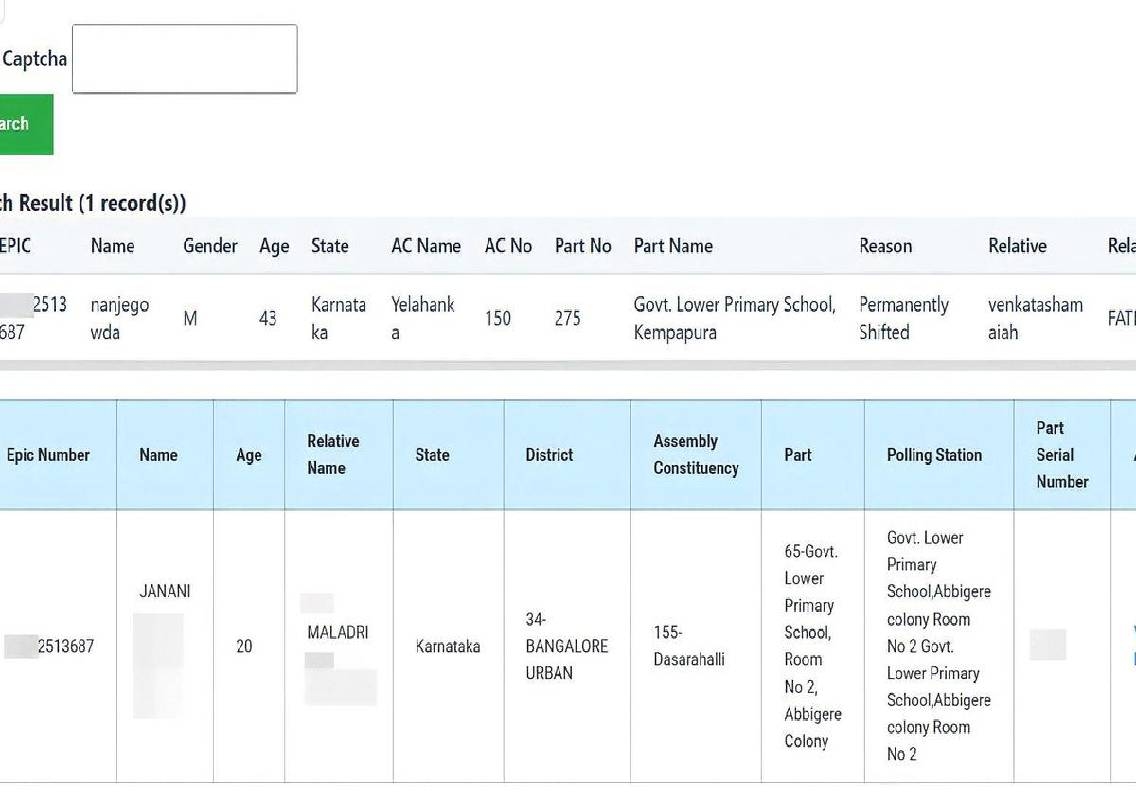


Bengaluru: In at least 290 cases across Bengaluru, Elector Photo Identity Card (EPIC) numbers belonging to people marked for deletion during the Special Intensive Revision (SIR) of electoral rolls have reportedly been reissued to different individuals in the final voters’ list, raising concerns over compliance with the Election Commission of India’s (ECI) rules on unique voter identification.
An investigation found that EPIC numbers assigned to electors categorised as “Absent, Shifted, Dead or Duplicate” (ASDD) during the revision were subsequently linked to other individuals in the final electoral roll. This means that an EPIC number that identified one person before the SIR is now being used to identify someone else.
The reported cases raise questions about the procedures followed while deleting entries and generating or assigning EPIC numbers during the electoral-roll revision.
ECI manual prohibits reuse of EPIC numbers
The ECI’s Handbook for Electoral Registration Officers explicitly states that an EPIC number issued to an elector must not be reused. According to the manual, the software used to generate EPIC numbers must maintain a record of numbers already allotted and ensure that an EPIC number once used is not assigned again.
The handbook also stresses that electoral authorities must make every effort to ensure the “universality, uniqueness and permanence of EPIC” details of an elector.
These provisions are intended to ensure that every voter has a distinct and permanent identity number in the electoral system. The reported reallocation of numbers in Bengaluru therefore raises concerns about whether the prescribed safeguards were followed during the SIR.
Questions over electoral-roll data integrity
The EPIC number is a key identifier in the electoral system. It helps officials identify electors and maintain their records across electoral-roll updates and changes in residence.
If a number previously assigned to one elector is linked to another individual, it could create confusion while checking voter details and verifying entries. It also raises questions about the accuracy of the database and the process used to update records after deletions.
The findings reported at least 290 cases across Bengaluru. The available information does not establish whether the affected voters have faced problems while exercising their franchise or whether the discrepancies have been corrected.
The ECI manual’s emphasis on uniqueness and permanence makes the reported cases significant, as the number is intended to remain associated with the elector to whom it was originally issued.