







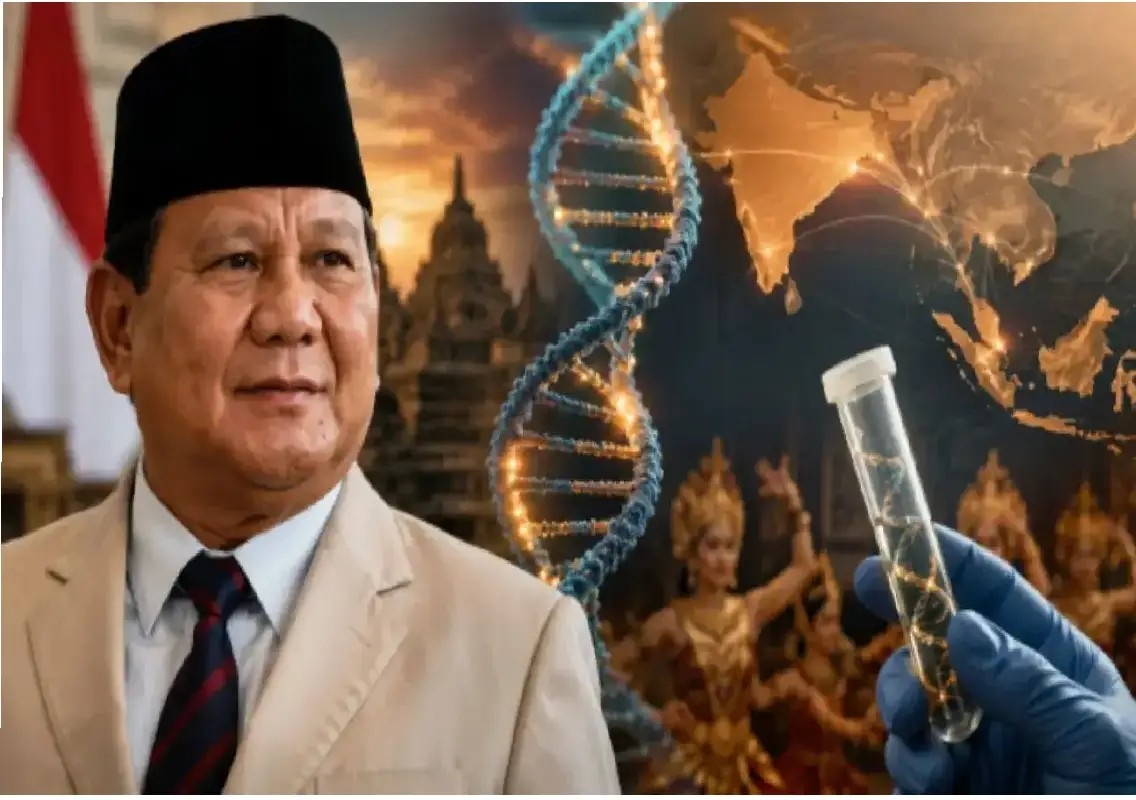


New Delhi: Indonesian President Prabowo Subianto has sparked widespread interest in genetic ancestry after revealing that a genome sequencing test conducted before his state visit to India indicated he has Indian DNA.
Speaking at an event attended by the Indian diaspora alongside Prime Minister Narendra Modi, Subianto joked that Indian music naturally makes him want to dance. He also quipped that many of his ministers might have Indian DNA because they know Indian songs so well, drawing laughter from the audience.
His remarks have reignited public curiosity about what DNA ancestry tests can actually reveal.
What does an ancestry DNA test show?
Experts say genomic ancestry tests do not determine a person’s nationality, ethnicity or cultural identity. Instead, they compare an individual’s DNA with large global reference databases to estimate where different parts of their genetic ancestry may have originated.
According to genetic experts, the results are statistical estimates based on shared genetic markers rather than definitive proof of belonging to a particular country or ethnic group.
Why someone outside India may have Indian DNA
The Indian subcontinent has shared centuries of trade, migration and cultural exchange with Southeast Asia, including present-day Indonesia, Malaysia, Thailand and Cambodia.
These historical connections mean many people across Southeast Asia carry genetic markers linked to populations from the Indian subcontinent. Likewise, many Indians also possess genetic ancestry connected to other regions due to thousands of years of human migration and intermarriage.
As a result, ancestry reports often identify links to multiple geographical regions rather than a single country.
DNA is only part of a person’s identity
Genome sequencing is increasingly used in healthcare to diagnose inherited disorders, identify cancer-related mutations, predict disease risks and support precision medicine. It can also provide insights into ancestral origins.
However, experts caution that genetics represents only one aspect of a person’s identity. Culture, language, nationality, traditions, upbringing and personal experiences all play equally important roles in shaping who a person is.
While ancestry testing offers fascinating insights into humanity’s shared history, scientists emphasise that DNA should be viewed as a guide to genetic heritage rather than a definition of personal identity