







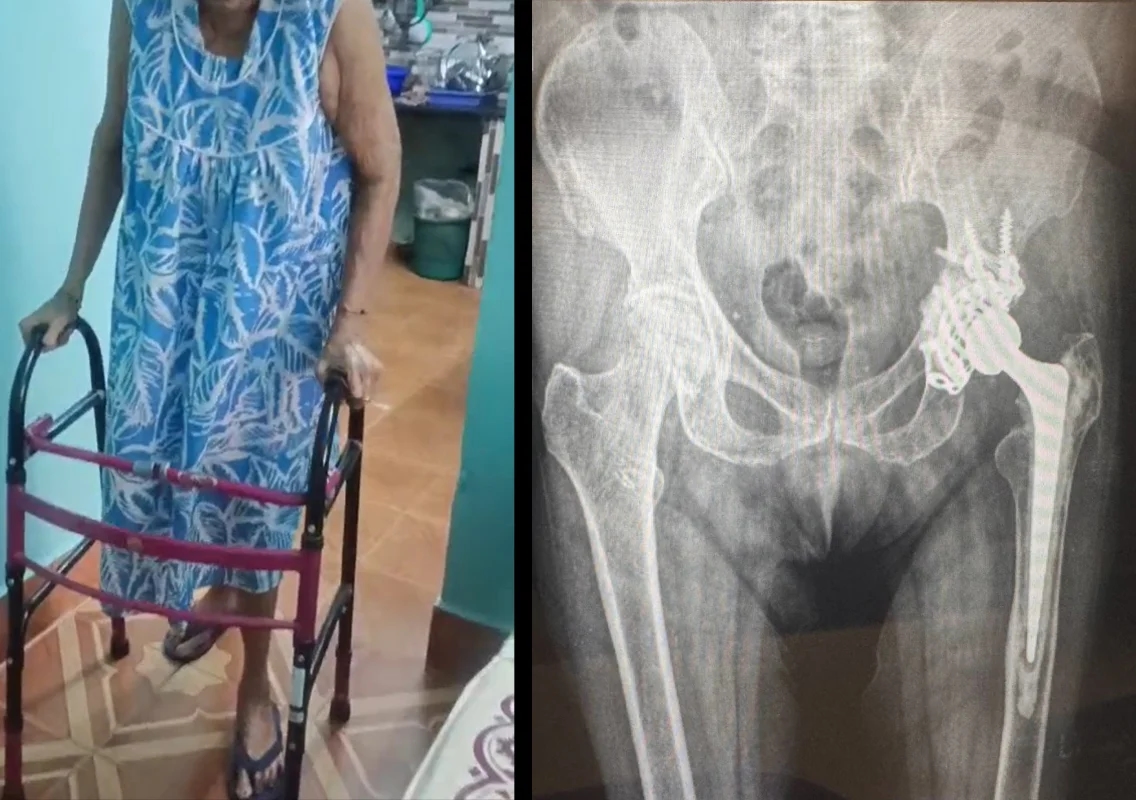


Mangaluru: Doctors at KMC Hospital Attavar successfully performed a complex revision hip reconstruction surgery on a 90-year-old woman, restoring stability to her hip joint and enabling her to walk again despite a rare complication from a previously implanted prosthesis.
The elderly patient had been suffering from severe pain in her left hip and difficulty in bearing weight due to complications associated with an earlier hip replacement surgery. After detailed medical evaluation, doctors discovered that the prosthetic implant had gradually migrated inward into the pelvic cavity, a rare condition known as Intrapelvic protrusion of prosthesis.
Rare and complex orthopaedic condition
Medical experts explained that intrapelvic protrusion occurs when a hip implant shifts from its intended position and moves into the pelvic cavity, making revision surgery technically demanding.
Considering the patient’s advanced age and the complexity of the condition, the orthopaedic team at KMC Hospital conducted a detailed clinical evaluation and multidisciplinary planning before proceeding with surgery.
Doctors performed a revision total hip replacement using an antiprotrusio cage, a specialised orthopaedic implant designed to reconstruct the hip socket and provide structural support in cases where the bone has weakened.
Surgery restores stability and mobility
The surgery was completed successfully, and the patient responded well during the postoperative recovery phase.
Following the procedure, the hospital initiated early rehabilitation and physiotherapy, which included structured exercises and assisted mobilisation to help the patient regain stability and confidence while walking.
Doctors said coordinated care from surgeons, anaesthesiologists, nursing staff, and physiotherapists played a vital role in ensuring a safe recovery.
Team approach ensured successful outcome
Speaking about the case, Dr Atmananda S. Hegde, Professor and Head of the Department of Orthopaedics at KMC Hospital Attavar, said the surgery required careful planning and precise surgical execution.
“Managing complex hip revision surgery in a patient of this age requires meticulous planning and a coordinated team approach. In this case, the earlier implant had migrated into the pelvic cavity, making reconstruction technically demanding,” he explained.
He added that specialised reconstruction techniques and advanced implants helped restore stability to the hip joint, allowing the patient to regain mobility.
Importance of multidisciplinary care
Dr Chakrapani, Medical Superintendent of KMC Hospital Attavar, emphasised the importance of a multidisciplinary approach in treating complex orthopaedic conditions, especially in elderly patients.
“Treating elderly patients with complicated orthopaedic problems requires a comprehensive approach. The successful outcome reflects the coordinated efforts of our surgeons, anaesthesia team, nursing staff, and physiotherapists who worked together to ensure safe surgery and smooth recovery,” he said.
Hospital authorities noted that the case highlights the hospital’s ability to perform advanced orthopaedic reconstruction procedures even in high-risk elderly patients, supported by specialised surgical expertise and comprehensive rehabilitation services.
The successful surgery demonstrates how modern orthopaedic techniques combined with coordinated post-operative care can significantly improve mobility and quality of life for elderly patients.