







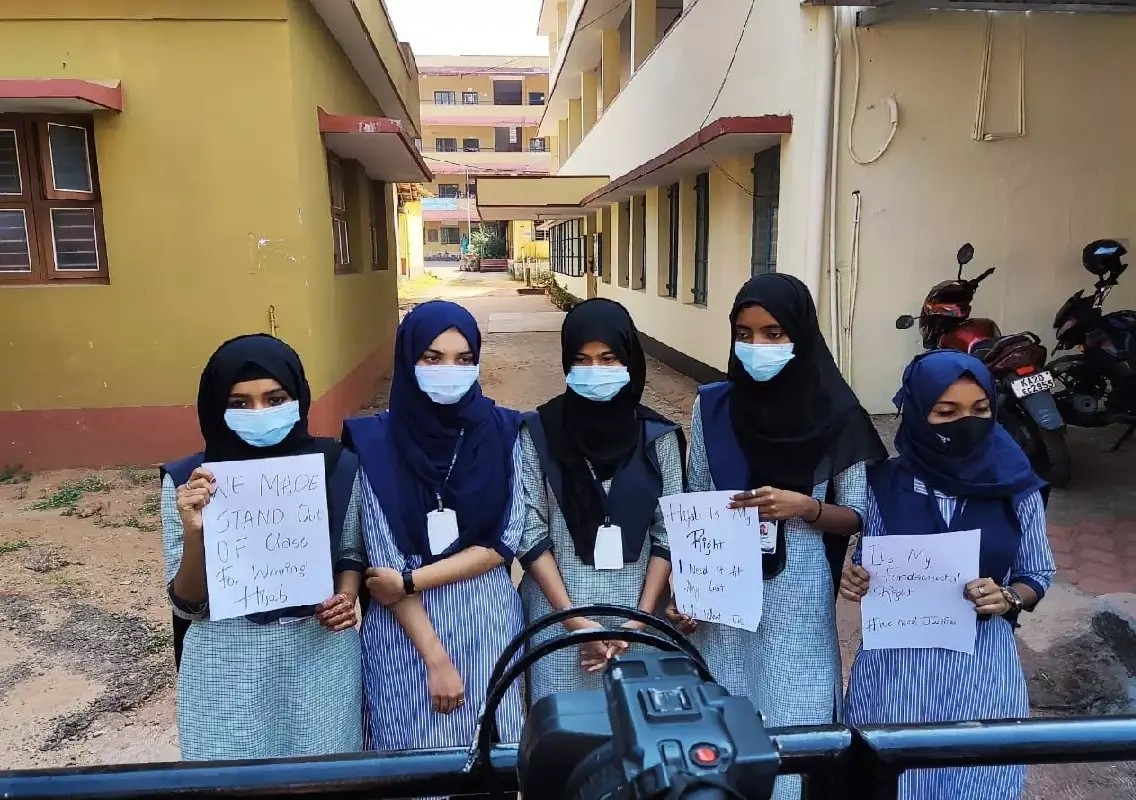


Mangaluru: The hijab issue, which drew widespread attention in 2022, has resurfaced following a fresh order issued by the Karnataka government allowing students to wear hijab and other religious symbols along with prescribed uniforms in educational institutions. The development has once again triggered political discussions and public debate over religious identity, educational policies and constitutional rights.
The Congress government has maintained that the move is in line with its pre-election commitment, while critics have questioned the timing of the decision and linked it to political considerations.
The renewed discussion has brought focus back to an issue that had earlier sparked widespread protests and debates across the state and beyond.
Controversy first emerged in 2022
The hijab controversy initially gained prominence during the previous BJP government’s tenure in 2022, when restrictions were imposed on wearing hijab inside classrooms in educational institutions.
Although the Congress had promised to withdraw the order after assuming power, the decision has now been implemented nearly three years later.
The issue had generated extensive discussions among political parties, educational institutions, legal experts and members of the public.
Issue began as a local dispute
The origins of the controversy date back to December 2021, when six students of a Government PU College for Girls in Udupi were reportedly denied entry into classrooms for wearing hijab.
Reports stated that the students had approached the college principal and later contacted officials from the Department of Pre-University Education and district authorities seeking permission to attend classes while wearing hijab.
Despite repeated representations, they were allegedly not allowed to enter classrooms wearing the headscarf.
What initially appeared to be a local administrative issue gradually expanded into a larger public debate.
Debate spread across the state
As the issue received wider media coverage, discussions spread rapidly across television platforms, social media and public spaces.
Student protests and demonstrations in different places drew national attention and transformed the issue into a larger debate concerning religious expression and constitutional rights.
Images and videos of students waiting outside classrooms became widely circulated and came to symbolise the broader arguments surrounding the issue.
The latest government order has once again brought the matter into public focus, with supporters and critics expressing differing views on its implications for education and public policy.
Further political discussions and reactions are expected in the coming days as the issue continues to generate attention.