







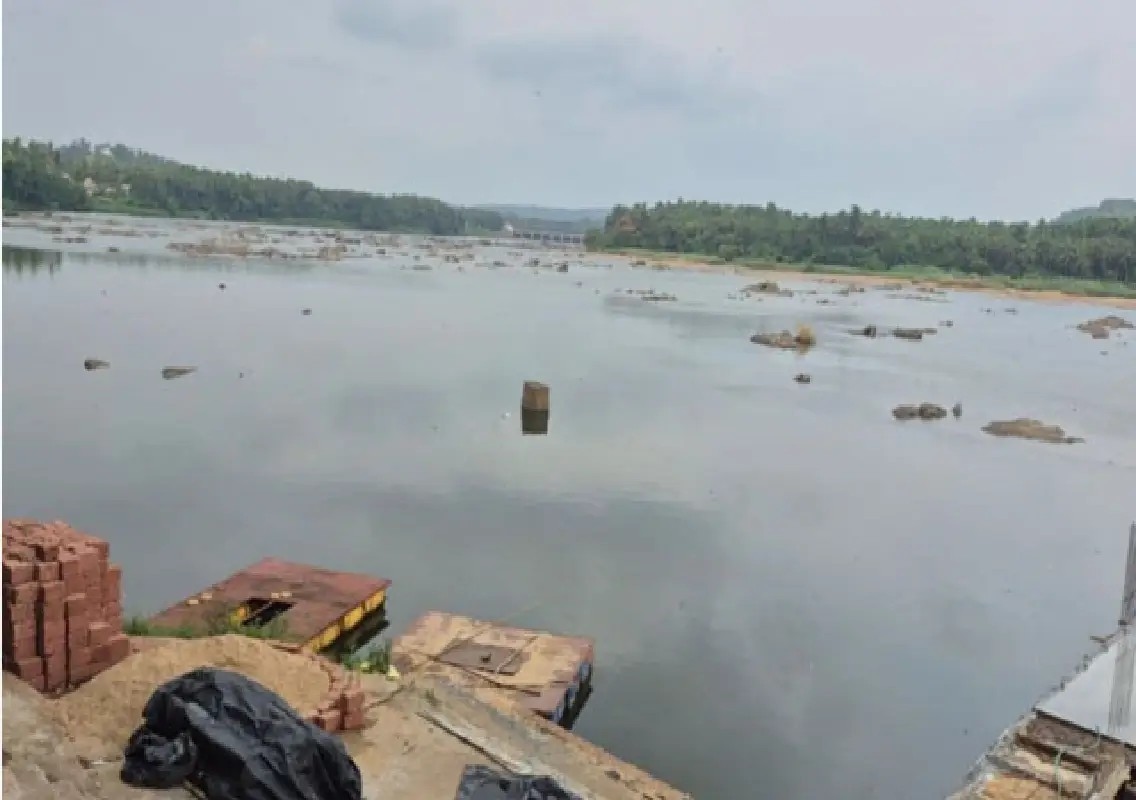


Bantwal: After weeks of growing concern over rapidly falling water levels and fears of a looming drinking water shortage, the Netravati river has witnessed a significant revival following continuous rainfall in the ghat and foothill regions over the past few days. The sudden increase in water flow has brought relief to residents and authorities across Dakshina Kannada district, particularly in areas dependent on the river for drinking water supply.
The Netravati, regarded as the lifeline of Dakshina Kannada, had recently reached worrying levels due to intense summer conditions. The drastic change in river conditions over the past few days has now reduced immediate concerns over water availability.
River had reached alarming levels during summer
Only a few weeks earlier, prolonged summer heat had caused a substantial decline in water levels in several stretches of the river. Areas extending from the downstream side of the Jakribettu dam to the Panemangaluru new bridge had witnessed exposed riverbeds, large sand patches and visible rock formations as the water receded.
The declining inflow triggered serious concern among residents and officials, not only in Bantwal but also in areas falling under the limits of Mangaluru city, where fears of a drinking water crisis were increasing.
As water levels continued to decline, precautionary measures were initiated to manage the situation and safeguard drinking water resources.
Authorities initiated emergency measures
Amid concerns over a potential shortage, Rajesh Nayak had directed officials to exercise caution in the supply and consumption of drinking water.
The district administration also stepped in with emergency measures aimed at preventing a severe water crisis in Mangaluru and surrounding regions.
The Deputy Commissioner’s office had instructed authorities to release water up to six metres from the AMR Dam towards the Thumbe Dam to ensure sufficient storage during the peak summer period.
Officials were also directed not to divert remaining water in the AMR reservoir for purposes other than drinking water supply.
Mangaluru city depends significantly on the vented dam at Thumbe constructed across the Netravati river for meeting its drinking water requirements. The Thumbe dam has a maximum storage capacity of 10.41 million cubic metres (MCM).
According to official data recorded on April 21, 2026, the water level stood at 4.71 metres at Thumbe dam and 18.62 metres at AMR dam. Authorities had estimated that the available water at that stage would meet the city’s requirements for only around 22 days.
Rainfall changes the situation dramatically
The situation has changed considerably over the past three to four days following steady rainfall across the Western Ghats and nearby foothill regions.
The increase in rainfall substantially improved inflow into the river system. In accordance with district administration directions, water was also released from the Shambhoor AMR Dam, contributing further to the rise in river levels.
The Jakribettu dam has now reached full capacity and surplus water is reportedly being released downstream. Water levels at the Thumbe dam have also risen to full levels.
The once-parched sections of the river have transformed significantly, with flowing water replacing dry sandbanks and exposed rocks that had become visible during the peak summer period.
Relief for residents and water supply authorities
The increase in water availability up to the Thumbe region has considerably reduced fears of an immediate drinking water shortage.
Residents and officials believe that if rainfall activity continues over the coming days, the region may avoid major water supply concerns even if the southwest monsoon experiences a delayed onset.
The replenishment of the river has not only restored confidence regarding water availability but has also brought relief to communities dependent on the Netravati for drinking water and ecological balance.
For now, the recent rainfall has provided much-needed respite and renewed hopes after weeks of uncertainty surrounding water availability in the district.