







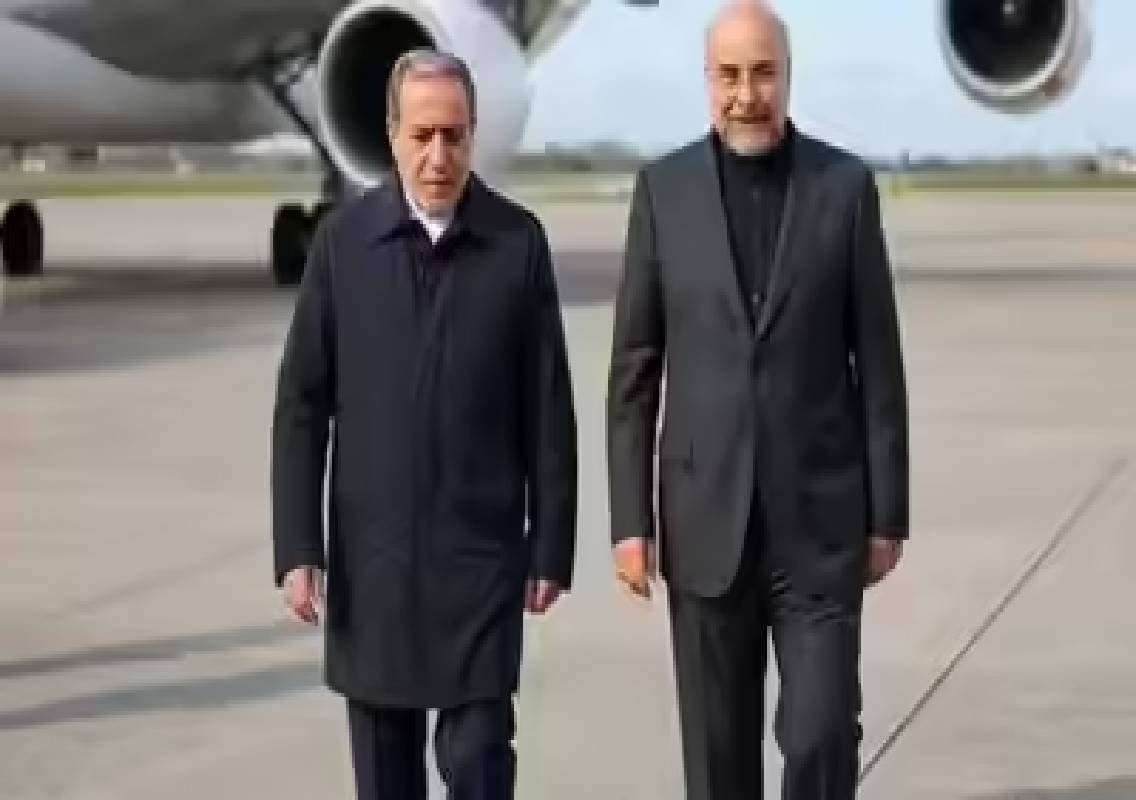


WASHINGTON: Senior United States officials privately warned Iran that Israel could attempt to assassinate two of Tehran’s top political figures during sensitive diplomatic efforts to end the Iran-Israel conflict and reopen the Strait of Hormuz, according to reports by The Washington Post and The New York Times.
The reports, citing current and former US officials familiar with the discussions, suggest Washington took the unusual step of using intermediaries to caution Tehran about potential threats against Iranian Foreign Minister Abbas Araghchi and Parliament Speaker Mohammad Bagher Ghalibaf. The warnings reportedly reflected concerns that any such attacks could derail ongoing peace negotiations and reignite hostilities.
Neither the White House nor Israeli officials have publicly confirmed the claims, and the Israeli Embassy in Washington declined to comment.
US feared assassination could derail diplomacy
According to The Washington Post, US officials believed that targeting Iran’s senior negotiators would undermine diplomatic efforts led by the Trump administration to secure a ceasefire and broader peace agreement.
One unnamed US official told the newspaper that removing the officials would eliminate key figures willing to engage in negotiations.
“You kill those folks and you’re killing the pragmatists,” the official was quoted as saying.
The report states that Washington considered the threat serious enough to alert Iranian authorities through regional intermediaries earlier this year.
US officials also reportedly urged Israeli counterparts as early as March not to target Iran’s political leadership while negotiations remained active.
White House reportedly backed diplomacy
A White House official quoted by The Washington Post said President Donald Trump wanted diplomatic efforts to continue.
“The president wants the peace process to play out,” the official told the newspaper.
According to the report, the United States gradually shifted its strategy after concluding that regime change in Iran was unlikely despite the conflict.
Instead, Washington focused on achieving a negotiated settlement aimed at ending hostilities and restoring stability in the region.
Reports highlight differences between US and Israel
The reports suggest growing differences between Washington and Tel Aviv over their long-term objectives regarding Iran.
While both countries initially supported stronger action against Iran following the outbreak of conflict in February, US officials reportedly prioritised negotiations once it became clear that Iran’s political leadership would likely remain in power.
Former US State Department official Aaron David Miller told The Washington Post that the developments reflected diverging strategic goals.
According to him, the reports demonstrate the difference between Washington’s diplomatic approach and Israeli Prime Minister Benjamin Netanyahu’s more hardline position towards Tehran.
Reports link tensions to alleged killing of Ali Larijani
According to The Washington Post, tensions between the two allies reportedly intensified after Israel allegedly assassinated senior Iranian national security official Ali Larijani in March.
A Western official quoted by the newspaper described the incident as a major turning point, saying Washington suddenly lost an important Iranian figure with whom discussions could potentially continue.
The report states that Araghchi and Ghalibaf later became Washington’s primary interlocutors during negotiations that eventually produced an initial ceasefire in April and a broader peace framework in June.
New York Times reports emergency diversion
The New York Times separately reported that US intelligence suggested Israel could have targeted Araghchi and Ghalibaf following the April 8 ceasefire.
According to the newspaper, Iranian Parliament Speaker Mohammad Bagher Ghalibaf was warned of a possible Israeli threat while returning from Islamabad after holding discussions with US Vice President JD Vance on April 12.
The report claims intelligence regarding a potential attack prompted his aircraft to make an emergency landing in Mashhad, after which he reportedly travelled overland to Tehran.
The newspaper added that US officials believed any assassination attempt during negotiations would likely have ended diplomatic efforts and triggered another round of fighting.
Israel has not commented
The Israeli Embassy in Washington declined to comment on the reports.
Neither Israel nor Iran has officially confirmed the alleged warnings or the reported assassination concerns.
The reports nevertheless underscore continuing differences between the United States and Israel over managing relations with Iran, particularly regarding the balance between military pressure and diplomatic engagement.
Conclusion
Although the allegations remain based on anonymous official sources and have not been independently confirmed, the reports suggest that behind-the-scenes diplomacy played a significant role during efforts to end the Iran-Israel conflict. They also highlight the delicate balance Washington sought to maintain between supporting its ally Israel and preserving negotiations with Tehran. As regional tensions continue, the differing approaches adopted by the United States and Israel are likely to remain under close international scrutiny.