







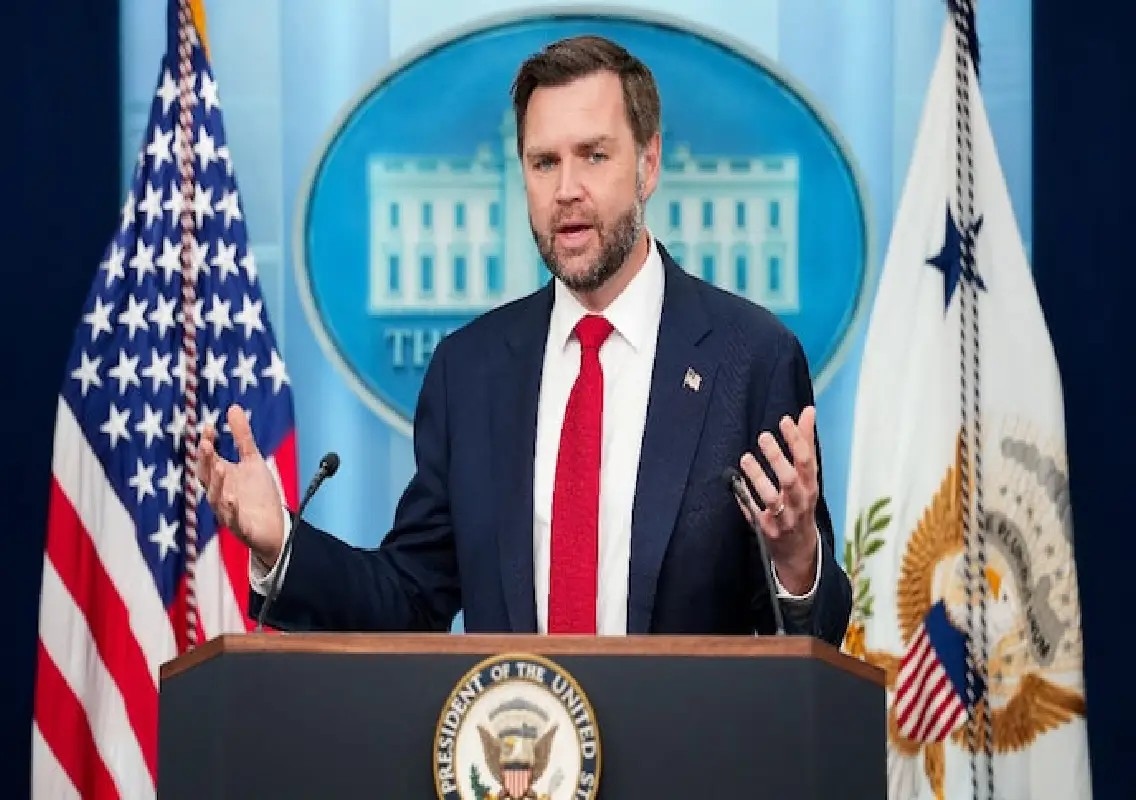


Washington: United States Vice President JD Vance has strongly defended the recently signed US-Iran Memorandum of Understanding (MoU), while criticising Israeli leaders for attacking the agreement and questioning their reliance on military force as a long-term solution to regional security challenges.
Vance’s remarks come amid growing criticism from sections of Israel’s political leadership, who argue that the agreement fails to adequately address Iran’s nuclear programme, ballistic missile capabilities and regional influence.
The Vice President’s comments have intensified debate over the future of the agreement and the broader direction of US policy in the Middle East.
Vance urges support for diplomacy
Speaking during an interview with The New York Times and later at a White House press conference, Vance argued that military action alone cannot resolve every national security challenge facing Israel.
Addressing criticism from Israeli leaders, he questioned what alternative strategy critics were proposing and stressed the importance of supporting diplomatic efforts aimed at reducing regional tensions.
“What is your exact proposal? You’re a country of 9 million people. You can’t just kill your way out of solving every single national security problem that you have,” Vance said.
The Vice President emphasised that diplomacy remains a crucial component of long-term regional stability and urged Israeli leaders to work with Washington rather than undermine ongoing negotiations.
Defence of Trump administration’s agreement
Vance strongly defended President Donald Trump and the administration’s decision to pursue the agreement with Iran.
The MoU is intended to end months of tensions, facilitate the reopening of the Strait of Hormuz and establish a framework for broader diplomatic negotiations.
According to Vance, the agreement represents an opportunity to reduce instability in the region while avoiding a prolonged military confrontation.
He also described Trump as one of Israel’s strongest international supporters and suggested that criticism directed at the US administration was misplaced.
“My message to them would be twofold. No. 1: Donald J. Trump is the only head of state in the entire world who is sympathetic to the nation of Israel at this moment in time,” Vance said.
Highlights US support for Israel
The Vice President pointed to the longstanding military partnership between the United States and Israel, noting the significant level of American assistance provided to the country.
The United States currently provides billions of dollars in military aid to Israel annually and remains its principal strategic ally.
Vance stated that much of Israel’s defensive capability has been developed with American support and argued that Israeli leaders should recognise the importance of maintaining close coordination with Washington.
He further asserted that Israel’s primary challenges stem from broader regional dynamics rather than from policies pursued by the Trump administration.
Criticism of continued strikes in Lebanon
Vance also expressed concern over recent Israeli military operations in Lebanon, describing some actions as potentially harmful to ongoing diplomatic efforts.
He said the White House had become frustrated when progress towards de-escalation appeared close, only to be followed by incidents that risked escalating tensions.
The Vice President stressed that civilian casualties and actions that could undermine negotiations were matters of concern for Washington.
While reaffirming Israel’s right to self-defence, he said all parties involved in the peace process must exercise restraint and respect diplomatic commitments.
Calls for both sides to honour commitments
According to Vance, the success of any regional peace initiative depends on all parties fulfilling their obligations.
He said the agreement requires commitments not only from Israel but also from groups such as Hezbollah, which have been involved in conflicts along Israel’s northern border.
The Vice President emphasised that a sustainable peace process requires restraint from all sides and warned against actions that could derail ongoing negotiations.
“This is about regional peace,” Vance said, adding that both Israel and Hezbollah must adhere to their respective commitments under any future arrangement.
Israeli criticism continues
Despite the White House’s defence of the agreement, opposition remains strong among several Israeli political figures.
Some members of Prime Minister Benjamin Netanyahu’s coalition government have argued that the agreement does not sufficiently limit Iran’s nuclear ambitions or military capabilities.
Israeli National Security Minister Itamar Ben-Gvir was among those who publicly criticised the agreement, maintaining that stronger measures are required to address threats posed by Iran.
The criticism reflects broader concerns within Israel regarding regional security and the long-term implications of the US-Iran understanding.
Trump pushes broader regional peace efforts
The exchange comes as President Trump seeks to expand the Iran agreement into a wider regional peace framework.
The administration has called for a comprehensive ceasefire involving Israel, Hezbollah and other parties involved in regional conflicts.
Trump has repeatedly urged all stakeholders to remain committed to negotiations and avoid actions that could jeopardise diplomatic progress.
Officials in Washington view the agreement as an opportunity to reduce tensions, stabilise energy markets and create conditions for broader political settlements across the Middle East.
Conclusion
JD Vance’s sharp defence of the US-Iran agreement and criticism of Israeli opposition highlight growing differences over how best to address regional security challenges. While the White House views diplomacy as the path towards lasting stability, Israeli leaders continue to express concerns that key security issues remain unresolved. As negotiations continue, the future success of the agreement will depend on whether all parties can balance their security interests with the pursuit of regional peace.