







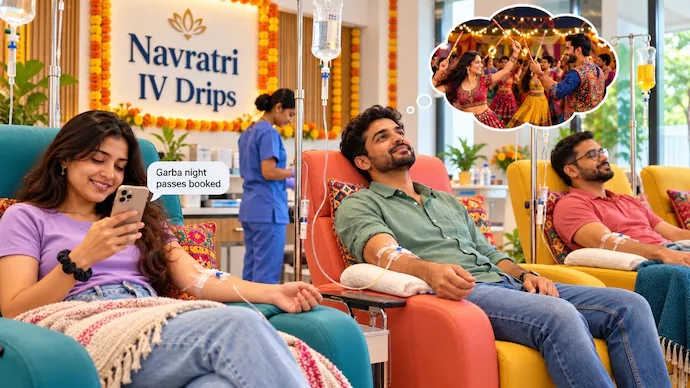


Ahmedabad: As Gujarat prepares for Navratri, a growing number of people are exploring an unusual addition to their festive routines: intravenous (IV) drips marketed for hydration, energy and glowing skin. Clinics in Ahmedabad, Surat, Rajkot and other cities are offering special packages for people hoping to stay refreshed through long garba nights and daytime fasting.
The treatments involve delivering fluids and, depending on the formulation, vitamins, minerals and other substances directly into the bloodstream. Prices vary by clinic and the ingredients used, with some packages costing several thousand rupees per session.
The trend has drawn attention on social media, where wellness treatments are increasingly presented as a way to prepare for weddings, parties and festivals. However, medical experts caution that IV therapy is not necessary for everyone and that evidence supporting claims of extra energy or an instant cosmetic glow in otherwise healthy people remains limited.
Doctors say the treatments can have a legitimate medical role in specific circumstances, including dehydration and certain nutritional deficiencies. But they warn against treating a medical procedure as a routine festive-season beauty or energy booster without an assessment of individual health needs.
Gujarat gets garba-ready with IV drips
Navratri celebrations in Gujarat often involve hours of garba and dandiya dancing late into the night, sometimes alongside daytime fasting and limited sleep. For some people, keeping up with the schedule can be physically demanding.
Clinics are now promoting Navratri-themed IV drip packages that claim to help with hydration, energy and skin appearance. Videos featuring these treatments have circulated online, bringing attention to a wellness trend that has also appeared at weddings and among beauty-conscious consumers.
IV therapy is not new to the wellness industry. It has been promoted internationally for a range of purposes, from hydration to vitamin supplementation, although the evidence and medical justification vary depending on the treatment and the person receiving it.
The festive packages in Gujarat reflect the growing appeal of personalised wellness services. But experts say the popularity of a treatment does not establish that it works as advertised or that it is appropriate for every customer.
What goes into a Navratri IV drip?
There is no single standard formulation for a festive IV drip. The ingredients and concentrations depend on the clinic’s package and the individual assessment.
Dr Mrugesh Prajapati, an anaesthesiology specialist whose Ahmedabad clinic, Optimise IV, offers Navratri packages, told India Today that IV formulations can combine vitamins, minerals, antioxidants, amino acids and other substances.
He said the clinic’s formulations may include pharmaceutical preparations containing glutathione, vitamin C, vitamin B-complex and other micronutrients, depending on a patient’s medical assessment.
Dr Monika Tibrewal, a dermatologist and cosmetologist at Ahmedabad’s SkinEra – Skin and Cosmetic Clinic, which also offers IV treatments, said the aim was to provide targeted hydration or nutritional support based on individual needs.
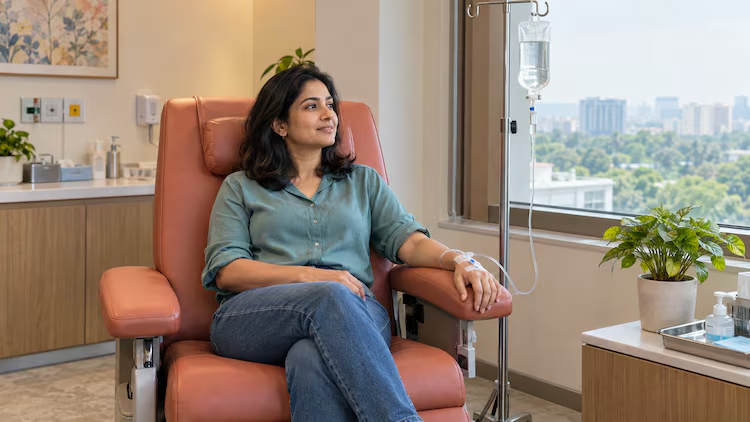
According to Tibrewal, patients may experience benefits such as improved hydration or a greater sense of wellbeing when a treatment addresses an actual need.
However, the presence of vitamins or antioxidants in an IV bag does not automatically mean that a healthy person will benefit from receiving them intravenously. The potential benefit depends on the person’s health, the substance administered, its dose and whether there is a medical reason for using it.

Can IV drips really boost energy?
The answer depends on what is causing the fatigue.
Dr Prashant Sinha, senior consultant and head of emergency medicine at PSRI Hospital in New Delhi, said fatigue during Navratri could result from inadequate sleep, missed meals, prolonged dancing or dehydration.
An IV infusion may help replenish fluids when dehydration is present and treatment is medically appropriate. However, that does not mean adding vitamins will necessarily provide an extra energy boost.
“For a healthy person who is eating well and does not have a nutritional deficiency, there is not enough good evidence to say that these vitamin drips will give them more energy or a better skin glow,” Sinha told India Today.
People experiencing tiredness during the festival may benefit more from addressing its underlying causes, including inadequate rest, insufficient food intake and a lack of fluids.
IV therapy can be useful when oral hydration is inadequate or when a specific medical condition calls for intravenous treatment. But for healthy people who can eat and drink normally, an infusion may offer little advantage over ordinary hydration and balanced nutrition.
Who is paying for the treatments?
Clinics report growing interest in IV wellness treatments, including from younger adults and people trying them for the first time.
Prajapati said the clientele had previously included non-resident Indians, frequent international travellers, entrepreneurs and professionals familiar with IV wellness services overseas. He said enquiries were now also coming from younger customers and first-time users.
He attributed the shift partly to social media visibility, international exposure and increased interest in personalised wellness.
Tibrewal reported demand for treatments promoted for hydration, energy and appearance. According to her, many of the clients seeking these services are women aged around 25 to 45, although men are also showing interest.
The cost depends on the formulation and clinic. Tibrewal’s practice charges around Rs 5,000 per session, while Optimise IV offers packages priced between Rs 4,000 and Rs 15,000.
The number and frequency of sessions vary according to the clinic’s assessment and the treatment offered. These prices can make IV therapy a significant expense, particularly if customers are encouraged to return for repeated sessions.
Experts advise consumers to look beyond promotional claims and establish exactly what a treatment contains, why it is being recommended and what evidence supports its expected benefits.
What are the risks of IV vitamin therapy?
IV treatment is an invasive medical procedure. Even when administered in a clinical setting, it carries risks that should be considered before a person signs up for a wellness package.
Dr Nishita Ranka, medical director and founder of Dr Nishita’s Clinic for Skin, Hair & Aesthetics in Hyderabad, has warned about the risks associated with high-dose vitamin C, particularly for people with kidney problems or glucose-6-phosphate dehydrogenase (G6PD) deficiency. The inherited condition can make red blood cells vulnerable to damage under certain circumstances.
Inserting a cannula into a vein can also cause bruising, infection, inflammation or irritation. Additional risks can arise from inappropriate dosing, reactions to ingredients, contamination or incompatibility between substances in the formulation.
The risks depend on the ingredients, their concentration, the person’s medical history and the way the infusion is administered. That is why doctors stress the importance of proper screening, sterile equipment, trained medical staff and the ability to respond to an adverse reaction.
Prajapati acknowledged that safety depends on appropriate patient selection, pharmaceutical quality, dosing and monitoring. He said his clinic emphasises medical screening, sterile techniques, ingredient compatibility and emergency preparedness.
He also noted that a substance being naturally present in the body does not automatically make it safe when administered intravenously at a particular concentration.
Does an IV drip guarantee glowing skin?
Medical experts urge consumers to be cautious about claims that vitamin infusions can produce an immediate cosmetic transformation.
Sinha said the effect of vitamins on skin health depends on whether an individual has a deficiency or another condition that would benefit from treatment.
“If someone has a genuine nutritional deficiency, treating that deficiency can certainly improve their overall health and sometimes their skin or hair as well,” he said. “But that is very different from giving vitamins intravenously to a healthy person simply for cosmetic reasons.”
A deficiency can affect health and appearance, and correcting it may help. But there is insufficient evidence to conclude that a vitamin infusion will give every healthy person brighter skin or a lasting glow.
Skin appearance is influenced by several factors, including genetics, sleep, nutrition, sun exposure, hydration and underlying medical conditions. A temporary change in how someone looks or feels should not be confused with a proven long-term cosmetic benefit.
Consumers should therefore be wary of guarantees of instant results, particularly when clinics promote packages without clearly explaining the limits of the available evidence.
What about regulatory approval in India?
The questions surrounding festive IV drips extend beyond medical safety to the regulatory status of the substances being used and the claims made about them.
In India, medicines and injectable preparations are governed by the Drugs and Cosmetics Act, 1940, and the applicable rules. Regulatory responsibilities are shared between the Central Drugs Standard Control Organisation (CDSCO) and state drug authorities.
Ranka has highlighted that while medicines used in IV preparations may be regulated, that does not mean every wellness package or advertised cosmetic benefit has been specifically evaluated and approved.
A medicine authorised for a particular medical indication is not automatically approved for every other purpose for which a clinic might use it. Prescribing a medicine outside its approved indications is generally known as off-label use. Such use is not automatically unlawful, but it requires appropriate clinical judgement and does not establish that the advertised benefit is proven.
Consumers should ask clinics to explain the ingredients, doses, intended purpose and evidence supporting the treatment. They should also establish whether the proposed use is medically justified and whether the procedure will be administered by qualified professionals in an appropriately equipped setting.
A social media trend or festive promotion is not a substitute for regulatory clearance, clinical evidence or an individual medical assessment.
What should you consider before booking a drip?
Doctors advise people to consider why they want the treatment before committing to a session.
If fatigue is caused by inadequate sleep, missed meals or hours of dancing, an IV infusion may not address the underlying problem. If dehydration or a nutritional deficiency is suspected, a medical assessment can help determine the appropriate treatment.
Consumers should also disclose their medical history, current medicines, allergies and any kidney-related conditions or other relevant health concerns before receiving an infusion.
The clinic should explain what is in the IV bag, why each ingredient is being used, the expected benefits, possible side effects and what emergency arrangements are available.
People should avoid treatments that promise guaranteed cosmetic results or offer high-dose formulations without explaining the risks. They should also not assume that a treatment is safe simply because it is marketed as a wellness service.
Experts recommend sleep, food and hydration first
The appeal of a quick energy boost is understandable during Navratri, when festive schedules can leave little time for rest. But doctors say IV therapy should not be treated as a routine step before a night of dancing.
Sinha stressed that there is no shortcut to replacing sleep, good nutrition and adequate hydration. Both he and Ranka favour IV treatment when there is a clear medical need rather than as a general wellness ritual for healthy people.
Ranka also raised concerns about the wider cultural implications of normalising an invasive medical procedure before social events, warning that it could encourage people to see a cannula as an ordinary part of getting ready for a party.
For most healthy revellers, the basics remain the most reliable starting point: drink enough fluids, eat adequately, get sufficient sleep and allow time to recover between late-night celebrations.
Navratri IV drips may be gaining visibility across Gujarat, but their popularity should not be mistaken for proof of universal benefits. Anyone considering a session should seek an informed medical assessment and weigh the potential benefits against the risks before adding an infusion to the festive checklist.