










Solitude and loneliness resemble almost a state of equality though in meaning they are vastly different. While the former is creative and productive, the latter is destructive and adverse. Again, though both functionally remain a state of being possibly away from both, people and the environment, the impact that each has on people is different. There have been neurologists, philosophers, literary artists and creative thinkers who have written plenty about the basic support that solitude can provide all humans in their respective areas of artistic or even common work. Some of them also have critically written about the adversities that the humans may experience while they face loneliness. Drawing a sharp line between solitude and loneliness is not easy, especially while considering the felicities and the adversities.
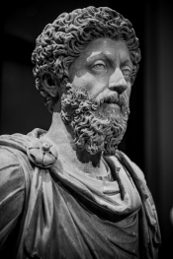
Marcus Aurelius, Roman Emperor, stoic philosopher of the second century CE, wrote in his personal journal ‘Meditations’ that solitude is a tool for self reliance, peace of mind and moral grounding. He went on to explain the latter as one which keeps a person with integrity and equally keeps the people around such a person under the influence of that integrity. Writer Virginia Woolf, one of the most influential twentieth century authors who used the stream of consciousness technique in her writings, referred to the relationship between being alone and creativity. She believed that the creative moments of any intellectual work demands a certain amount of aloofness from the rest of the world to bring out the best out of a person.
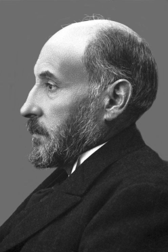
The Chinese poet Qu Yuan of the third century BCE, a man who lived in political exile in China itself, wrote his book ‘The Lament’, which contains a deep sense of sorrow over lost hope. All the same, in his personal living, he is supposed to have looked into a well to see his own reflection during times of grief to get encouraged to write and work with people. Despite such positive living in aloneness, he ended his life in suicide. Yet, he is still remembered for the faith which he upheld even in the deep sorrow of a righteous man, symbolising the creative solitude. Similarly, it is said that even the Hebrew Bible contained haunting descriptions of solitary grief which moved on to become creative. Socrates, the great Greek philosopher of the fourth century BCE is said to have told his disciples that moving away from the noise of public life to engage in self examination would result in wisdom to discover truth. Many Greek philosophers followed his path of solitude to think and create great literary products. One of the best statements came from Santiago Ramon Cajal, the Spanish founding father of modern neuroscience, known for his theory of ‘Neuron Doctrine’, wrote in his book ‘Advice for a Young Investigator’, published in 1887, the famous statement that solitude is a ‘Supreme Fertilizer’ for creative work. He connected the advantages of solitude with the way the creative brain, the work of the neurons, functions better and naturally brings out exceptionally brilliant  original thoughts.
Socrates, the great Greek philosopher of the fourth century BCE is said to have told his disciples that moving away from the noise of public life to engage in self examination would result in wisdom to discover truth. Many Greek philosophers followed his path of solitude to think and create great literary products. One of the best statements came from Santiago Ramon Cajal, the Spanish founding father of modern neuroscience, known for his theory of ‘Neuron Doctrine’, wrote in his book ‘Advice for a Young Investigator’, published in 1887, the famous statement that solitude is a ‘Supreme Fertilizer’ for creative work. He connected the advantages of solitude with the way the creative brain, the work of the neurons, functions better and naturally brings out exceptionally brilliant original thoughts.
Solitude, some like to call this aloneness, which is different from loneliness, provides the necessary environment, circumstances and situations for creative thinking; especially when one is ‘far from the madding crowd’, to use a line from Thomas Gray’s poem ‘Elegy Written in a Country Churchyard’ or the title of Thomas Hardy’s novel ‘Far from the Madding Crowd’; all of which will support a stirring and active mind to bring out the best in a person. The Romantic poets like Wordsworth, Keats and Byron, not only spoke about the values of solitude but also mentioned in their poems, like Byron’s poem ‘Solitude’, how, despite being away from the crowd and the noise of surrounding places, a person need not be alone when one is surrounded by the beautiful forms of nature. Elizabethans like William Shakespeare and Philip Sidney not only wrote several lines; like Shakespeare Soliloquies of Hamlet in his famous play of the same name; or Sidney’s reference to necessary sanctuary where a poet can find creative voice even when one is alone.
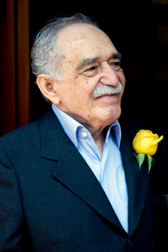
Philosophers, sometimes even casually, referred to the advantages of solitude. Arthur Schopenhauer, the nineteenth century philosopher known for his pacifism said that ‘a man can be himself only so, as long as he is alone’ as he believed original thoughts emerge when a person is alone. Similarly, Friedrich Nietzsche, the German philosopher, the originator of the theory of master slave morality, considered solitude a ‘crucible for self transformation and the path to greatness’. For many philosophers, the idea of aloneness and the connections established with nature around were of great importance for creative productions. Gabriel Garcia Marquez who wrote the 1967 magical novel ‘One Hundred Years of Solitude’ brought up cyclical isolation, fate and emotional closure to bring out the essential elements of solitude as it works on all humans as he exhibited them in his creation of the fictional town of Macondo. Similarly, modernists like Albert Camus and Sartre created literature that exhibited polarized forms of isolation and showed how art bridged the possible separation that loneliness enforced. In like manner, Henry David Thoreau, in the ‘Solitude’ chapter of ‘Walden’ explicitly shows that solitude is not a lonely isolation but is a wholesome state of deep connection with nature and oneself. He wrote that he never found a companion that was so companionable as solitude which he referred to as ‘Fertile aloneness’, which also is a gift for writers, artists or scientists. Solitude, thus, is considered a voice in the silence. Walt Whitman called solitude ‘primal sanities’ and he said that they lead a person to create a poem, a painting, a theorem or any piece of art.
Therefore, solitude or aloneness is not loneliness. It is one’s basic right to be alone to keep one’s mind in active reflection. Automatically such an environment, circumstance or situation of quietness for oneself is likely to bring out the best products of the human mind.
………………………………….
Prof. Sunney Tharappan, is Director of College for Leadership and HRD, Mangaluru.