







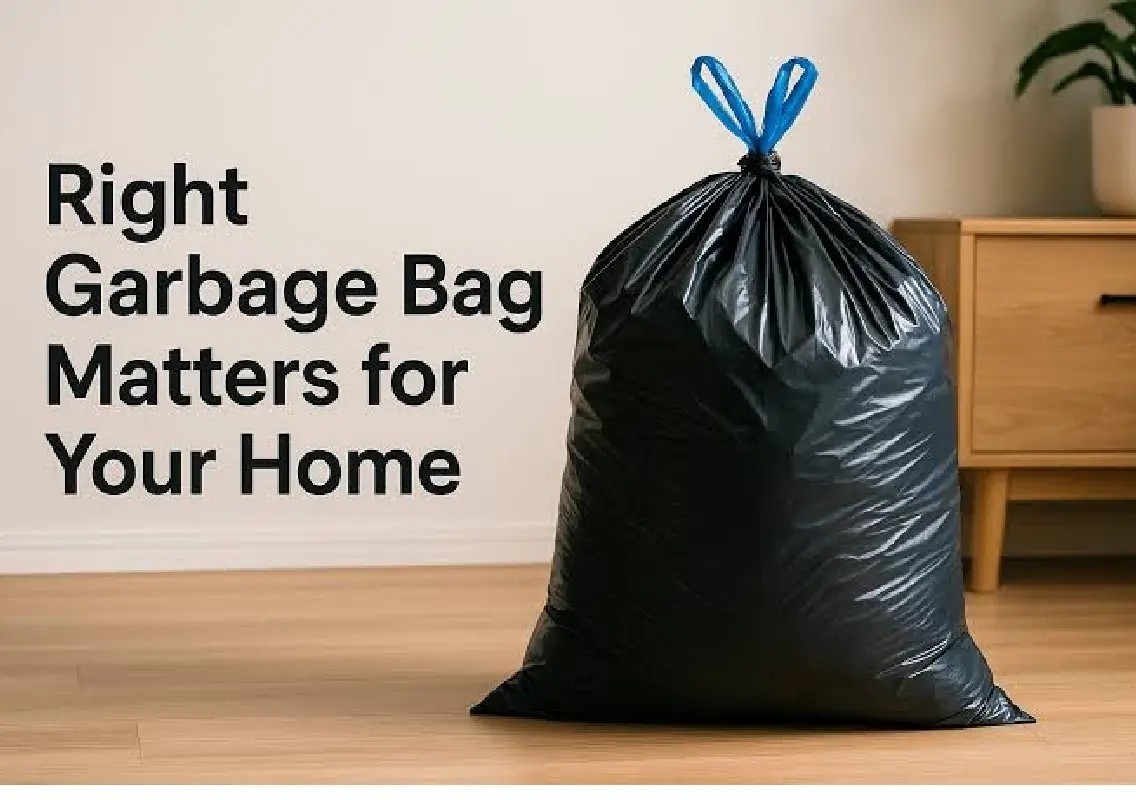


Most people buy garbage bags without giving them much thought. However, choosing the right bag can make waste disposal cleaner, easier and more cost-effective. From kitchen bins to garden clean-ups, garbage bags are designed for different purposes based on size, thickness and material strength.
Size matters more than you think
The first factor to consider is bag size. Small bags are ideal for bathroom bins and office waste baskets, while medium-sized bags are commonly used in kitchens. Larger bags are better suited for outdoor waste, community bins and yard clean-up projects.
Using a bag that is too small can lead to spills and tears, while oversized bags may be wasteful and difficult to handle.
Understanding bag thickness
Garbage bags are often classified by thickness, usually measured in microns or mils.
Thin bags work well for lightweight waste such as paper, tissues and packaging materials. Medium-thickness bags are suitable for everyday household waste. Heavy-duty bags are designed to handle sharp, bulky or wet rubbish without tearing.
Selecting the appropriate thickness helps prevent leaks and reduces the risk of bags breaking during disposal.
Why stretch and strength are important
Modern garbage bags are made from different types of plastic, affecting how much they can stretch before tearing.
High-stretch bags can accommodate oddly shaped items and heavier loads, making them useful for kitchens and outdoor clean-ups. Less flexible bags may be adequate for dry, lightweight waste but can tear when overloaded.
Choosing the right bag for the job
For kitchens, medium to heavy-duty bags generally provide the best balance between durability and cost. Bathrooms and bedrooms typically require smaller, thinner bags, while gardening and renovation projects benefit from larger, reinforced options.
Experts recommend matching the bag to the type of waste being discarded rather than simply choosing the cheapest option.
A little attention to size, thickness and strength can make waste management easier, reduce mess and help households avoid unnecessary plastic waste.