







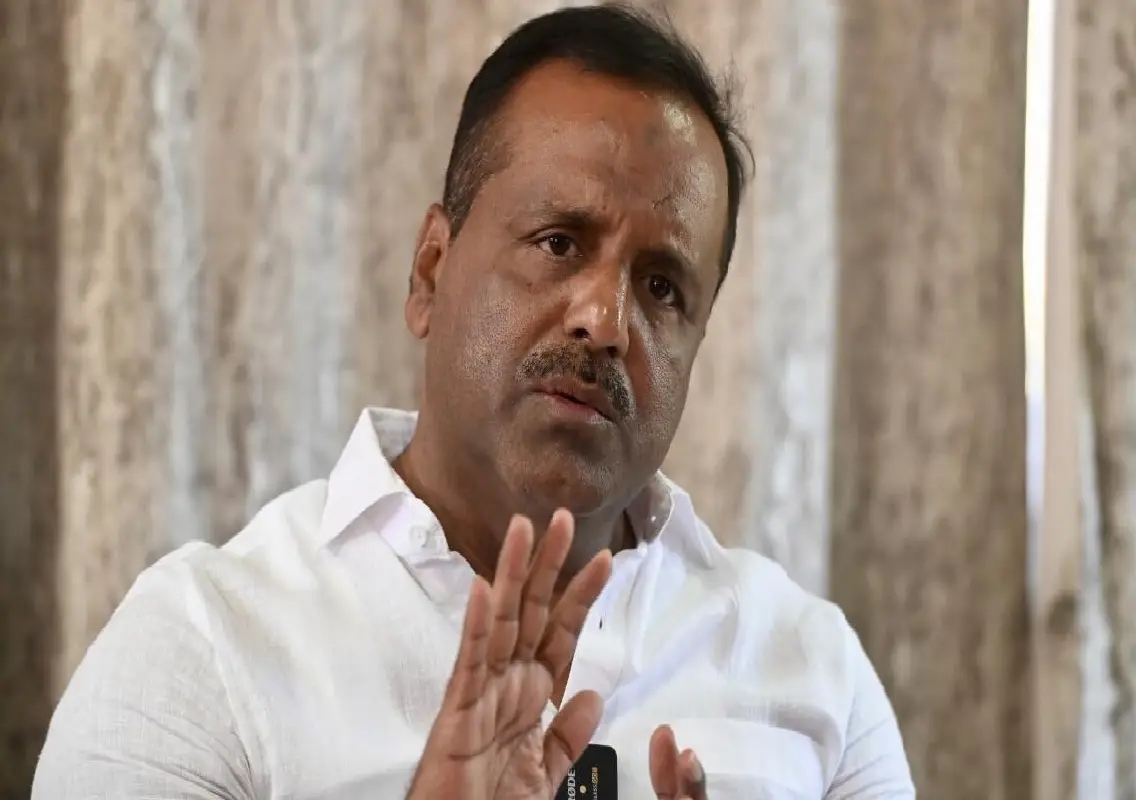


Mangaluru: Reacting to the growing controversy surrounding the ban on cockfights in Dakshina Kannada district, Karnataka Legislative Assembly Speaker U.T. Khader on Friday said the issue requires a balanced and lawful resolution through appropriate rules rather than blanket restrictions. He emphasised that while illegal gambling must be dealt with strictly, traditional practices should not be targeted without clear legal clarity.
Khader was responding to questions on the police department’s action against cockfighting events in parts of Dakshina Kannada, which has triggered protests and criticism from organisers and sections of the public who view cockfighting as a traditional rural sport rather than a gambling activity.
Gambling allegations at the core of the issue
According to Khader, the police have justified the ban by alleging that gambling is taking place during cockfighting events. “If gambling is indeed taking place, then action should be taken against those who are involved in such illegal activities,” the Speaker said.
He clarified that enforcing the law against gambling is the responsibility of the police and that no one is above the law. However, he cautioned against treating all cockfighting events as illegal by default, especially when organisers claim they are conducted as part of long-standing cultural traditions without betting.
“The core of the issue is not cockfighting alone, but gambling. These two aspects must be clearly separated,” Khader observed.
Organisers oppose blanket ban
Organisers of cockfighting events in Dakshina Kannada have argued that cockfighting has been practised for generations in rural areas, particularly during local festivals and community gatherings. They contend that an outright ban amounts to an attack on tradition and local culture.
Several organisers have maintained that not all events involve gambling and that many are conducted purely as exhibitions or competitions rooted in custom. They have demanded that the administration distinguish between illegal gambling and traditional practices, instead of imposing prohibitory orders across the board.
The issue has gained traction in recent weeks, with debates intensifying on social media and among political circles, particularly in coastal Karnataka.
Need for clear rules and legal framework
Khader said the controversy could be resolved by framing clear and practical rules that address both law enforcement concerns and cultural sensitivities. “This problem needs to be resolved by formulating appropriate rules. Only then can there be clarity for the police, organisers and the public,” he said.
He revealed that he had already taken the matter up with the state government. “I have spoken to the Law Minister and the government’s legal advisor in this regard and have given my suggestions,” Khader stated.
While he did not disclose the specific nature of the suggestions, he indicated that they focused on creating a legal framework that would allow traditional activities to continue under regulated conditions, while ensuring that gambling and animal cruelty laws are not violated.
Confidence in resolution
Expressing confidence, the Speaker said he believed the matter would be resolved amicably through dialogue and legal clarity. “I am confident that this problem can be resolved,” Khader said, signalling that the government was open to considering multiple viewpoints before arriving at a final decision.
Political observers note that the issue is sensitive in Dakshina Kannada, where cultural practices often intersect with law enforcement and political narratives. Any decision taken by the government is expected to have wider implications across coastal Karnataka.
Balancing tradition and law
The controversy has once again highlighted the challenge of balancing traditional practices with modern legal and ethical standards. While gambling is clearly prohibited under law, the absence of clearly defined rules governing traditional events like cockfighting has often led to confusion and conflict on the ground.
Legal experts have pointed out that ambiguity in enforcement can result in selective action, which in turn fuels public resentment. They argue that a transparent regulatory framework would help prevent misuse, protect animal welfare and respect cultural sentiments.
Conclusion
As the debate continues, all eyes are now on the state government and the legal steps it may take following consultations with stakeholders. Khader’s remarks indicate a willingness at the highest levels to seek a middle path—one that curbs illegal gambling while avoiding unnecessary restrictions on traditional practices.
Until such clarity emerges, however, the cockfighting ban remains a contentious issue in Dakshina Kannada, reflecting the broader challenge of reconciling tradition with the rule of law.