







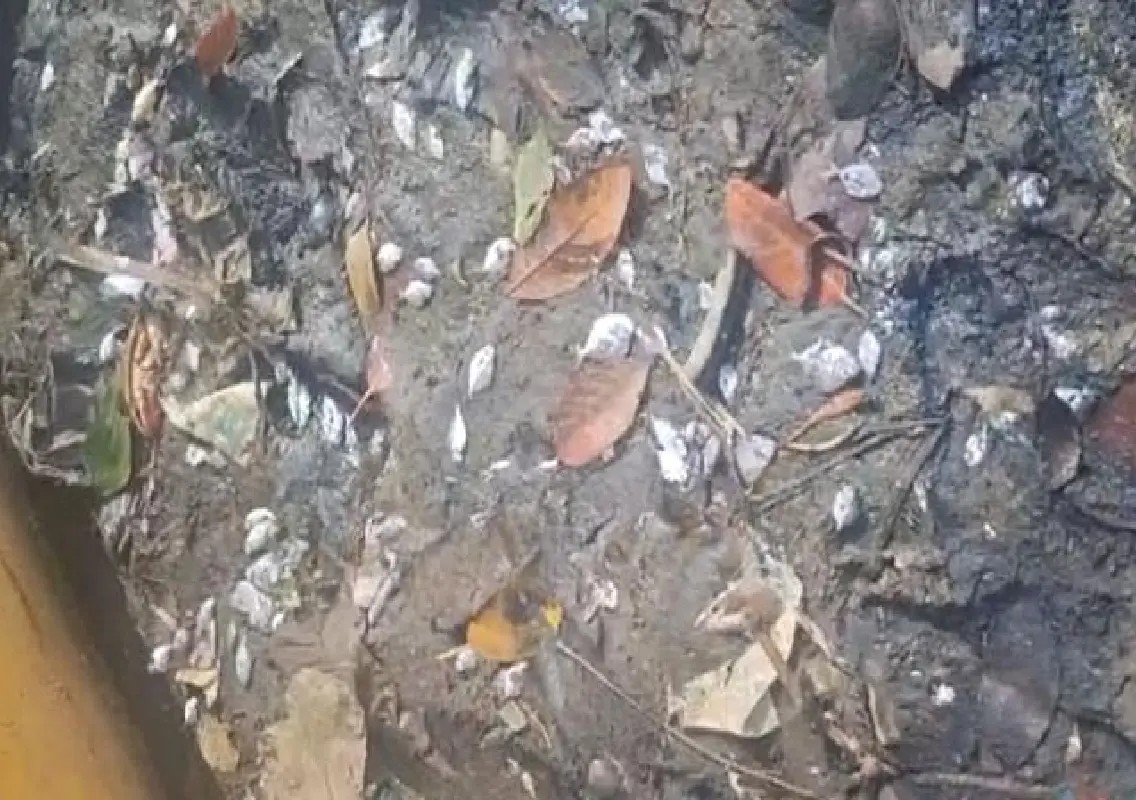


Mangaluru: Dead and semi-conscious fish were found floating along the banks and in the waters of the Phalguni river in Bengre, Sultan Battery and Bokkapatna areas on Saturday, triggering concerns over rising pollution levels in the river. Local fishermen, who noticed the fish while heading out for fishing early in the morning, suspect that chemical contamination in the water may have led to the incident.
The discovery has renewed concerns about the deteriorating health of the Phalguni river, which has faced increasing pollution from sewage discharge, industrial effluents and stagnant water conditions in recent months.
Fishermen report unusual fish deaths
According to local fishermen, several fish were found dead while many others appeared semi-conscious and struggled to swim. The incident was observed in multiple locations along the river, particularly near Bengre, Sultan Battery and Bokkapatna.
Fishermen believe the sudden deterioration in water quality may have affected oxygen levels and exposed aquatic life to harmful contaminants. They suspect that chemical pollutants accumulated in the river could have contributed to the deaths.
The sight of dead fish floating near the riverbanks raised alarm among residents and members of the fishing community, many of whom depend on the river for their livelihood.
Embankment linked to stagnant water problem
The incident comes amid ongoing work related to the bridge project connecting Bengre and Sultan Battery. As part of the project, an embankment had been constructed across a section of the river.
Following the arrival of the monsoon, authorities began removing the embankment to restore the natural flow of water. However, fishermen and environmental observers point out that for nearly four to five months, water remained stagnant between the embankment site and the Maravoor dam because of the obstruction.
The prolonged stagnation reportedly prevented proper circulation and flushing of pollutants, creating conditions favourable for water contamination.
Polluted discharge accumulated during summer
During the summer months, polluted discharge from industries, stormwater drains and sewage flowing from the municipal corporation’s sewage treatment plant accumulated in the stagnant stretch of the river.
Residents and fishermen reported that the water gradually turned dark in colour and emitted an unpleasant odour, indicating severe pollution. The lack of adequate water flow prevented contaminants from dispersing naturally, leading to a significant decline in water quality.
Environmental concerns had been raised earlier regarding the impact of untreated or partially treated wastewater entering the river system. The latest incident has intensified calls for stronger monitoring and enforcement measures.
Rainfall and renewed water flow may have triggered impact
Heavy rainfall over the past two days increased water flow in the river, while the ongoing removal of the embankment allowed water to move downstream more freely.
Fishermen said that the arrival of fresh water encouraged fish to move upstream. However, they believe that the accumulated pollutants and chemical contaminants present in the river may have affected the fish as they migrated through the polluted stretch.
According to local accounts, the contaminated water may have reduced oxygen availability and affected the fishes’ ability to breathe, leaving many semi-conscious and resulting in the death of several others.
The exact cause of the fish deaths is yet to be scientifically confirmed, but concerns over pollution remain central to the investigation.
Similar incidents reported in other areas
Fish deaths have previously been reported in several locations along the river system, particularly during the summer when water levels were low.
Areas such as Kuloor, Baikampady, Jokatte and Maravoor witnessed similar incidents in recent months. However, fishermen noted that this is the first time such large-scale fish deaths and distress have been observed in the Bengre and Sultan Battery regions.
The spread of the problem to new areas has heightened concerns among local communities and environmental activists about the overall health of the river ecosystem.
Authorities point to pollution and stagnant water
While fishermen suspect chemical contamination as the primary cause, officials from the Pollution Control Board have attributed the worsening condition to stagnant polluted water created by the bridge project’s embankment.
According to officials, the river became heavily contaminated due to the accumulation of sewage and other pollutants over several months. They stated that action has already been initiated against officials responsible for allowing untreated wastewater to enter the river.
Authorities are expected to continue monitoring water quality and assess the environmental impact of the incident while exploring measures to prevent similar occurrences in the future.
Conclusion
The discovery of dead and semi-conscious fish in the Phalguni river has highlighted growing concerns about pollution, sewage discharge and water management in Mangaluru. As investigations continue, local communities are calling for stricter pollution control measures and long-term solutions to protect the river ecosystem and the livelihoods dependent on it.