







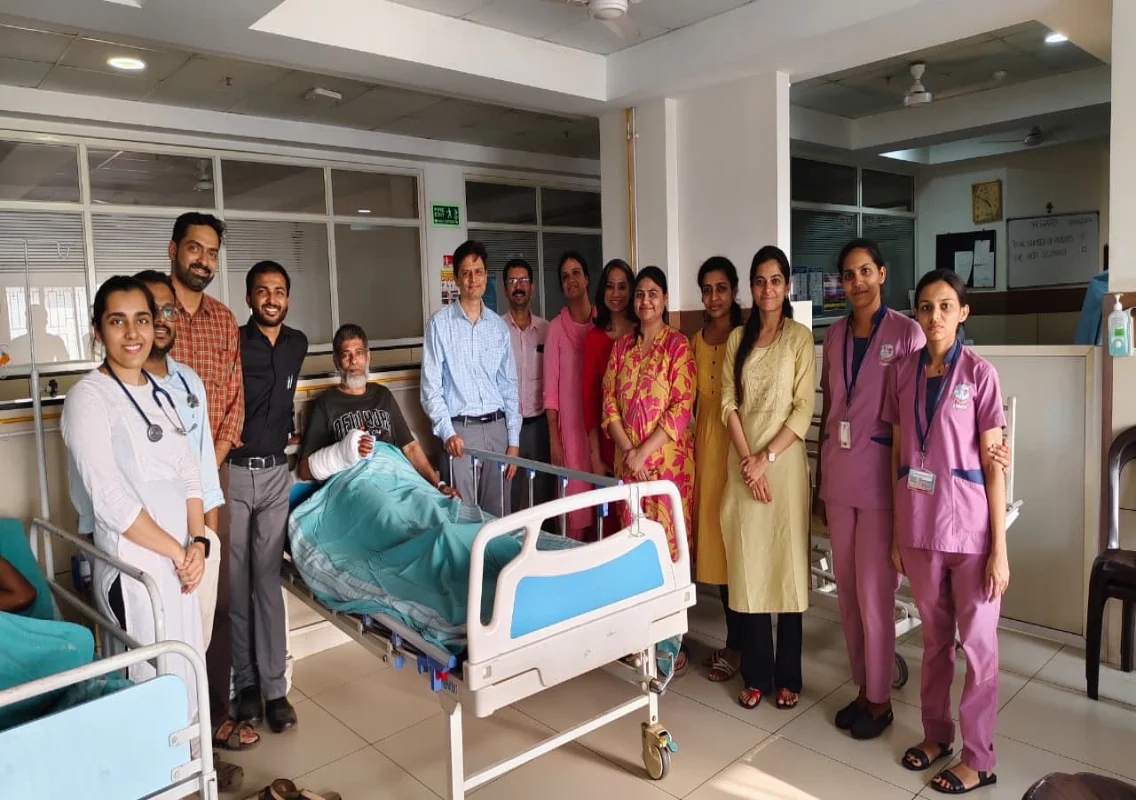


Mangaluru: The Plastic Surgery team at Father Muller Medical College Hospital successfully managed and restored the forearm of a 58-year-old NRI patient who suffered severe chemical burns following an accidental sulphuric acid spillage at his workplace in Dubai.
The patient presented with deep and extensive forearm injuries that required urgent and specialised intervention. Given the severity of the burns and the risk of functional loss, the medical team initiated immediate treatment to salvage the limb and restore mobility.
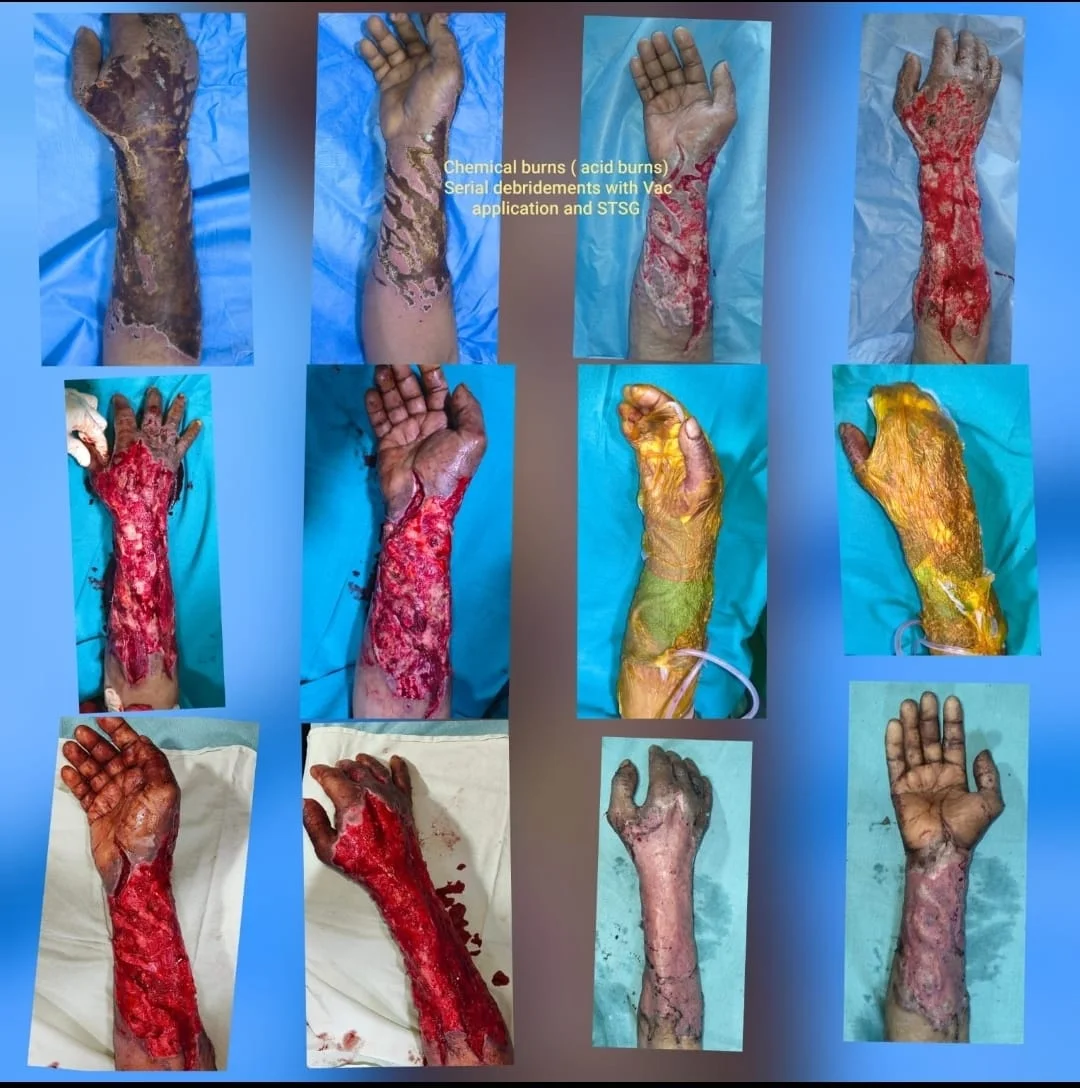
Advanced staged procedures
The Department of Plastic Surgery undertook a series of advanced, staged procedures. These included repeated surgical debridements to remove dead and infected tissue, application of VAC (vacuum-assisted closure) dressings to promote healing, and definitive skin grafting to restore damaged skin coverage.
The multidisciplinary approach ensured that infection was controlled, tissue viability preserved, and gradual recovery of function achieved. The coordinated efforts of the surgical and anaesthesia teams were critical in ensuring safe perioperative care and successful outcomes.
The patient expressed deep gratitude to the institution and the entire medical team for the timely, compassionate and dedicated care received during his recovery.
Expert team behind the success
The Plastic Surgery team comprised Professors and Consultant Plastic Surgeons Dr Aravind L Rao and Dr Satish Bhat, along with Dr Akanksha Rajpoot and Dr Karthik Aithal. They were supported by residents Dr Manasa (M.Ch), Dr Ragavi (M.Ch), Dr Chetna (M.Ch) and Dr Aheesh (M.S.).
The procedures were performed with strong anaesthesia support from Dr Vishma (Associate Professor), Dr Karthik (Assistant Professor), Dr Synol, Dr Amit and residents from the Department of Anaesthesia, ensuring comprehensive perioperative monitoring and patient safety.
Lifeline through skin donation
The Plastic Surgery Department also manages the Father Muller Rotary Skin Bank, which provides preserved donor skin for patients suffering from major burns and traumatic skin loss. Skin donation remains a critical support system for severe burn victims, significantly improving healing outcomes and survival rates.
Hospital authorities stated that such complex cases highlight the importance of specialised burn care facilities and multidisciplinary teamwork in managing life-altering injuries.