







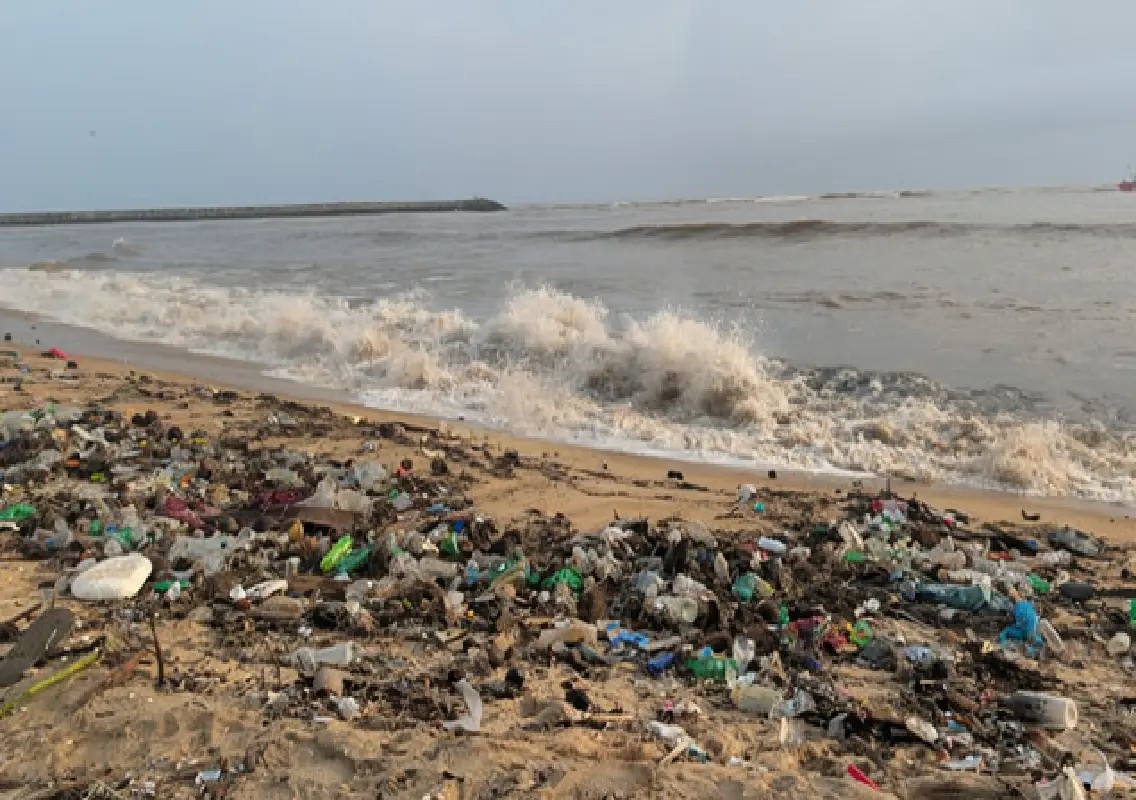


Mangaluru: Tonnes of floating waste have washed ashore at the Bengre Beach endpoint, turning the scenic coastal stretch into a dumping ground and raising concerns over marine pollution and the impact on the fragile shoreline ecosystem.
The beach, known for its picturesque views of the sea and its tranquil surroundings, is currently littered with plastic bottles, carry bags, food wrappers, flower offerings and other waste carried towards the shore by the waves. The accumulation has significantly affected the appearance of the coastline, leaving visitors confronted with piles of garbage instead of a clean seaside landscape.
The waste accumulation has also highlighted the continuing challenge of managing marine debris along Mangaluru’s coastline, particularly during periods of strong waves and changing sea conditions.
Plastic waste poses threat to marine ecosystem
While the garbage has affected the visual appeal of Bengre Beach, the environmental implications are more serious. A considerable portion of the waste consists of plastic and other non-biodegradable materials that can remain in the environment for long periods.
Plastic bottles, bags and food packaging can break down into smaller pieces and eventually become microplastics. These materials can enter the marine food chain and pose risks to fish, birds, turtles and other marine organisms.
The presence of flower offerings and other waste also points to the variety of materials entering the sea before being returned to the shoreline. Once carried into the ocean, such waste can travel considerable distances depending on tides, currents and weather conditions.
The accumulation at Bengre therefore serves as a visible reminder that marine pollution is not restricted to offshore waters. Waste entering the sea can eventually return to beaches and affect coastal communities and ecosystems.
Waves bring waste back to shore
The latest accumulation has occurred as floating debris has been pushed back towards the coastline by the sea. The endpoint at Bengre has consequently become a collection point for waste transported by the waves.
During periods of rough sea conditions, floating debris can be deposited in large quantities along particular sections of the coast. Without timely removal, the waste can remain on the beach, become scattered across a larger area or be carried back into the sea.
This makes regular monitoring particularly important. Cleaning operations carried out only after large quantities of waste accumulate may not be sufficient to prevent repeated pollution.
Clean-up and waste management needed
The growing quantity of garbage at Bengre Beach underlines the need for a systematic approach to coastal waste management.
Regular cleaning of the shoreline, especially after periods of strong waves or heavy rainfall, can help prevent the accumulation from becoming widespread. Authorities could also monitor vulnerable sections of the coast more frequently and ensure that collected waste is segregated and disposed of appropriately.
Preventing waste from reaching the sea in the first place is equally important. Better management of plastic waste in coastal settlements, markets and tourist areas can reduce the quantity of debris eventually carried into marine waters.
Public awareness also has a major role to play. Visitors and residents can help by avoiding single-use plastics, using designated waste bins and ensuring that offerings and other materials are not disposed of in ways that allow them to reach the sea.
Scenic destination faces environmental challenge
Bengre Beach is valued for its coastal landscape and views, making the visible accumulation of garbage particularly concerning for visitors and local residents.
A polluted shoreline can discourage tourists and affect the overall experience at a destination that depends on its natural surroundings. More importantly, continued accumulation of plastic waste can cause long-term damage to the coastal ecosystem.
The situation highlights the need to treat beach cleanliness as more than an aesthetic issue. Protecting the shoreline requires sustained efforts involving local authorities, residents, visitors and other stakeholders.
Immediate attention needed
The garbage currently gathered at Bengre Beach needs to be removed promptly to prevent the waste from being redistributed along the coastline or carried back into the sea.
At the same time, authorities need to identify the sources and movement of the floating debris and strengthen measures to prevent further accumulation. Regular inspections and timely clean-up operations could help ensure that the problem does not recur on the same scale.
For a coastal city such as Mangaluru, maintaining clean beaches is closely linked to protecting its marine environment. The waste-covered shoreline at Bengre is a reminder that the beauty of the coast can be preserved only through consistent waste management and responsible public behaviour.
With visitors continuing to frequent the beach throughout the year, immediate intervention is essential to restore the shoreline, protect marine life and preserve Bengre’s natural character.