







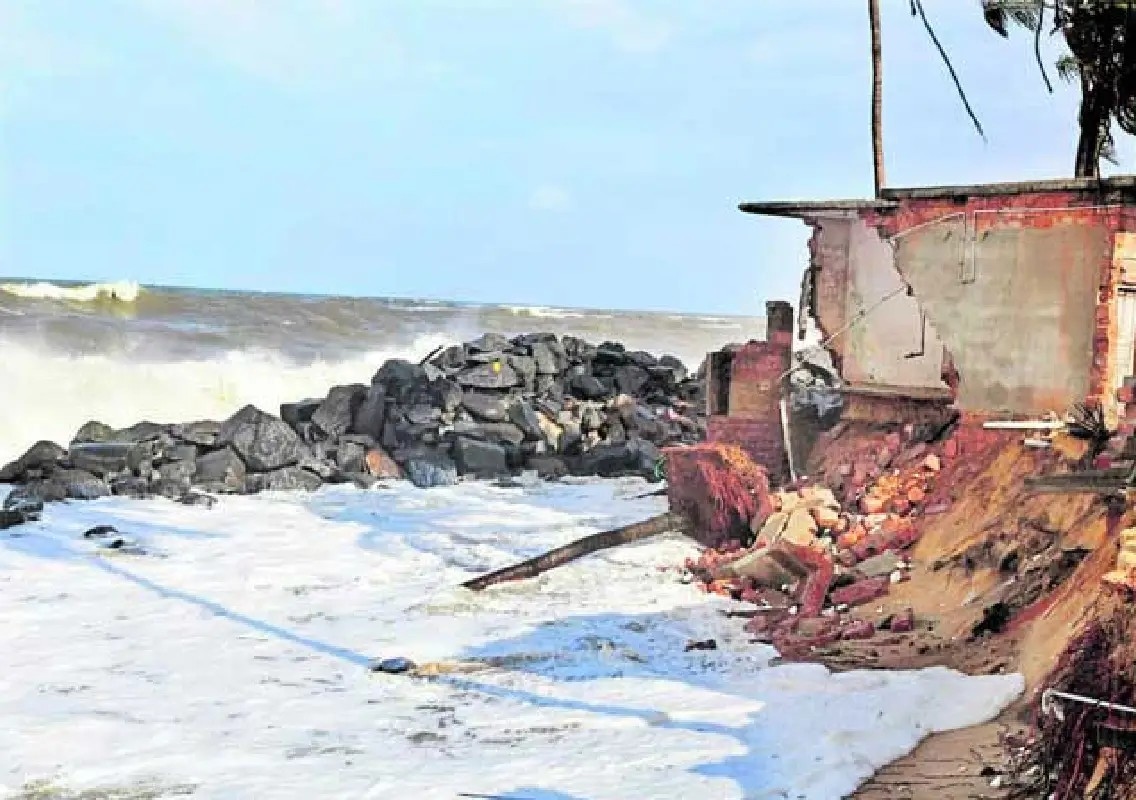


Mangaluru: After years of depending on temporary measures such as stone bunds and sandbags to tackle coastal erosion, the Karnataka government is preparing to introduce a long-term and environmentally sustainable shoreline protection project along the Dakshina Kannada coast.
The proposed initiative, estimated at around Rs 250 crore, will focus on scientific and nature-friendly methods to address coastal erosion while protecting the livelihoods of fishing communities and preserving the ecological character of the coastline.
Around 15 years ago, permanent coastal protection works were undertaken at selected locations in the district at a cost of nearly Rs 800 crore with assistance from the Asian Development Bank (ADB). The government is now seeking a more comprehensive approach through a new Shoreline Management Plan.
37.34-km coastline covered under plan
The Karnataka Water Transport Board is implementing the Shoreline Management Plan (SMP) under the theme ‘Our Coast, Our Lifeline: Protecting the Coast, Safeguarding Livelihoods’.
The plan covers a 37.34-km stretch of coastline in Dakshina Kannada district and seeks to address erosion through measures based on scientific assessment of local coastal conditions.
The project is being developed in accordance with directions issued by the National Green Tribunal (NGT) and the Coastal Regulation Zone (CRZ)-2019 regulations.
As part of the process, the National Centre for Sustainable Coastal Management (NCSCM), Chennai, carried out a detailed scientific study on coastal protection. The findings were subsequently submitted to the Karnataka State Coastal Zone Management Authority.
Scientific study guides coastal protection
The scientific assessment examined several factors contributing to coastal erosion in Dakshina Kannada.
These include wave intensity, wind patterns, cyclones, tidal surges, human-made structures, sand mining, river dams and urbanisation. Understanding the combined impact of these factors is expected to help authorities identify suitable protection measures for individual stretches of the coastline.
The study is intended to ensure that future coastal protection works are based on local environmental and physical conditions rather than relying on a uniform solution across all locations.
The Karnataka Water Transport Board has been entrusted with preparing the Detailed Project Report (DPR) based on the recommendations of the Shoreline Management Plan.
The final cost of the project and the exact nature of the proposed works will be determined after the DPR is completed.
Artificial reefs and green buffers proposed
One of the major features of the proposed initiative is the emphasis on environmentally friendly coastal protection methods.
Instead of depending entirely on conventional stone revetments, authorities are considering measures such as artificial reefs and green coastal buffers at suitable locations.
Panambur is among the locations where such nature-based interventions are being considered.
The objective is to protect vulnerable stretches from erosion while allowing natural coastal processes to continue as far as possible. The approach is also aimed at maintaining the environmental, economic and social balance of the coastal region.
Authorities believe that adopting measures compatible with natural coastal processes could help reduce long-term risks and costs while creating a safer coastline for future generations.
Twelve locations identified for priority works
According to the SMP-2024, 12 locations in Dakshina Kannada have been identified on a priority basis for coastal protection measures.
The identified stretches include Battapady, Uchila, Someshwara, Red Rock, Mulki, Haleangady, Sasihithlu, Ullal, Panambur, Hosabettu, Surathkal and the Surathkal Lighthouse area.
These locations have been identified based on the scientific assessment and the vulnerability of different stretches to coastal erosion.
The selection of priority locations is expected to help authorities focus resources on areas where erosion poses a greater threat to settlements, infrastructure, beaches and fishing-related activities.
Public consultations planned
Assistant engineer of the ports department Manohar Acharya said the Shoreline Management Plan would be implemented to address the coastal erosion problem in Dakshina Kannada.
He said the NCSCM had already submitted its scientific report and that a public consultation had been held at Ullal.
Similar consultations are planned at Surathkal and Mulki before the DPR is prepared and the estimated project cost is finalised.
Public consultations are expected to provide an opportunity for local residents and stakeholders, particularly fishing communities, to share their concerns and views regarding the proposed coastal protection measures.
Shift from temporary to long-term measures
Coastal erosion has remained a recurring concern along several stretches of Dakshina Kannada, particularly during the monsoon and periods of rough sea conditions. Temporary measures such as stone bunds and sandbags have often been used to provide immediate protection to vulnerable areas.
However, such interventions may need repeated maintenance and may not address the wider coastal processes responsible for erosion.
The proposed Shoreline Management Plan represents a shift towards a district-wide, scientifically planned approach. By combining coastal engineering with nature-based solutions, the government aims to protect vulnerable areas without unnecessarily disturbing the natural character of the shoreline.
The proposed Rs 250-crore project will take shape after completion of the DPR and further consultations. Once the technical and financial aspects are finalised, the initiative could mark a significant step towards creating a more sustainable coastal protection framework for Dakshina Kannada.