







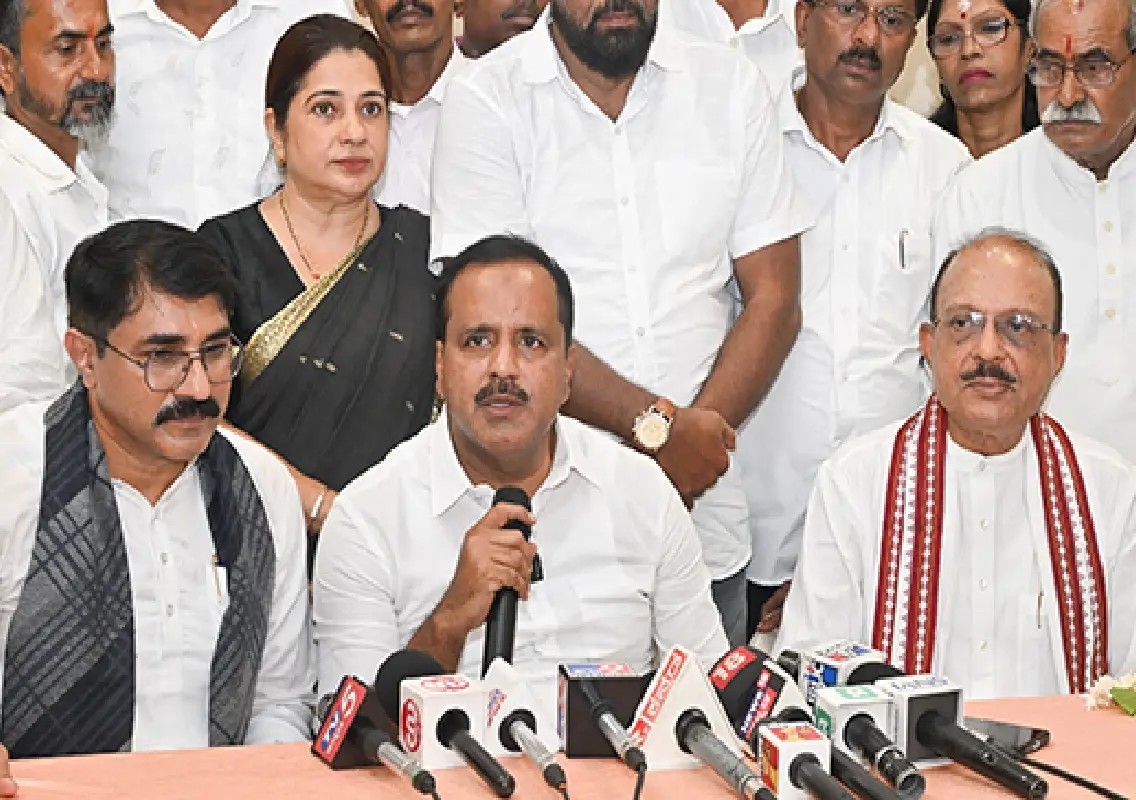


Mangaluru: Mangaluru witnessed Karnataka Health and Family Welfare Minister U.T. Khader outlining his priorities for the state’s healthcare sector during his first visit to the coastal city after assuming office. Emphasising the need for improved patient care and better hospital administration, the minister said strengthening government healthcare services and addressing systemic shortcomings would remain at the forefront of his agenda.
Speaking to reporters at Kudroli Gokarnanatheshwara Temple, Khader stated that the government would continue welfare schemes and healthcare initiatives introduced by previous administrations while focusing on enhancing the quality of services available to the public. During his visit, he also offered prayers at Ullal Syed Madani Dargah, St. Sebastian Church and Kudroli Temple, reflecting his commitment to engaging with people across communities.
Focus on monitoring government hospitals
Khader stressed that effective monitoring is crucial to improving the functioning of government hospitals across Karnataka. He said surprise inspections, including late-night visits, would be conducted to assess the availability of doctors, nursing staff and other healthcare workers, as well as to evaluate cleanliness and patient care standards.
According to the minister, regular inspections would help identify operational challenges and ensure accountability within the healthcare system. He noted that deficiencies often come to light only through direct observation and interaction with patients and staff.
To address local healthcare concerns, Khader announced that a review meeting with health officials from Dakshina Kannada district would be held on Monday. The meeting is expected to focus on grassroots-level issues affecting healthcare delivery and identify practical solutions to improve services.
Directions to health officials
The minister instructed district and taluk health officers to undertake regular visits to hospitals under their jurisdiction and ensure that issues are resolved without delay. He emphasised that healthcare administrators must remain actively involved in overseeing hospital operations and addressing public grievances.
Khader also underlined the importance of punctuality and professionalism among medical personnel. He said doctors working in government hospitals must carry out their responsibilities efficiently and adhere to scheduled duty hours to ensure uninterrupted patient care.
The minister observed that improving hospital management requires collective efforts from healthcare workers, administrators and government authorities. He reiterated that accountability at every level would be essential for delivering better healthcare outcomes.
Addressing shortage of specialist doctors
One of the key challenges facing government healthcare institutions is the shortage of specialist doctors. Responding to this issue, Khader said external specialists could be engaged wherever vacancies or shortages exist, particularly in maternity hospitals, child-care centres and community health facilities that require specialised services.
He recalled that a similar model had been successfully implemented during his earlier tenure as Health Minister. At that time, specialist shortages at the Ullal Government Hospital were addressed by bringing in external medical experts, leading to improved healthcare services for local residents.
The minister said the government would adopt a practical approach to ensure patients receive timely treatment, regardless of whether services are provided directly by government doctors or through collaboration with nearby medical colleges and healthcare institutions.
Quality healthcare remains top priority
Reiterating his commitment to public welfare, Khader said the primary objective is to ensure that citizens receive quality healthcare without unnecessary delays or inconvenience.
“The priority is to ensure that people receive quality healthcare. Whether the service is provided by a government doctor or with support from nearby medical colleges is secondary,” he said.
The minister indicated that improving healthcare accessibility, reducing staffing gaps and strengthening hospital infrastructure would be central to the government’s efforts in the coming months.
Healthcare experts have often pointed out that shortages of specialists and uneven service delivery remain major challenges in several government hospitals. Khader’s emphasis on monitoring, accountability and collaborative solutions is expected to play a significant role in addressing these concerns.
District in-charge minister decision left to Chief Minister
Responding to questions regarding the appointment of the Dakshina Kannada district in-charge minister, Khader said the decision rests entirely with the Chief Minister. He stated that he would willingly accept any responsibility assigned by the party leadership.
Khader noted that he had previously served as district in-charge minister for Dakshina Kannada, Kolar and Chamarajanagar districts and would extend full cooperation irrespective of who is chosen for the position.
His remarks signalled a willingness to work collectively for the district’s development while maintaining focus on his responsibilities in the health department.
Conclusion
Khader’s visit to Mangaluru highlighted his commitment to strengthening Karnataka’s public healthcare system through better monitoring, improved accountability and innovative solutions to staffing challenges. With a renewed focus on patient care and hospital management, the minister’s initiatives are expected to influence healthcare delivery across the state. The upcoming review meetings and hospital inspections will be closely watched as indicators of how the new administration plans to implement its healthcare reforms.