







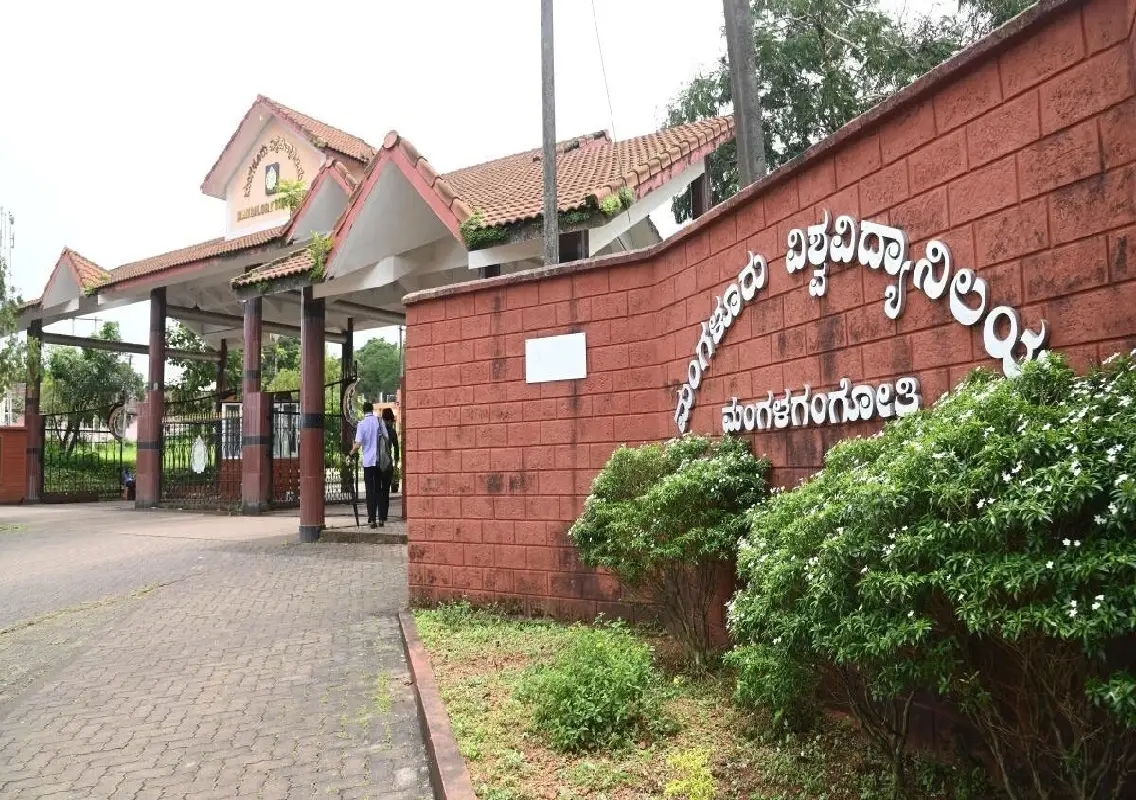


Mangaluru: Cash-strapped Mangalore University (MU) has submitted a proposal to the state government seeking permission to hand over the incomplete international hostel project on its campus to an interested organisation under the public-private partnership (PPP) model, citing severe fund constraints and limited demand from international students.
The move comes nearly a decade after construction of the international hostel was initiated during the tenure of former vice-chancellor K Byrappa. The project envisages a modern hostel facility with 300 rooms, attached washrooms and a common kitchen. Despite substantial investment, the university has been unable to complete the project due to lack of funds.
Project stalled due to financial crunch
University sources said MU has already spent nearly Rs 48 crore on the hostel project. However, with only about 60 to 70 per cent of the construction completed, the remaining work is estimated to require an additional Rs 25 crore. The prolonged delay has resulted in cost escalation and mounting liabilities.
Adding to the financial burden, a contractor’s bill amounting to nearly Rs 15 crore is yet to be cleared. With no immediate sources of funding and limited internal revenue, the university has found it increasingly difficult to proceed with the project on its own.
Proposal sent to state government
Vice-chancellor P L Dharma said the university had formally sent a proposal to the state government seeking approval to hand over the project to a third party under the PPP model. He clarified that the university does not have the authority to take a unilateral decision on the matter.
“The university alone cannot decide about handing over the hostel to a third party. A proposal has been sent to the government, and the future course of action will depend entirely on the government’s decision,” he said.
The state government is yet to take a call on the proposal.
Limited demand from international students
University officials also pointed out that MU does not currently have a sufficient number of international students to justify completing and operating such a large hostel facility independently. The shortfall in international enrolment has further weakened the case for investing additional public funds into the project at this stage.
By adopting the PPP model, the university hopes that a private partner could complete the construction, maintain the facility and possibly repurpose parts of the hostel to ensure financial viability, while still meeting the institution’s requirements.
Hope pinned on state budget
The vice-chancellor said the university was also hoping that some funds might be allocated for the project in the upcoming state budget, which could influence the final decision.
“As of now, 60 to 70 per cent of the work has been completed, and it still requires huge funds to finish. We are also hoping that some funds are allocated during the upcoming state budget,” Dharma said.
However, officials acknowledged that given competing priorities and fiscal pressures, there is no certainty about receiving adequate budgetary support.
Evaluation centre plan may not materialise
Dharma also revealed that there had been plans to allocate a dedicated floor in the hostel building for evaluation-related activities. He said the idea was conceived during his tenure as registrar (evaluation), with the intention of setting up a centralised evaluation centre.
“When I was registrar (evaluation), we had planned an evaluation centre. However, it may not materialise due to fund constraints and a possible shift towards digital evaluation,” he said.
Conclusion
The stalled international hostel project has become a symbol of the financial challenges faced by public universities. With nearly Rs 48 crore already invested and significant work still pending, MU is now looking to the state government for a policy decision that could determine whether the facility is completed through public funding or revived through private participation under the PPP model.