







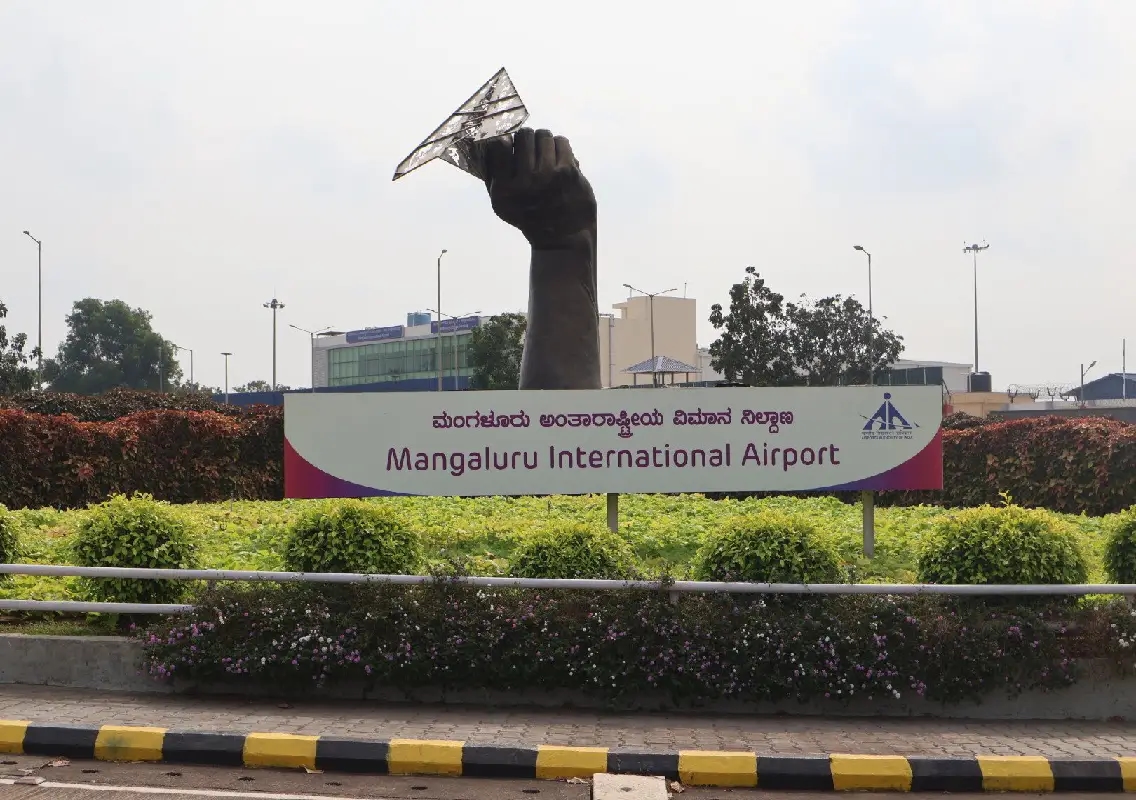


Mangaluru: Mangaluru International Airport Limited has been awarded the highest ‘Zero Waste to Landfill’ certification by the Confederation of Indian Industry, marking a significant milestone in its sustainability journey and reinforcing its commitment to environmentally responsible airport operations.
The airport received the prestigious Platinum – Class I rating after an extensive audit conducted by the CII-ITC Centre of Excellence for Sustainable Development. The evaluation found that the airport successfully diverts more than 99 per cent of its waste away from landfills, placing it among the leading sustainable aviation facilities in the country.
Rigorous audit validates waste management practices
The certification process involved a detailed assessment of the airport’s waste management systems, including segregation, collection, recycling processes, and adherence to environmental regulations. Auditors examined how waste is handled at every stage—from generation at terminals to final disposal or reuse.
Officials stated that achieving over 99 per cent diversion required a combination of infrastructure upgrades, staff training, and strict compliance protocols. Waste streams such as plastics, food waste, paper, and hazardous materials are carefully segregated and processed through designated channels.
The audit also evaluated documentation, monitoring systems, and reporting practices to ensure transparency and consistency in operations.
5R framework drives sustainability goals
Airport authorities attributed the achievement to the systematic implementation of the 5R framework—Refuse, Reduce, Reuse, Repurpose, and Recycle—across all facilities. This approach focuses not only on managing waste but also on minimising its generation at the source.
Efforts under this framework include reducing single-use plastics within airport premises, encouraging vendors to adopt eco-friendly packaging, and promoting reuse of materials wherever possible. Organic waste is processed through composting systems, while recyclable materials are channelled to authorised recycling units.
Repurposing initiatives have also been introduced, converting waste into usable products and reducing dependency on external disposal systems. These combined efforts have significantly lowered the environmental footprint of airport operations.
Sustainability gains momentum in aviation sector
The recognition comes at a time when India’s aviation sector is witnessing rapid growth in passenger traffic, putting additional pressure on infrastructure and environmental resources. Airports are increasingly being evaluated not only on operational efficiency but also on their sustainability practices.
Experts note that certifications such as ‘Zero Waste to Landfill’ provide measurable benchmarks for environmental performance. They also encourage airports to adopt best practices and invest in green technologies.
With stricter environmental norms and global climate commitments shaping policy decisions, sustainable infrastructure is becoming a key priority for both regulators and operators.
A model for future infrastructure development
By achieving the highest level of certification, Mangaluru International Airport sets an example for other mid-sized airports aiming to integrate sustainability into their core operations. The initiative demonstrates that environmental responsibility can coexist with efficiency and growth.
Industry observers believe that such recognitions could influence future infrastructure planning, funding decisions, and policy frameworks, particularly as India expands its aviation network under regional connectivity schemes.
Conclusion
The Platinum – Class I ‘Zero Waste to Landfill’ certification highlights Mangaluru International Airport’s proactive approach to environmental management. As sustainability becomes central to infrastructure development, the airport’s achievement reflects a broader shift towards greener, more responsible growth in India’s aviation sector.