







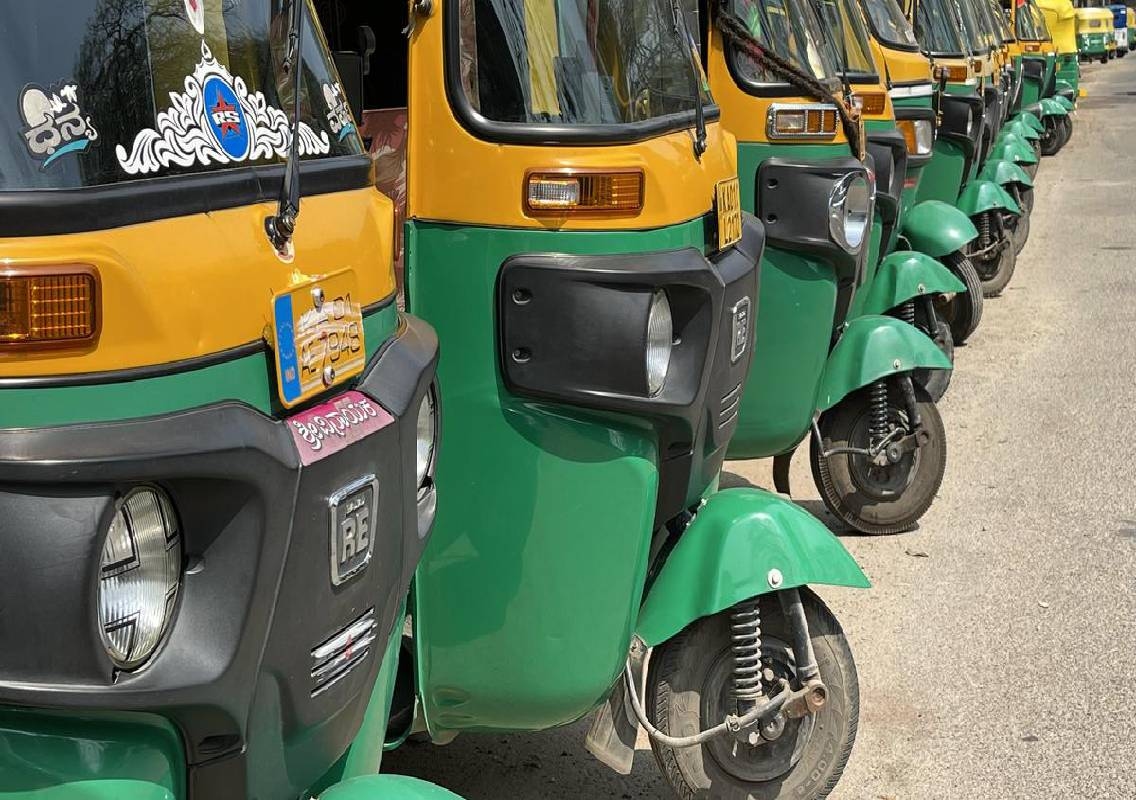


Mangaluru: Autorickshaw rides in Dakshina Kannada have become costlier from September 1, with the Regional Transport Authority (RTA) approving a revised fare structure. The minimum fare has been increased from ₹35 to ₹40 for the first 1.5 km, while the charge for every additional kilometre has been fixed at ₹20.
The revised rates apply across Dakshina Kannada, including Mangaluru, and come after autorickshaw drivers sought a substantial increase citing rising operating and maintenance costs. The previous fare revision in the district was implemented in October 2022.
The latest revision is intended to balance the financial pressures faced by autorickshaw drivers with the interests of daily commuters. The RTA considered the demands raised by driver representatives but approved a smaller increase than what the associations had sought.
Minimum fare rises to ₹40
Under the revised fare structure, passengers will have to pay a minimum of ₹40 for the first 1.5 km. The earlier minimum fare was ₹35.
After the initial 1.5 km, the fare will be ₹20 for every additional kilometre. This represents an increase from the previous rate of ₹17 per kilometre.
For short-distance commuters, the increase means that even a brief autorickshaw journey will now cost at least ₹40 when the trip falls within the initial 1.5-km limit.
The revised rates are expected to affect a large number of commuters in Mangaluru, where autorickshaws are widely used for last-mile connectivity between residential areas, bus stops, railway stations, markets, workplaces and other parts of the city.
Waiting charges revised
The RTA has also introduced revised provisions for waiting charges.
Passengers will not have to pay any waiting charge for the first 10 minutes. After that, a waiting charge of ₹5 can be collected for the subsequent 15 minutes.
The change provides a defined structure for waiting charges and is intended to reduce uncertainty for both passengers and drivers when an autorickshaw has to remain stationary during a journey.
Commuters may therefore need to keep the revised waiting provisions in mind, particularly when travelling during periods of heavy traffic or when making stops along a route.
New luggage charges
The revised tariff also specifies how luggage charges should be applied.
Passengers can carry up to 20 kg of luggage without paying an additional charge. For every additional 20 kg, the driver can collect ₹5.
The provision is particularly relevant for passengers travelling to and from railway stations, bus terminals and other transport hubs with heavier baggage.
The specified limit also gives passengers a clearer basis for understanding when an additional luggage charge can be imposed.
Night journeys to cost more
Autorickshaw passengers travelling between 10 pm and 5 am will be permitted to be charged 1.5 times the fare shown on the meter.
This provision continues to recognise the additional costs and challenges associated with operating autorickshaws during late-night hours. Passengers travelling at night should therefore be prepared for a higher fare than the standard daytime meter rate.
The applicable night-time multiplier is particularly important for commuters who depend on autorickshaws after the city’s regular public transport options become less frequent.
Drivers had sought a bigger increase
The fare revision follows a consultation meeting convened by the Dakshina Kannada RTA on July 9.
During discussions, autorickshaw drivers and their representatives pointed to rising expenditure on fuel, spare parts, repairs and other operational requirements. They sought a larger increase, including a proposal to raise the minimum fare from ₹35 to ₹50.
Driver representatives had argued that the existing tariff was not adequate to meet increasing operating costs. In June, autorickshaw associations had also demanded a minimum fare of ₹50 and ₹25 for every additional kilometre.
However, the RTA did not accept the full demand. Instead, it approved a ₹5 increase in the minimum fare and revised the per-kilometre charge.
RTA seeks balance between drivers and passengers
The decision reflects the administration’s attempt to balance the demands of autorickshaw drivers with the affordability concerns of passengers.
Dakshina Kannada Deputy Commissioner and RTA chairman Darshan HV said a steep increase could place an additional burden on commuters and potentially encourage some passengers to shift to other forms of public transport. Such a shift could also affect the earnings of autorickshaw drivers, according to the administration.
The approach has resulted in a moderate increase rather than the ₹15 hike in the minimum fare sought by drivers.
For commuters, however, the revised fare will still increase the cost of everyday short-distance travel. The impact is likely to be more noticeable for people who regularly use autorickshaws for multiple trips each day.
Meters must be recalibrated
The RTA has directed autorickshaw owners and drivers to have their fare meters recalibrated and sealed according to the new tariff.
Drivers have also been instructed to prominently display the revised fare structure inside their vehicles.
The instructions are significant because the meter reading is expected to reflect the officially approved tariff. Displaying the new fare structure can also help passengers understand the applicable charges and identify discrepancies.
The implementation of the revised rates will therefore depend not only on the new tariff but also on compliance by autorickshaw operators.
Previous fare revision was in 2022
The latest increase comes nearly four years after the previous revision of autorickshaw fares in Dakshina Kannada.
The earlier revision was implemented on October 27, 2022. Since then, operating expenses have changed, with drivers pointing to higher costs associated with fuel, maintenance, spare parts, insurance and other requirements.
The gap between the two revisions was one of the factors behind renewed demands from autorickshaw associations for a revision.
The administration has now responded by approving a new tariff while keeping the increase below the level sought by driver representatives.
What passengers need to know
From September 1, commuters in Dakshina Kannada should keep the following revised charges in mind:
- Minimum fare: ₹40 for the first 1.5 km
- Additional distance: ₹20 for every kilometre after 1.5 km
- First 10 minutes of waiting: No charge
- Next 15 minutes of waiting: ₹5
- Luggage: No charge up to 20 kg; ₹5 for every additional 20 kg
- Night fare: 1.5 times the meter fare between 10 pm and 5 am
The revised structure applies to autorickshaw services operating in the district.
Impact on daily commuters
The fare revision is likely to have its biggest impact on frequent autorickshaw users. Students, office workers, senior citizens and residents who rely on autos for short-distance connectivity may see their daily travel expenses rise.
At the same time, the revision provides autorickshaw drivers with some relief from increasing operational expenses. The challenge for the administration will be ensuring that the revised fares are followed consistently and that commuters are not charged amounts beyond the approved tariff.
Clear display of fare charts and properly calibrated meters will be important in this regard.
Conclusion
The revised autorickshaw fares in Dakshina Kannada seek to address rising operating costs while limiting the burden on commuters. With the minimum fare now at ₹40 and additional charges clearly specified, both passengers and drivers will need to follow the new tariff from September 1.