







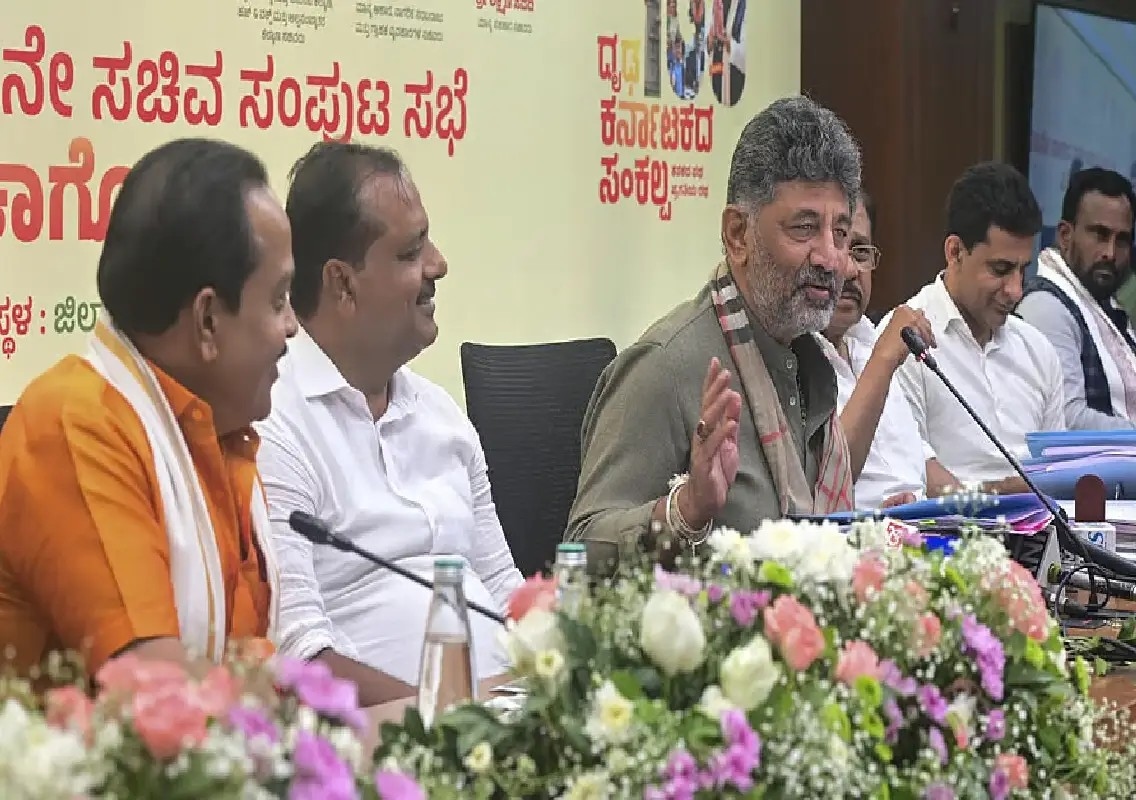


Mangaluru: The recent Cabinet meeting held in Mangaluru has renewed attention on the Karnataka government’s efforts to take decision-making beyond Bengaluru and address region-specific development priorities.
Cabinet meetings have previously been held outside the state capital, including in Belagavi, Kalaburagi and Male Mahadeshwara Hills. The Mangaluru meeting has added momentum to the discussion on decentralising governance and giving regional issues greater space in the state’s policy-making process.
Taking governance beyond Bengaluru
Holding Cabinet meetings in different parts of Karnataka allows ministers and officials to engage more directly with regional priorities. The approach also provides an opportunity for local representatives and communities to place issues before the government at the highest level.
Chief Minister D K Shivakumar has proposed holding 10 to 12 Cabinet meetings across the state. If implemented, the initiative could make district-level concerns a more regular component of Cabinet deliberations.
The Mangaluru meeting has also been linked to the government’s broader ‘Beyond Bengaluru’ approach, which seeks to encourage economic activity, infrastructure development and investment outside the state capital.
Major projects proposed for coastal Karnataka
The Cabinet approved projects and proposals involving a reported investment of Rs 32,611 crore. The package includes initiatives covering coastal infrastructure, rural development, healthcare, tourism and public services.
Among the proposals is a 343-km coastal ferry system aimed at improving connectivity along the coastline. The Cabinet also approved the Rs 6,925-crore Manki multipurpose port and shipyard project.
A feasibility study for a Mangaluru water metro has also been proposed, while the expansion of Karwar airport is among the other infrastructure-related initiatives.
The proposals indicate a focus on improving transportation and logistics infrastructure along the coast while supporting potential growth in tourism and maritime-linked activities.
Healthcare and education proposals
Healthcare infrastructure also featured among the proposals discussed in connection with coastal Karnataka.
Projects involving Kidwai and Jayadeva facilities in Mangaluru have been proposed, while Rs 425 crore has been allocated for the Puttur Medical College.
Such investments are expected to expand healthcare infrastructure and improve access to specialised medical services in the region.
Tourism and blue economy initiatives
The Cabinet meeting also brought attention to the economic potential of coastal and Malnad regions.
A new Coastal-Malnad Karnataka Tourism Policy has been proposed, with the objective of developing the region’s tourism potential. The proposed fisheries and blue economy university is another initiative focused on sectors linked to the coastline and marine resources.
The proposals come at a time when coastal Karnataka is seeking greater investment in tourism, fisheries, maritime infrastructure and other sectors connected to its geographic location.
Tulu recognition and district renaming proposal
The Cabinet’s decision to recognise Tulu as an additional administrative language in Dakshina Kannada and Udupi addresses a longstanding demand from sections of the region.
The decision has cultural significance for Tulu-speaking communities and is expected to support the use and promotion of the language in administration in the two coastal districts.
Another proposal is the renaming of Dakshina Kannada as Mangaluru district. The proposal will now go through a public consultation process before further action is taken.
Both decisions have generated considerable discussion in the coastal region, with their administrative and cultural implications likely to remain part of the public discourse.
Political context of the Cabinet meeting
The Cabinet meeting was preceded by a roadshow through Mangaluru and other public outreach activities involving the Chief Minister.
The political context of the visit was also significant. In the 2023 Karnataka Assembly elections, the Congress won two of the 13 Assembly constituencies across Dakshina Kannada and Udupi, while the BJP won 11. The BJP also holds both Lok Sabha constituencies in the two districts.
With the next Assembly election scheduled for 2028, the government’s increased engagement with coastal Karnataka will therefore take place against an important political backdrop.
Development and social stability
Coastal Karnataka has historically been associated with entrepreneurship, trade and overseas commercial networks. The region has also developed significant activity in sectors such as fisheries, education, healthcare, tourism and emerging technology.
At the same time, communal tensions and social conflicts in parts of the coastal region have frequently attracted attention. For businesses and investors, infrastructure, skilled talent and a stable social environment are among the factors that influence long-term economic activity.
The government’s proposals announced around the Mangaluru Cabinet meeting therefore extend beyond individual infrastructure projects. Their eventual impact will depend on how effectively the projects are funded, implemented and monitored.
Implementation will determine impact
The Cabinet meeting has placed a substantial set of development proposals and regional issues on the government’s agenda. Taking Cabinet deliberations to different parts of Karnataka can also provide a mechanism for bringing local concerns directly into the state’s decision-making process.
For coastal Karnataka, the next stage will be the implementation of the announced projects and policies, along with continued public scrutiny of their progress.
The Mangaluru meeting has given fresh attention to the ‘Beyond Bengaluru’ approach. Whether that translates into sustained regional development will ultimately depend on the delivery of projects, timely decisions and effective implementation on the ground.