







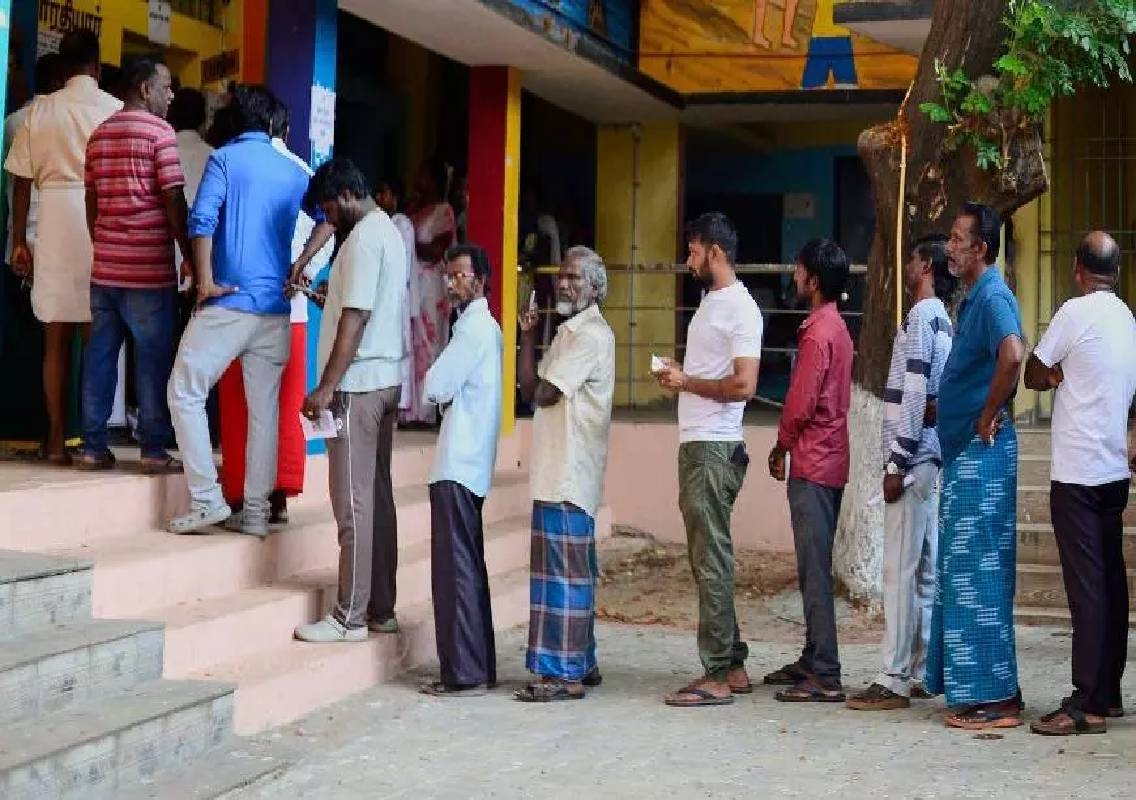


Mangaluru: Hearings under the Special Intensive Revision (SIR) of electoral rolls in Dakshina Kannada have brought to light several discrepancies in voter records, with some electors questioning why errors that existed in official databases were not identified during the initial enumeration process.
The hearings, which began across Karnataka on September 5, are part of the claims and objections stage of the SIR exercise. In Dakshina Kannada, around 1.5 lakh voters have received notices over discrepancies involving names, age details, family relationships, previous electoral-roll mapping and categories such as absent, shifted, deceased or duplicate.
The process has prompted questions among voters about the accuracy of the enumeration exercise and the subsequent verification mechanism. At the same time, election officials have maintained that notices are intended to provide voters an opportunity to establish their details and that receiving a notice does not automatically mean deletion from the electoral roll.
Around 1.5 lakh voters receive notices
Dakshina Kannada had 16,46,387 voters in the draft electoral roll prepared under the SIR process. Notices were generated for around 1,50,128 voters for various discrepancies, according to data reported on September 20.
The discrepancies include differences in parents’ ages, progeny age gaps, grandparent age differences, voters not mapped with the previous SIR, name mismatches and ASDD categories covering absent, shifted, deceased and duplicate cases.
As of September 20, officials had delivered 1,46,855 notices, while 3,274 were still pending delivery. Belthangady Assembly constituency completed the generation and delivery of all 12,454 notices issued there.
Mangaluru City South recorded the highest number of discrepancy notices in the district, with 35,182 voters flagged out of 2,06,493 electors in the draft roll. Mangaluru City North had 27,911 notices generated against its 2,23,296 voters.
Why are voters being called for hearings?
The SIR process involves checking present electoral records against older electoral data, including the 2002 roll. When the system identifies a mismatch or fails to establish a connection between records, the voter may be placed in a discrepancy category.
Common issues include differences in spelling, changes in names, variations in parents’ names and inconsistencies in age or family relationships.
Some voters have questioned why such discrepancies were not corrected or identified when enumeration forms were being collected.
The issue is significant because the enumeration stage involved Booth Level Officers visiting voters and collecting information before the draft roll was prepared. The emergence of large numbers of discrepancies during the subsequent verification stage has therefore led some electors to seek clarity on how the original data was recorded and checked.
Voters report difficulties during verification
Reports from Dakshina Kannada indicate that voters have faced practical difficulties while attending hearings and submitting supporting documents.
In one case reported from Ujire, a voter said he was asked to provide documents because his name differed from the version recorded in the 2002 electoral roll. He said the difference arose after he worked abroad and added parts to his name.
Another family member reportedly faced a similar issue involving expanded initials in official records. After submitting documents, the voters said they did not receive immediate confirmation that their records had been accepted for inclusion in the final roll.
The concerns have added to the uncertainty among voters who find their names in the draft roll but subsequently receive discrepancy notices.
Technical issues add to the burden
The verification process has also faced technical challenges in Mangaluru.
Earlier reports said server problems and poor internet connectivity were slowing down document uploads during hearings. The problem was reported to be particularly serious in areas within about two kilometres of the district prison, where mobile network jammers installed inside the prison were affecting connectivity.
In one reported instance, a voter attending a hearing at Bokkapatna Government Primary School had to wait for more than an hour because of server problems while officials attempted to upload documents.
Booth Level Officers also reported connectivity problems in parts of the city, while officials were required to upload supporting documents as part of the hearing process.
Dakshina Kannada had more than 18 lakh electors at the start
The scale of the SIR exercise becomes clearer from the district’s enumeration data.
As of June 16, Dakshina Kannada had 18,03,766 electors, and enumeration forms were distributed to all of them. Of these, 16,46,387 forms were digitised, accounting for 91.27 per cent.
Around 1,57,379 electors, or 8.73 per cent, were marked under the ASD category. The district data included 11,124 absent voters, 82,988 permanently migrated voters, 45,318 deceased voters and 15,395 voters registered elsewhere.
The figures subsequently fed into the draft-roll verification process, resulting in notices being issued to voters whose records required clarification.
Officials say a notice does not mean automatic deletion
Election officials have repeatedly clarified that receiving a discrepancy notice does not automatically mean that a voter’s name will be removed.
Dakshina Kannada Deputy Commissioner Darshan H.V. had earlier said voters whose names appeared in earlier electoral rolls but were left out of the draft roll because of non-mapping, changes in names or other discrepancies should not panic.
According to the district administration, eligible voters will be included in the final roll after verification of the required documents.
At the State level, election authorities have also explained that the notice system is intended to identify records that require verification rather than automatically exclude voters.
Hearings and documents form the next stage
Under the SIR procedure, voters receiving notices are required to check the discrepancy mentioned in the notice and provide the documents specified by election authorities.
The documents are photographed and uploaded by officials, after which they are returned to the voter. For certain categories, an appearance before the Electoral Registration Officer or Assistant Electoral Registration Officer is required.
The process has since been modified for vulnerable electors. The Karnataka Chief Electoral Officer’s office has allowed adult family members to appear on behalf of senior citizens, persons with disabilities, sick voters and overseas electors. The move followed concerns over the difficulties some voters faced in attending hearings personally.
Final electoral roll due on October 27
The SIR exercise is now moving towards the final stages of verification. The claims and objections process is scheduled to continue through October 22, while the final electoral roll is expected to be published on October 27, 2026.
For Dakshina Kannada voters, the ongoing hearings provide an opportunity to correct discrepancies before the final list is prepared.
The questions emerging from Mangaluru and other parts of the district also underline the importance of accurate enumeration, timely communication and accessible verification mechanisms. While election authorities have maintained that the exercise is aimed at cleaning and updating electoral rolls, voters whose records have been flagged are seeking clarity on how discrepancies arose and assurance that eligible names will not be left out because of clerical, mapping or technical errors.