







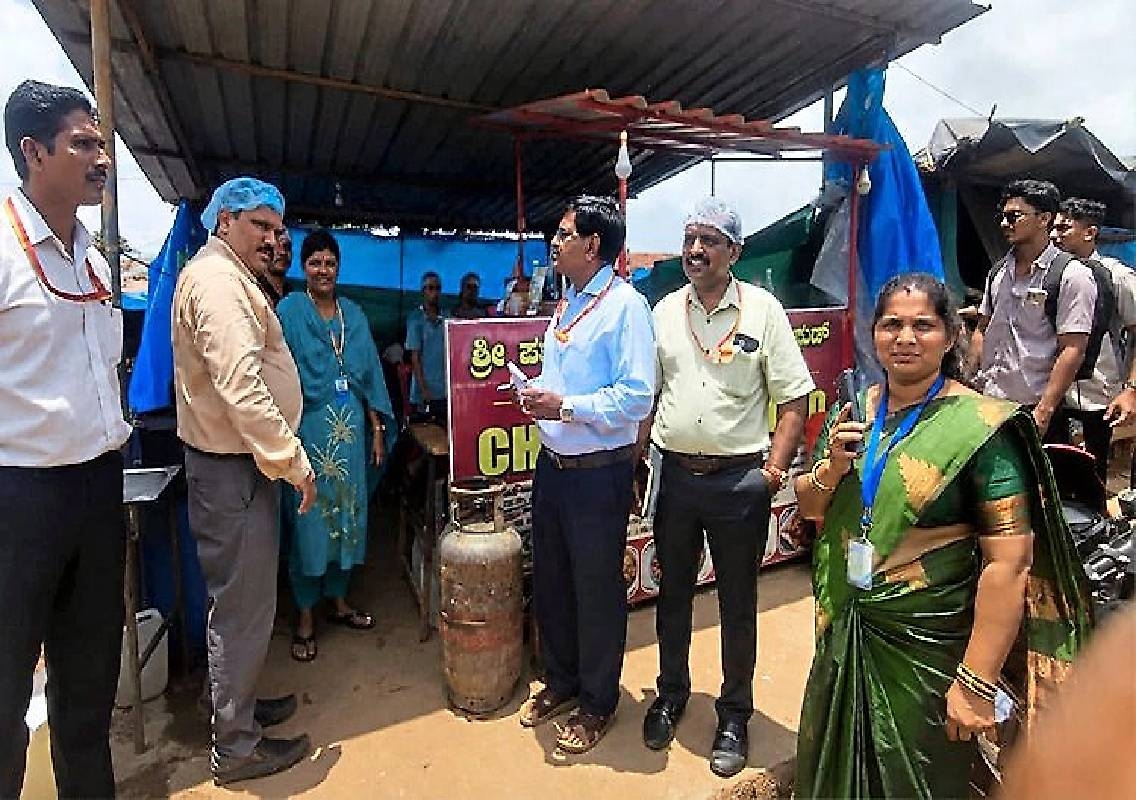


Moodbidri: Officials from the Health Department, Moodbidri Municipality and the Food Safety and Standards Authority of India (FSSAI) conducted an inspection at the Bedra weekly market following allegations of adulteration and the use of chemicals in food products. Samples of various food items were collected during the operation for further examination.
The inspection covered several parts of the weekly market, including vegetable and fruit stalls and fast-food centres. Officials checked the cleanliness of food products and assessed whether vendors were following basic food safety and hygiene requirements.
The operation comes amid concerns over the quality and safety of food items being sold in local markets. The collection of samples is expected to help authorities determine whether any of the products contain substances that could pose a health risk to consumers.
Officials inspect food stalls
During the inspection, officials visited different stalls selling vegetables, fruits and other food products at the weekly market.
The team examined the condition in which food items were being displayed and handled. Officials also checked the cleanliness of the surrounding areas and looked at food safety practices followed by vendors.
Fast-food centres operating in the market were also inspected.
Such establishments require particular attention because prepared food can be exposed to contamination if it is not stored, handled or prepared under hygienic conditions.
The inspection team collected samples from selected locations where officials had concerns regarding food quality or safety.
Samples collected for testing
Samples of various food products were collected during the operation.
The samples will help authorities assess whether the food items comply with prescribed safety and quality standards.
Laboratory examination is important in cases where adulteration or the presence of prohibited chemicals is suspected, as visual inspection alone may not always establish whether a food product is unsafe.
The test results can provide authorities with scientific evidence regarding the quality and composition of the collected samples.
If violations are established, further action can be taken under the applicable food safety regulations.
Focus on adulteration concerns
The inspection was conducted against the backdrop of allegations involving adulteration and chemical use in food products.
Food adulteration can involve the addition or substitution of substances that reduce the quality of food or potentially make it unsafe for consumption.
Authorities regularly conduct inspections and collect samples when complaints or concerns are raised regarding food quality.
The Moodbidri operation is part of this broader effort to ensure that consumers receive food products that meet prescribed safety standards.
Vegetable and fruit stalls checked
Vegetable and fruit vendors were among those inspected by the officials.
Fresh produce can be affected by poor storage, contamination and improper handling. Officials therefore examined the conditions in which vegetables and fruits were being displayed and sold.
The team also checked the cleanliness of the stalls and their surroundings.
Maintaining clean selling areas is important because food products can come into contact with contaminated surfaces, waste or other sources of contamination.
Fast-food centres inspected
Fast-food centres in the weekly market were also covered during the inspection.
Prepared food requires careful handling from the time ingredients are received until the final product is served to consumers.
Officials therefore assessed food hygiene and safety practices at the centres.
The inspection focused on whether food was being handled in a clean environment and whether vendors were maintaining appropriate standards.
Any samples collected from these establishments will undergo further testing where required.
Role of food safety authorities
The Food Safety and Standards Authority of India, commonly known as FSSAI, is responsible for regulating food safety standards in India.
Its regulatory framework covers food businesses, including requirements relating to food handling, hygiene, storage and quality.
Local food safety officials conduct inspections and take samples to verify compliance with these standards.
When violations are detected, authorities can initiate action depending on the nature and seriousness of the offence.
Regular inspections also help create awareness among food vendors about the importance of maintaining hygiene.
Health Department participates
The Health Department was also part of the inspection team.
The involvement of health officials highlights the public health importance of maintaining food safety at markets and food establishments.
Weekly markets attract large numbers of consumers, increasing the importance of ensuring that food sold at such locations is safe.
Any widespread food safety violation could potentially affect a large number of people.
Joint inspections allow different departments to coordinate their efforts and address concerns more effectively.
Municipality plays key role
The Moodbidri Municipality also participated in the operation.
Local municipal authorities are responsible for maintaining hygiene and public health standards within their jurisdiction.
Municipal health officials can inspect market areas, identify sanitation concerns and coordinate with food safety authorities when issues relating to food quality arise.
The joint operation at the Bedra weekly market demonstrates coordination between the local civic body and health and food safety departments.
Officials involved in operation
Food Safety and Standards Authority official Dr Praveen was among those who participated in the operation.
Moodbidri Municipality Health Inspector Shashirekha and Health Inspector Khader Nadaf were also part of the team.
Other officials and staff assisted with the inspection and sample collection.
The participation of officials from different departments enabled the team to cover multiple categories of food sellers operating in the weekly market.
Importance of market inspections
Weekly markets are important sources of fresh produce and other food items for local residents.
However, the large number of vendors and the temporary nature of some stalls can make consistent monitoring challenging.
Regular inspections can help ensure that vendors maintain appropriate hygiene standards.
They can also act as a deterrent against practices such as adulteration, improper storage and the use of substances that are not permitted in food.
Consumers and food safety
Consumers also have an important role in identifying and reporting possible food safety concerns.
People who notice unusual colour, odour, texture or other suspicious characteristics in food products can bring the matter to the attention of local authorities.
However, not all forms of adulteration can be detected through appearance alone.
This is why laboratory testing of samples remains an important part of food safety enforcement.
Need for continued monitoring
The collection of samples during the Moodbidri operation is an initial step in determining whether the allegations are supported by scientific evidence.
Authorities will be able to decide on further action after examining the test results.
Continued monitoring of food stalls and fast-food establishments can help ensure that any shortcomings identified during inspections are corrected.
Vendors can also benefit from greater awareness of proper food handling, storage and hygiene practices.
Action based on test results
The outcome of the collected samples will be significant.
If laboratory tests confirm adulteration or the presence of unsafe substances, authorities can initiate appropriate proceedings against the concerned food businesses.
If the samples meet the required standards, the testing can provide clarity regarding the allegations.
The scientific examination therefore provides an objective basis for determining whether violations have occurred.
Public health remains priority
Ensuring food safety is particularly important in markets where large quantities of food are sold directly to consumers.
Unsafe food can contribute to foodborne illnesses and other health problems.
Maintaining clean stalls, safe storage conditions and proper handling practices can reduce these risks.
The joint inspection in Moodbidri is therefore significant not only as an enforcement exercise but also as a measure aimed at protecting consumers.
Conclusion
Authorities from the Health Department, Moodbidri Municipality and Food Safety and Standards Authority of India conducted an inspection at the Bedra weekly market following allegations of food adulteration and chemical use.
Officials inspected vegetable and fruit stalls as well as fast-food centres, checking food hygiene, cleanliness and safety practices. Samples of various food products were collected from selected locations for further examination.
Dr Praveen, Food Safety and Standards Authority official, along with Moodbidri Municipality Health Inspectors Shashirekha and Khader Nadaf, participated in the operation along with other officials and staff.
The laboratory results of the collected samples will help authorities determine whether any food safety violations have occurred. The inspection also underlines the importance of regular monitoring and proper hygiene practices at local markets to protect consumers.