









Mangaluru: A large-scale verification drive under the Karnataka government’s Gruhalakshmi scheme has led to the removal of 9,251 deceased beneficiaries from the list of recipients in Dakshina Kannada district. The exercise is part of efforts to ensure that welfare benefits reach eligible beneficiaries and to prevent government funds from being credited to the accounts of deceased persons.
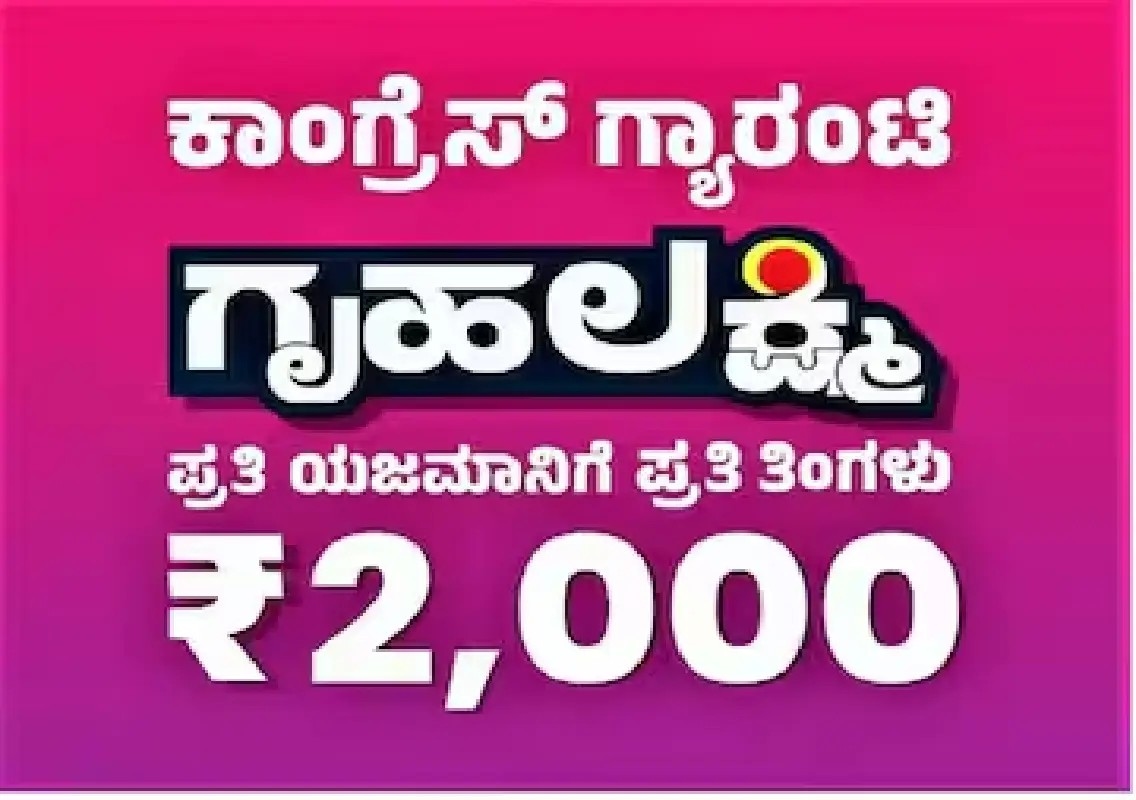
Gruhalakshmi, one of the state government’s flagship guarantee schemes, provides a monthly financial assistance of Rs 2,000 to the woman head of every eligible household. Since the scheme was launched in August 2023, around 3.82 lakh women have registered under the programme in Dakshina Kannada district.
However, during routine scrutiny, officials found that payments were continuing to be deposited into the bank accounts of some beneficiaries even after their deaths. In response, the Department of Women and Child Development intensified a district-wide verification process to identify such cases and remove ineligible names from the beneficiary list.
Verification drive uncovers discrepancies
Officials said the ongoing verification exercise is aimed at improving transparency and ensuring that public funds are utilised appropriately. Through data verification and field-level checks, authorities have identified thousands of deceased beneficiaries whose names remained active in the system.
The department has been cross-checking records to determine whether beneficiaries are alive and continue to meet eligibility requirements. The exercise has so far resulted in the deletion of 9,251 deceased beneficiaries from the scheme database.
Authorities believe the verification process will help strengthen the integrity of the welfare programme and prevent financial leakages.
Aadhaar-bank account mapping continues
Apart from identifying deceased beneficiaries, the department is also addressing issues related to Aadhaar and bank account linkage. Officials said some eligible women who had registered under the scheme were unable to receive benefits because their Aadhaar numbers were not linked to their bank accounts.
To resolve this issue, authorities are mapping such cases and facilitating the necessary updates. At present, mapping work is under way for 293 pending applications.
Officials noted that ensuring proper Aadhaar-bank account linkage is essential for the direct transfer of benefits and smooth implementation of the scheme.
Thousands of applications rejected initially
The department revealed that around 9,200 applications were rejected during the initial stages of scrutiny because the applicants were income tax payers or registered under the Goods and Services Tax (GST) system.
As per the eligibility criteria of the Gruhalakshmi scheme, such applicants do not qualify for financial assistance. The screening process was undertaken to ensure that benefits are directed towards households that genuinely require support.
Officials said periodic reviews are being conducted to maintain the accuracy of beneficiary records and prevent ineligible individuals from receiving assistance.
Death certificate verification crucial
According to the department, the standard procedure for removing a deceased beneficiary involves the submission of a death certificate by family members. Once received, the certificate is verified through the e-Janma system before the beneficiary’s name is officially removed from the scheme records.
However, officials pointed out that in several cases families have either not obtained death certificates or failed to submit them to the concerned authorities. As a result, some cases remain pending verification despite the beneficiary having passed away.
The absence of timely documentation has emerged as one of the key challenges in maintaining updated beneficiary records.
Anganwadi workers assist in field verification
To bridge information gaps, the department has enlisted the support of anganwadi workers who are collecting field-level information from villages and local communities.
Officials said anganwadi workers play a vital role in identifying deaths that may not have been formally reported to the authorities. Their inputs help ensure that beneficiary records are updated promptly and that government funds are not wrongly transferred to inactive accounts.
The department believes that combining digital verification systems with grassroots-level monitoring will improve the efficiency of the scheme and reduce instances of misuse.
Taluk-wise deletions highest in Mangaluru
Among the taluks in Dakshina Kannada district, Mangaluru recorded the highest number of deletions, with 1,996 deceased beneficiaries removed from the Gruhalakshmi beneficiary list.
Bantwal followed with 1,910 deletions, while Moodbidri reported 507 cases of deceased beneficiaries being struck off the rolls.
Officials said verification efforts are continuing across the district and additional deletions may be carried out as more records are reviewed and updated.
Conclusion
The removal of more than 9,200 deceased beneficiaries from the Gruhalakshmi scheme highlights the government’s efforts to enhance transparency and accountability in welfare distribution. Through digital verification, Aadhaar mapping and field-level monitoring, authorities aim to ensure that benefits reach eligible women while preventing the misuse of public funds.