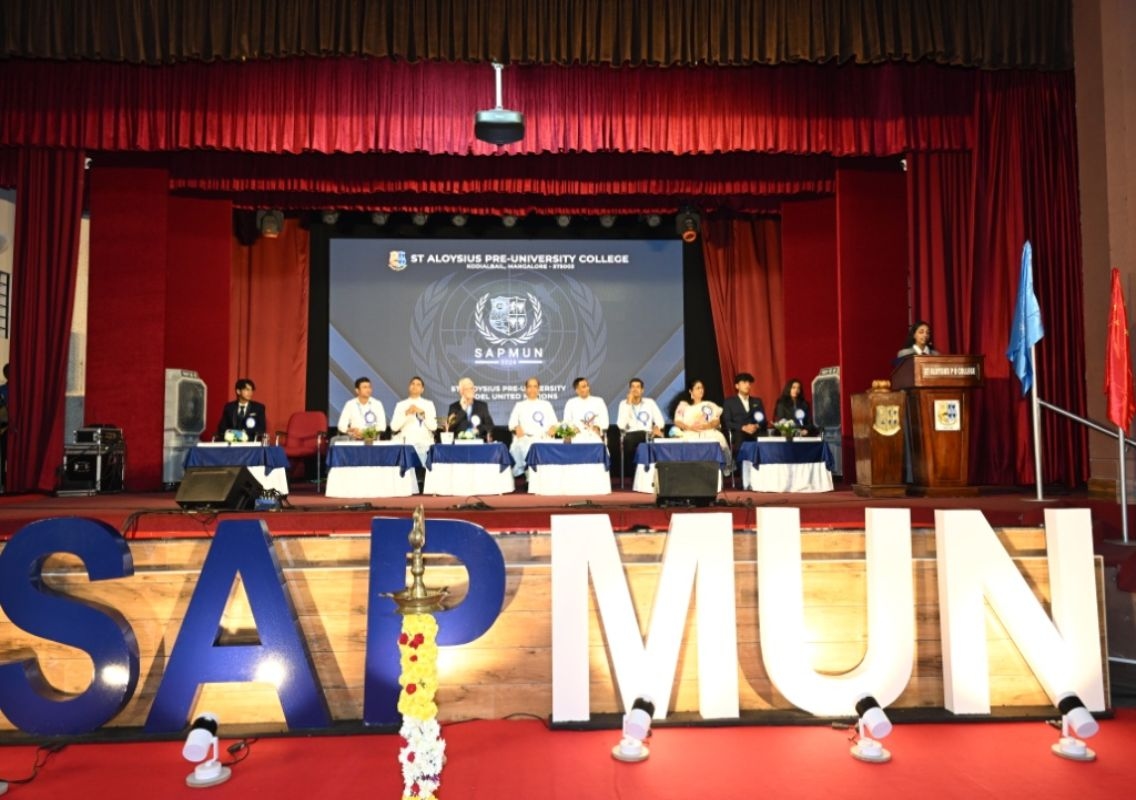


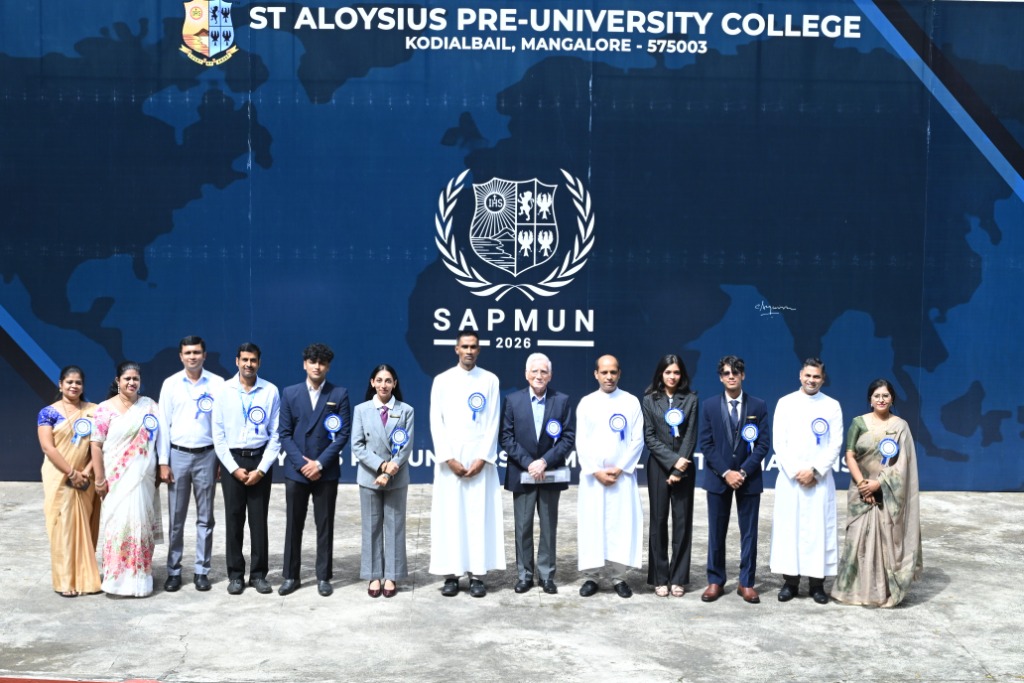
Mangaluru: The eighth edition of the St Aloysius Pre-University Model United Nations (SAPMUN) 2026 was inaugurated at St Aloysius Pre-University College, marking another year of the institution’s efforts to provide young people with a platform for dialogue, diplomacy and leadership.
The three-day conference brings together student delegates who will participate in debates, negotiations and discussions on a range of national and international issues. Through the Model United Nations format, students are encouraged to understand different perspectives, engage with complex global challenges and develop skills in communication, research, negotiation and decision-making.
The event reflects St Aloysius Pre-University College’s belief that young people can play an important role in shaping the future. The institution conducts various activities aimed at giving students opportunities to develop their abilities and become responsible contributors to society.
SAPMUN has emerged as one such platform, creating a simulated international forum where students can engage with issues that affect communities and countries across the world.
Inauguration marks eight years of SAPMUN
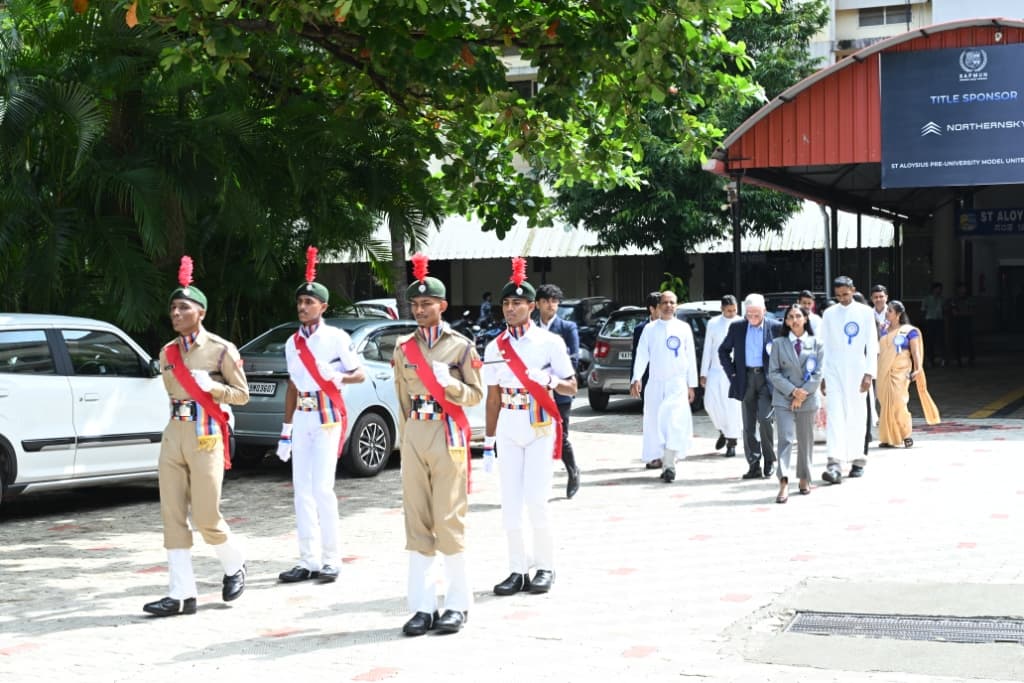
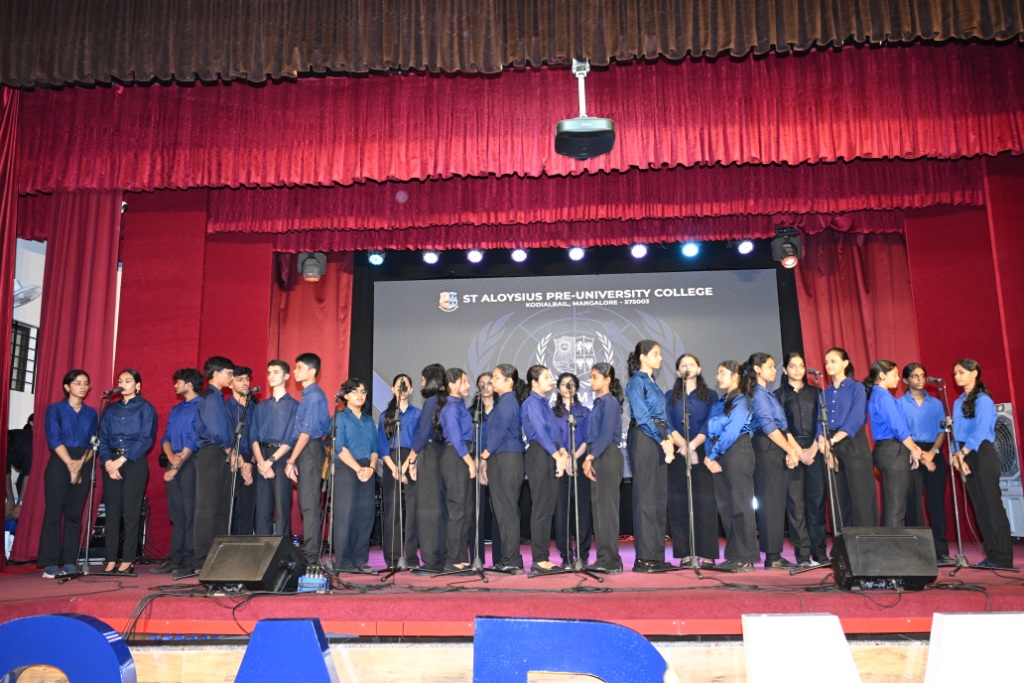
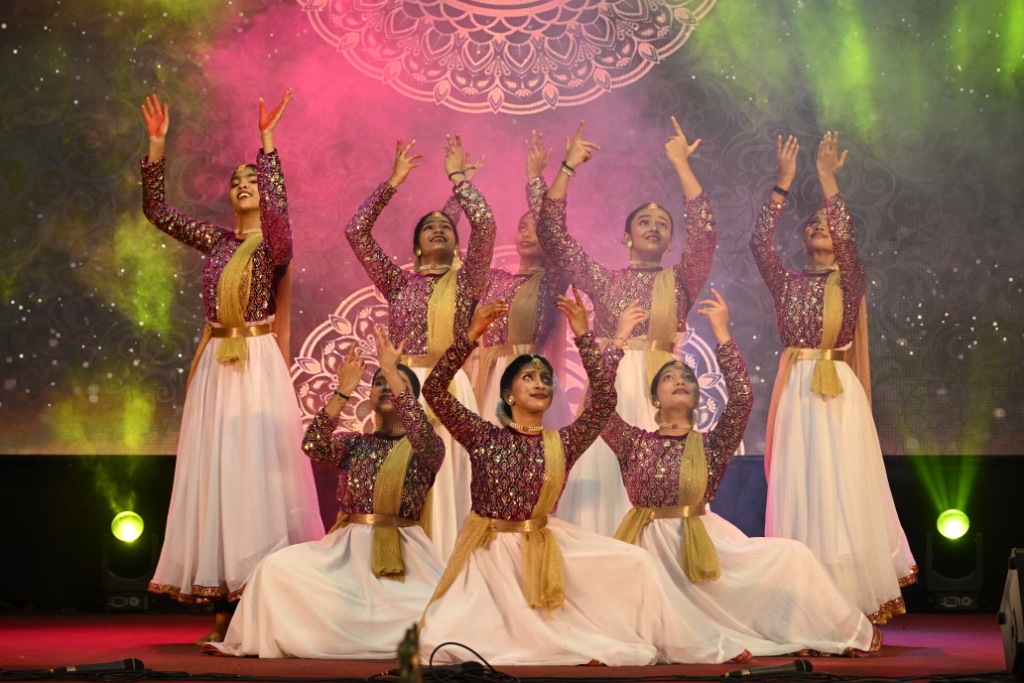
The inauguration ceremony began with a prayer song and a traditional welcome dance, followed by the ceremonial lighting of the lamp.
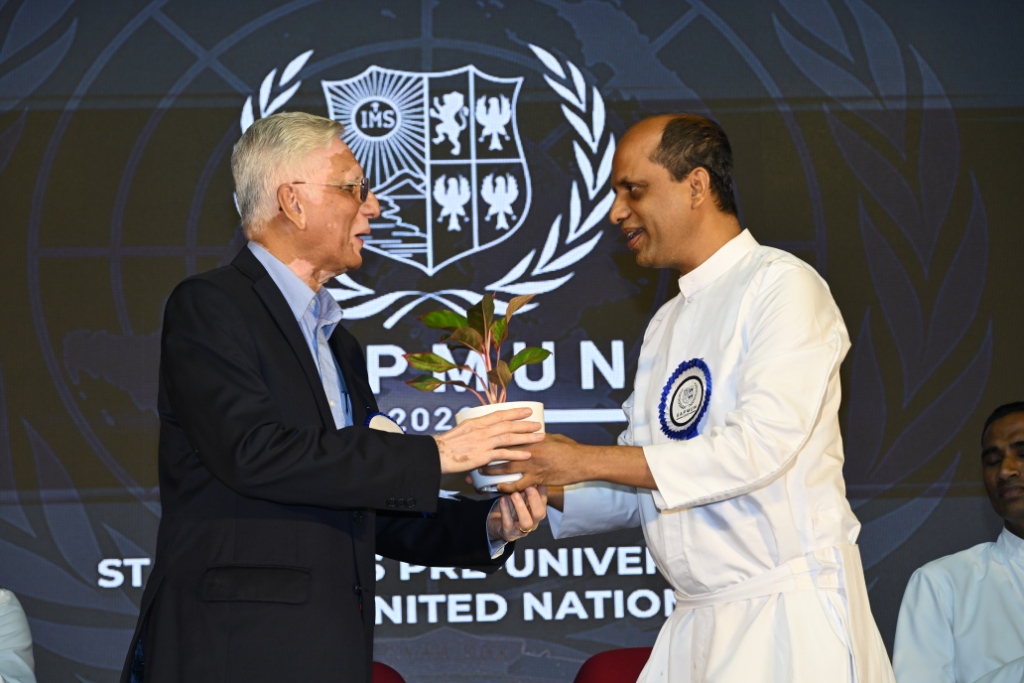
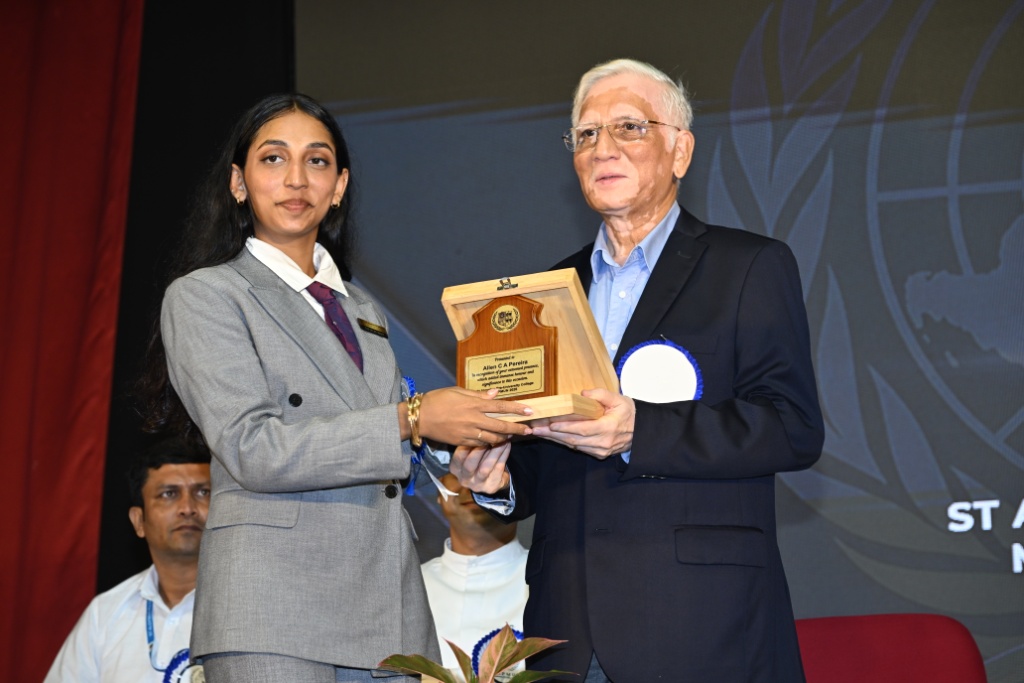
Daniel Eugene Veigas, President of SAPMUN 2026, welcomed the gathering and introduced the chief guest, Allen C. A. Pereira, an alumnus of St Aloysius and a distinguished banking professional.
The presence of an alumnus as chief guest also provided an opportunity to connect the institution’s past with its current generation of students.
As SAPMUN enters its eighth edition, the conference continues to focus on leadership and the overall development of students through activities that encourage them to look beyond the classroom.
The organisers emphasised that the purpose of the conference extends beyond competition. It is intended to help young people understand the world around them and develop the confidence to participate in conversations about issues affecting society.
Principal urges students to become future-makers
Rev. Fr Clifford Sequeira SJ, Principal of St Aloysius Pre-University College, addressed the delegates and highlighted the importance of platforms such as SAPMUN in preparing young people for the future.
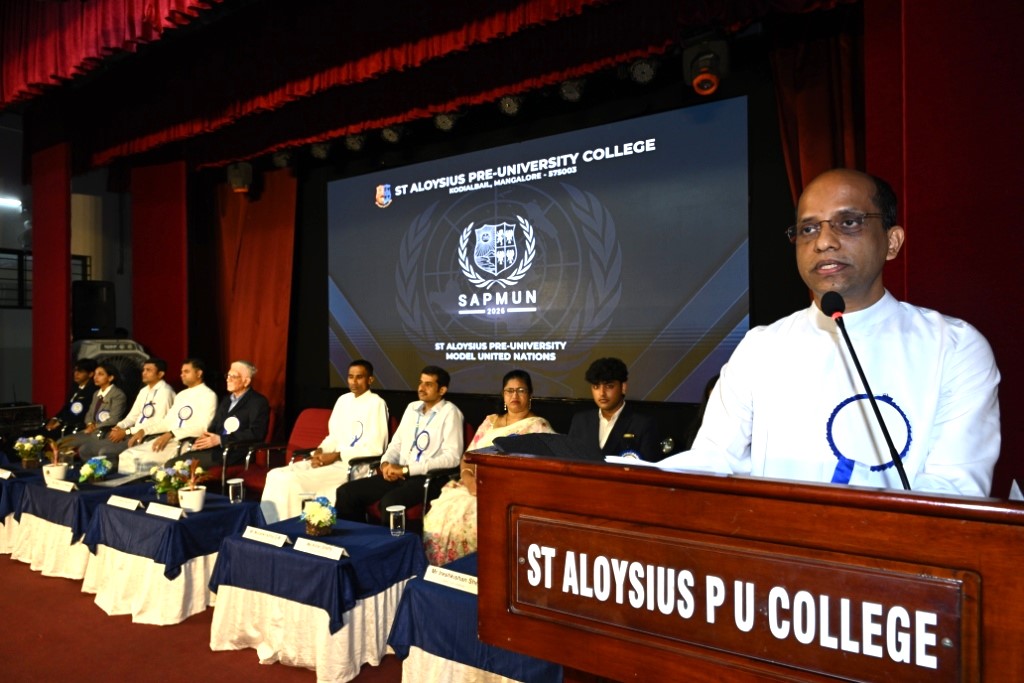
He said the Model UN provides students with an opportunity to understand the world, listen to different perspectives and discover their role as future-makers of the nation and the wider world.
Fr Clifford referred to the United Nations Sustainable Development Goals while discussing the scale of challenges confronting the global community.
Issues such as poverty, healthcare, education, environmental protection and peace require collective action from governments, organisations and communities, he said.
The Principal encouraged delegates to recognise that they have an agency in addressing such challenges rather than seeing global problems as issues that can be solved only by governments and international institutions.
His address centred on three broad imperatives: recognising one’s ability to act, converting awareness into action, and developing sensitivity towards people and perspectives that may be different from one’s own.
William Kamkwamba’s story inspires delegates
Fr Clifford recalled the story of William Kamkwamba to encourage students to make use of the resources available to them and believe in their own abilities.
Kamkwamba became known for building a wind turbine using available materials despite having limited resources.
The Principal used the story to underline the importance of initiative and determination.
He pointed out that awareness alone does not lead to change unless it is accompanied by action. He also urged students to be willing to take the first step towards addressing problems, even when ideological differences exist.
Fr Clifford further encouraged delegates to sensitise themselves to different cultures, people and viewpoints.
He called upon the young leaders to cultivate independent thought, consider alternative perspectives and stand up for what they believe is right.
He concluded by emphasising that meaningful global change begins when individuals commit themselves to making a difference in their own surroundings.
Allen Pereira highlights importance of co-curricular activities
Chief guest Allen C. A. Pereira reflected on his formative years at St Aloysius and spoke about the influence of co-curricular activities on students.
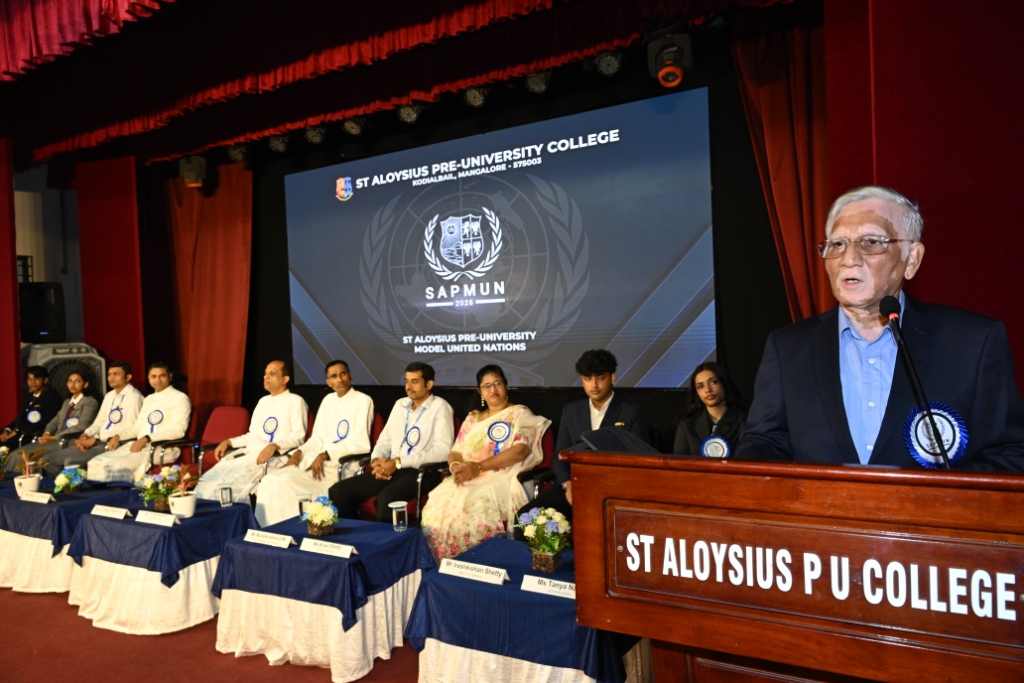
He recalled his participation in activities such as the Rotaract Club and the college magazine, saying these experiences helped develop a multicultural and multidimensional worldview.
According to Pereira, such opportunities played a role in shaping students into well-informed and morally grounded individuals.
He built on the Principal’s remarks by reflecting on the consequences of global conflict.
Pereira described the two World Wars as among the most devastating man-made catastrophes in modern history and warned delegates about the dangers of another major global conflict.
In this context, he described Model United Nations platforms such as SAPMUN as valuable spaces for reflection, dialogue and the resolution of conflicts.
Warning against prejudice and misinformation
Pereira also cautioned delegates about prejudices that can be influenced by sensationalist media and political narratives.
He urged students to critically evaluate the information they receive and consider their responsibilities as citizens of both their country and the world.
The chief guest said young people should not simply accept narratives presented to them but should develop the ability to examine different perspectives before forming conclusions.
His message was particularly linked to the role of students participating in a Model UN, where delegates are required to represent positions that may differ from their personal beliefs.
Such an exercise, he suggested, can encourage students to separate personal assumptions from informed understanding and develop a more balanced approach to global affairs.
Focus on UN reform and humanitarian challenges
Pereira also reflected on the legacy of the United Nations and its development following the World Wars.
He noted that the aftermath of the conflicts led the international organisation to focus on areas such as social justice, poverty alleviation and the elimination of human exploitation.
However, he observed that contemporary conflicts continue to test the effectiveness of the United Nations.
This has raised questions about the organisation’s relevance and the need for structural reform, including discussions surrounding the concentration of decision-making power within the UN Security Council.
Pereira also pointed to the global eradication of polio as an example of what international cooperation can accomplish.
He expressed optimism that the United Nations and the international community could similarly address humanitarian crises involving hunger and disease in Sub-Saharan Africa and assist populations displaced by war.
Call for non-violence and personal integrity
Pereira commended the younger generation for promoting non-violence and adopting a wider humanitarian perspective.
He said meaningful change in the external world begins with self-awareness and personal integrity.
Before taking action, he encouraged delegates to consider whether their decisions are truthful, fair and capable of building goodwill and better relationships.
He urged the students to reflect on the principle of treating others as they themselves would wish to be treated.
His address ultimately placed individual responsibility at the centre of the larger discussion on leadership and social change.
Namratha Shenoy highlights empathy and listening
Namratha Shenoy, Secretary-General of SAPMUN 2026, spoke about human connection and the importance of understanding different perspectives.
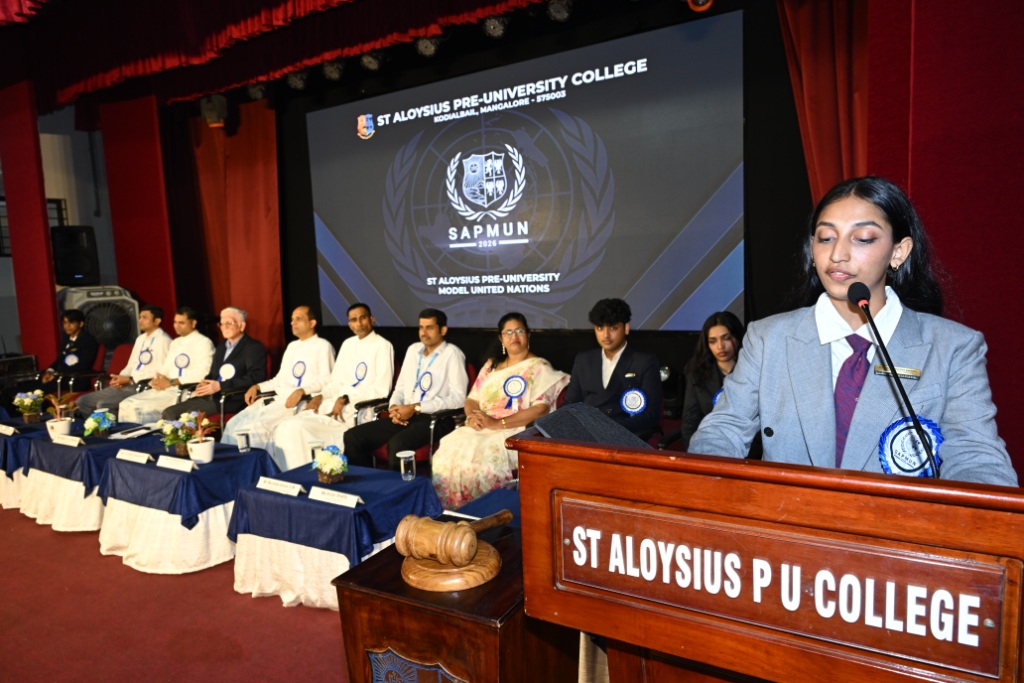
Reflecting on the conference, she said delegates would debate issues across unfamiliar borders, defend policies they may not personally support and develop solutions to crises affecting millions of people around the world.
However, Shenoy emphasised that SAPMUN was about more than debate and negotiation.
She identified empathy as one of the most important lessons delegates could take from the conference.
She encouraged participants to understand where an idea comes from before disagreeing with it, highlighting the importance of listening in an increasingly divided world.
“The world lacks understanding—let us learn to listen,” she said, urging delegates to move beyond their individual viewpoints and develop a broader perspective.
Her message reinforced the conference’s emphasis on dialogue rather than confrontation.
Project Svara aims to widen educational access
Shenoy also outlined Project Svara, a major initiative launched as part of SAPMUN 2026.
The initiative is designed to broaden educational access by providing underprivileged students with an opportunity to participate directly in the Model UN conference.
Through Project Svara, students who may not otherwise have access to such academic and co-curricular platforms can experience the debates, discussions and collaborative learning associated with SAPMUN.
The initiative adds an inclusion-focused dimension to this year’s conference and seeks to make the educational benefits of Model UN participation accessible to a wider group of students.
Eight committees announced for three-day conference
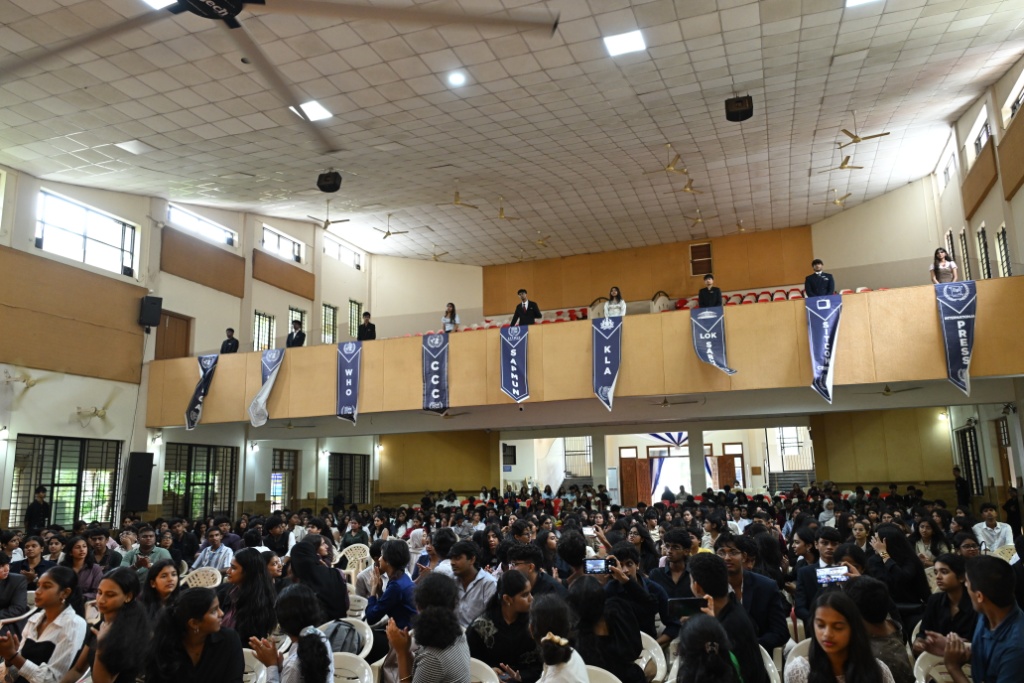
Shenoy officially declared the eighth edition of SAPMUN open and unveiled the eight committees that will conduct the proceedings during the three-day conference.
The committees are:
- United Nations General Assembly (UNGA)
- United Nations Security Council (UNSC)
- World Health Organisation (WHO)
- Sitcom Central
- Karnataka Legislative Assembly
- Lok Sabha
- International Press
- Crisis Control Committee (CCC)
The committees will provide delegates with different settings in which to research issues, debate proposals, negotiate with other participants and develop possible solutions.
The inclusion of both international and Indian political forums gives students an opportunity to explore issues at different levels of governance.
Dignitaries and organisers attend event
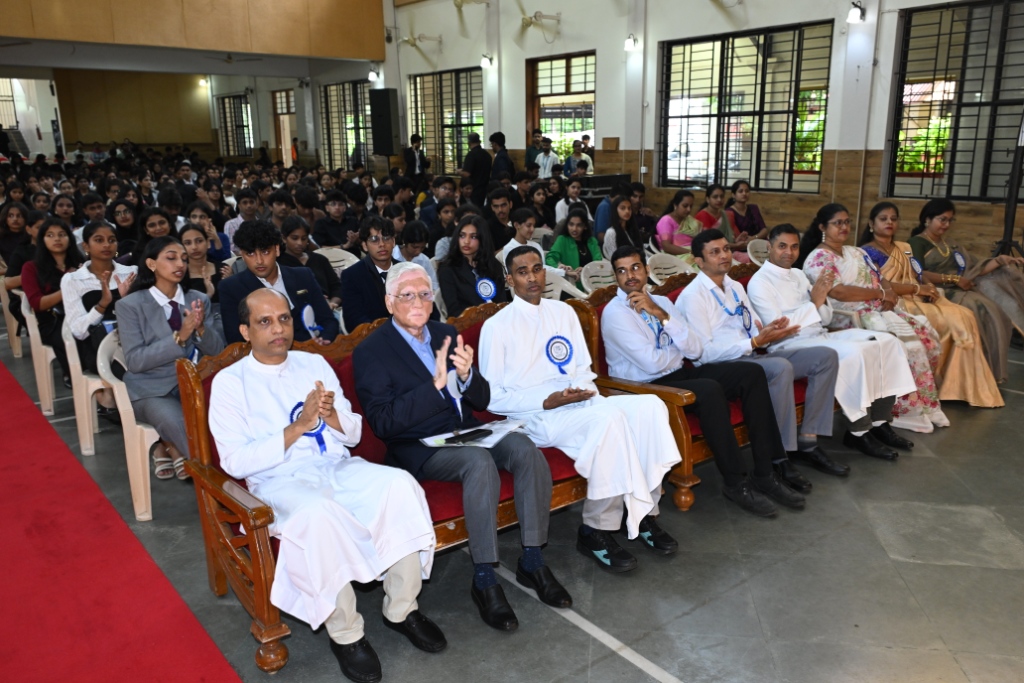
Several dignitaries, college officials and members of the SAPMUN organising team were present at the inauguration.
Those attending included Finance Officer Rev. Fr Balaraju SJ, Campus Minister Rev. Fr Anthony Derrick SJ, Vice Principal of Science Muralikrishna G M, and Deans Kiran Shetty and Inas Dais.
Staff coordinators Lavanya K, Niha Fahim and John Wesley were also present.
The organising team included Director General Iresh Kishan Shetty and Vice President Tanya Nayak.
Their involvement highlighted the institutional support for the annual student-led initiative.
Three days of debate and diplomacy begin
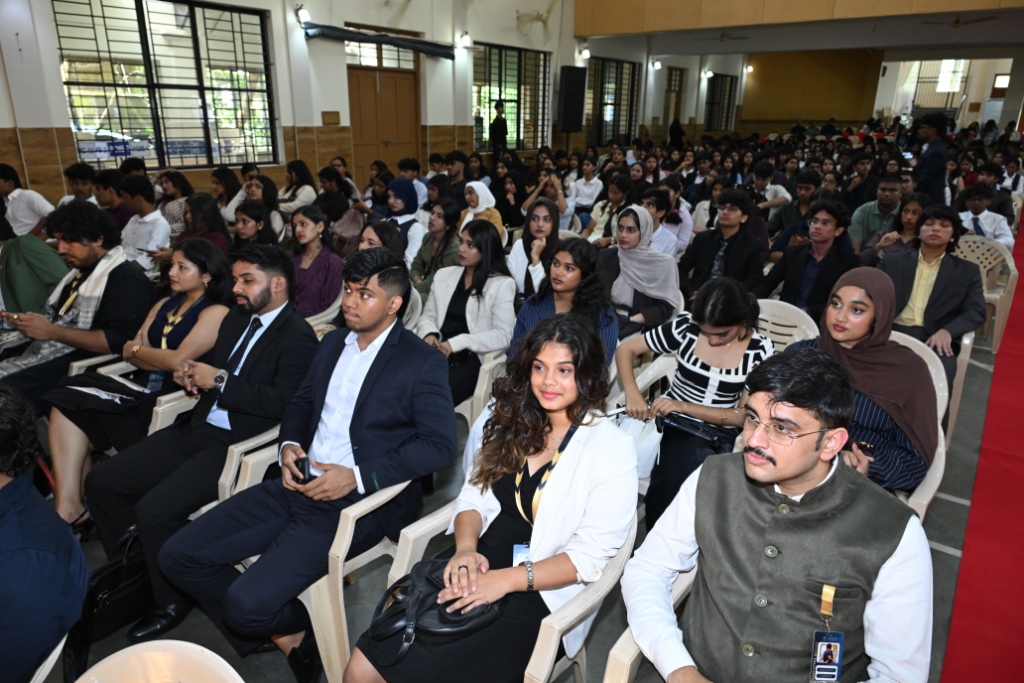
With the inauguration complete, delegates are set to begin three days of discussions, negotiations and crisis simulations across the eight committees.
The conference is expected to give participants an opportunity to examine international relations, public health, governance, media and crisis management while developing their communication and leadership abilities.
For students, the experience also involves stepping into unfamiliar perspectives and defending positions that may not necessarily reflect their personal opinions.
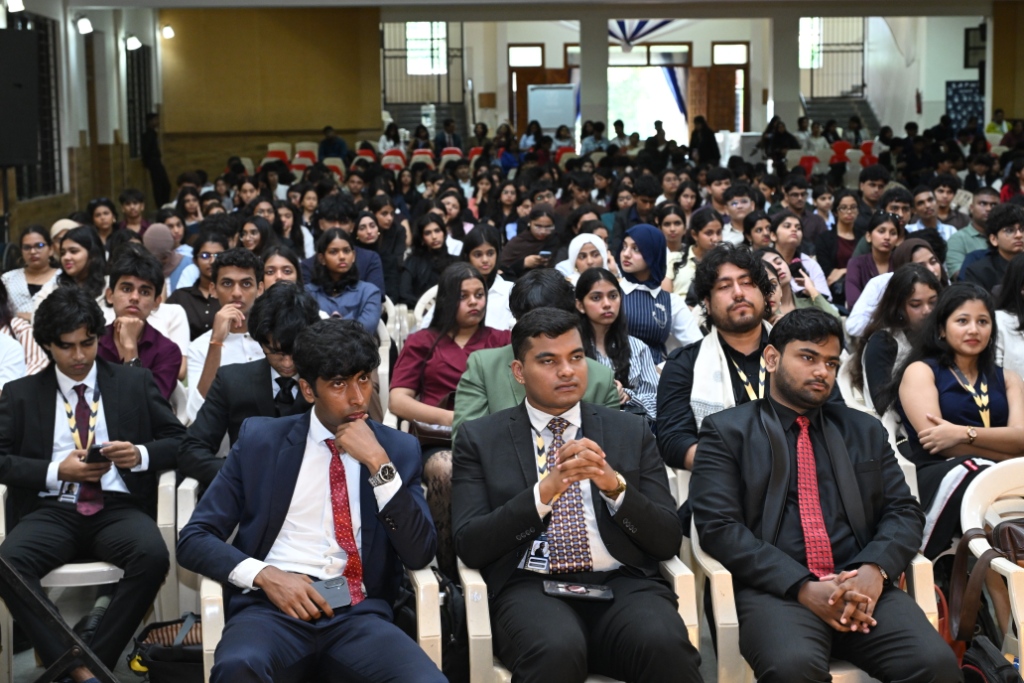
This element of the Model UN format encourages participants to research issues carefully and understand the reasoning behind different positions.
Ceremony concludes with vote of thanks
The inauguration ceremony concluded with a vote of thanks delivered by Deeya Alva, Under-Secretary General of Media and Design.
Neha Castelino compered the programme.
The opening ceremony thus set the tone for the three-day SAPMUN 2026 conference, with speakers placing emphasis on youth participation, empathy, responsible citizenship and the need to translate awareness into action.
Conclusion
The eighth edition of SAPMUN at St Aloysius Pre-University College has begun with a strong message on the role of young people in addressing global challenges.
Principal Rev. Fr Clifford Sequeira SJ urged students to combine awareness with action, remain open to different perspectives and take responsibility for creating change. Chief guest Allen C. A. Pereira highlighted the importance of personal integrity, non-violence and responsible citizenship while reflecting on global conflicts and the future of international cooperation.
Secretary-General Namratha Shenoy placed empathy and listening at the heart of the conference and introduced Project Svara to expand access to the Model UN experience for underprivileged students.
With eight committees and three days of debate ahead, SAPMUN 2026 aims to give students more than an opportunity to speak. It seeks to help them listen, understand, negotiate and develop the confidence to participate in shaping the future.
The central message of the inaugural session was that meaningful change begins with individuals who are willing to understand the world, take initiative and make a difference where they stand.