







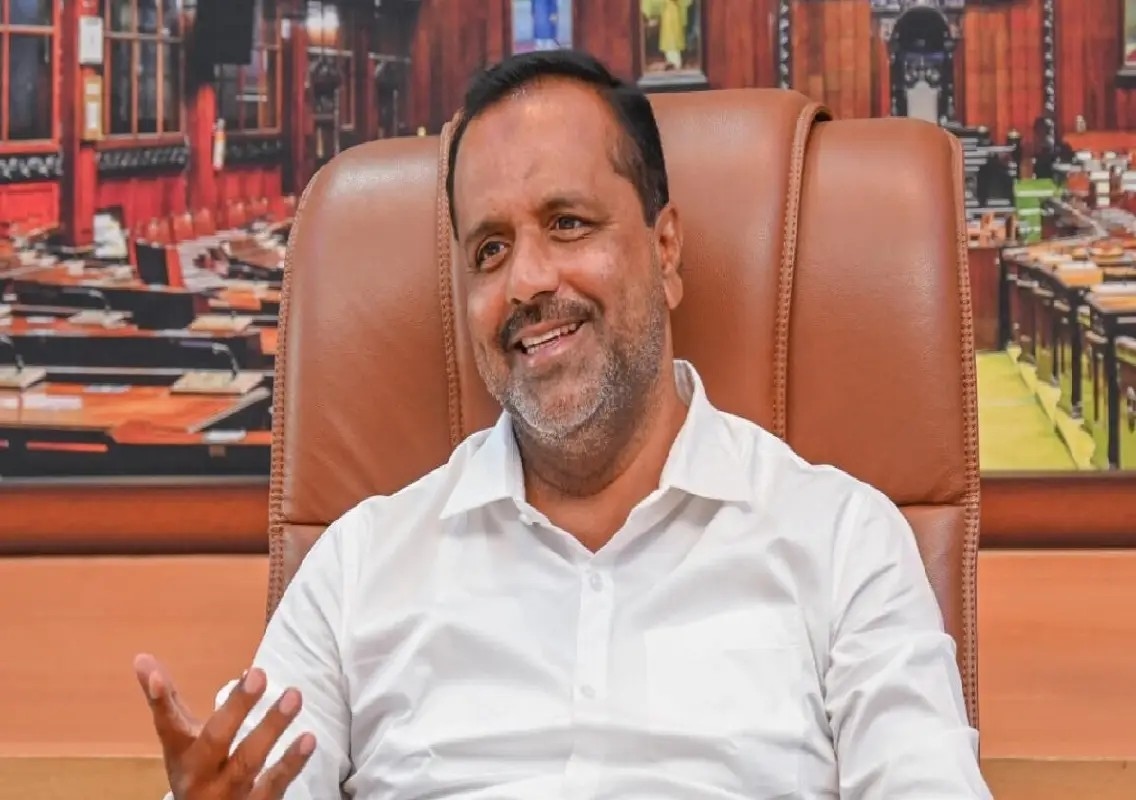


Mangaluru: Dakshina Kannada district in-charge and Health Minister U T Khader has issued a stern warning to owners of paying guest (PG) accommodations, hostels and hotels, stating that providing safe and quality food is their primary responsibility and that people’s health cannot be compromised for profit.
Speaking to media persons in Mangaluru on Saturday, Khader discussed the ongoing inspections of hostels and PG accommodations by government officials and stressed that establishments serving food would be subject to strict scrutiny.
The minister said authorities would take complaints about poor-quality or unhygienic food seriously and conduct inspections wherever such complaints are received.
Strict inspections across food establishments
Khader said the inspection drive would not be restricted to PG accommodations and hostels. Officials would conduct checks across a wide range of food establishments, including canteens operating in major hospitals, hotels, PGs and hostels.
“Officials will carry out strict inspections across all food establishments, ranging from canteens in major hospitals to small hotels, PGs, and hostels,” he said.
The minister’s warning comes amid increased attention on the quality and hygiene of food served to students, workers and other residents staying in hostels and PG accommodations.
According to Khader, establishments that provide food have a responsibility to ensure that the meals served to customers and residents meet required standards. He cautioned owners against compromising on food quality in an attempt to reduce costs or increase profits.
Complaints to trigger mandatory inspections
Khader said members of the public should not hesitate to lodge complaints if they encounter substandard, unsafe or unhygienic food.
A system has been introduced to make it easier for people to report such issues. A QR code-based complaint mechanism allows the public to seek assistance and submit complaints regarding food-related concerns.
The minister explained that complaints submitted through the system are routed directly to the department’s mobile system. Once a complaint is received, the concerned officials are required to visit the location and verify the issue.
“These complaints are routed directly to the department’s mobile system. Upon receiving a complaint, it is mandatory for the concerned officials to visit the spot, inspect the premises, and submit a detailed report,” Khader said.
The mechanism is intended to ensure that complaints do not remain unattended and that officials have a defined process for responding to food safety concerns.
Focus on hostels and PG accommodations
Hostels and PG accommodations have come under particular scrutiny because large numbers of people often depend on them for their daily meals. Students, employees and other residents may have limited alternatives when food is provided as part of their accommodation.
Khader said inspections would therefore focus on ensuring that food served at such establishments is prepared and handled properly.
The inspections are also expected to examine the general conditions in which food is prepared and served. Authorities can use complaints received from residents and members of the public to identify establishments that require immediate attention.
The minister made it clear that owners cannot treat food quality as an area where costs can be reduced at the expense of residents’ health.
QR code system aimed at easier public participation
The QR code system is intended to make the complaint process more accessible to ordinary citizens. Rather than depending entirely on conventional complaint channels, people can use the system to bring food-related concerns to the attention of the department.
Khader encouraged the public to make use of the mechanism whenever they find food being served in an unhygienic or substandard manner.
The system also creates a direct link between a complaint and the officials responsible for inspection. Once a complaint reaches the department’s mobile system, the concerned officials are required to visit the establishment, conduct an inspection and prepare a report.
This approach is aimed at improving accountability and ensuring that complaints result in field-level action.
Health cannot be compromised for profit
Khader’s warning places responsibility squarely on owners and operators of establishments serving food. He stressed that the pursuit of profit should not come at the cost of public health.
The minister’s remarks cover establishments of different sizes, from small hotels and hostels to larger institutional food facilities such as hospital canteens.
Regular inspections, prompt action on complaints and greater public participation through the QR-based system are expected to strengthen monitoring of food establishments in Dakshina Kannada.
The district administration’s inspection drive is therefore likely to remain focused on ensuring that people, particularly those dependent on hostel and PG food services, receive safe and quality meals.
Khader’s message to food establishment owners is clear: food safety is a responsibility, not an area for compromise, and violations reported by the public will invite official scrutiny.