







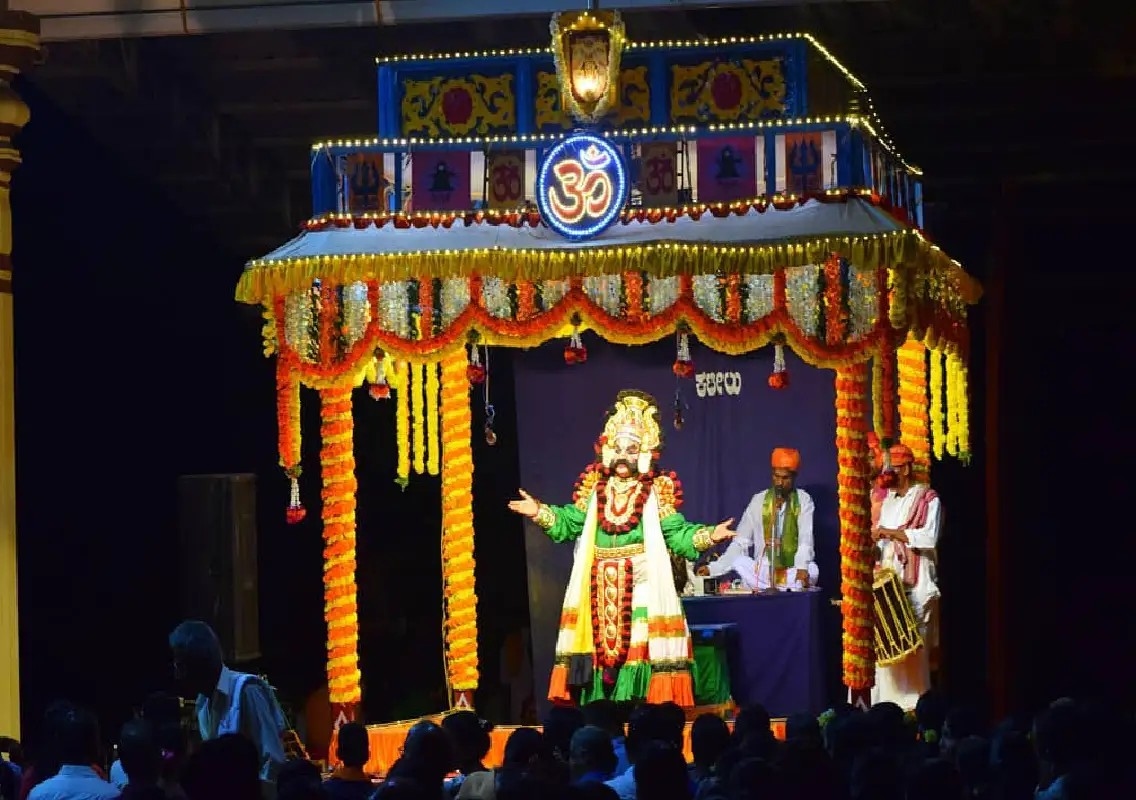


Mangaluru: In a landmark cultural moment, the traditional coastal art form Yakshagana found a new voice in English during a performance in Belgium, marking a significant step in taking the centuries-old tradition beyond linguistic boundaries. The unique presentation was organised by the Yakshadhruva Patla Foundation Europe as part of a cultural evening hosted by the Embassy of India in Belgium.
The event, held on Saturday, featured a full-length Yakshagana story performed entirely in English—an unprecedented initiative in Europe. The programme also included a Bharatanatyam recital by dancer Shilpa Abhiram, adding to the richness of the cultural showcase.
First complete English Yakshagana in Europe
Yakshagana, traditionally performed in Kannada, is renowned for its vibrant costumes, expressive storytelling, powerful dialogue delivery, and rhythmic music. While experimental adaptations into English have been attempted earlier in India and in select international venues, this was the first time that a complete Yakshagana narrative was staged in English anywhere in Europe.
Yakshagana artiste and enthusiast Guru Ajeeth Prabhu described the initiative as a milestone in promoting the art form among non-Kannada-speaking audiences. According to him, the performance aimed to make Yakshagana more accessible without compromising its traditional essence.
‘Hanumarjuna’ adapted for global audience
The troupe presented the story of Hanumarjuna in a concise one-hour format, carefully adapting the narrative into simple and engaging English. Despite the linguistic shift, the performance preserved the core elements of Yakshagana, including its stylised expressions, dramatic storytelling, and elaborate costumes.
Interestingly, while the dialogues were delivered in English, the background music remained in Kannada, played in recorded form. This blend of languages ensured that the traditional flavour of Yakshagana was retained while making the storyline understandable to a wider audience.
Growing global appeal of Yakshagana
The successful staging of Yakshagana in English reflects a growing interest in Indian classical and folk art forms among international audiences. In Europe, particularly, there has been increasing participation from both the Indian diaspora and local enthusiasts who may not be familiar with regional Indian languages like Kannada.
Cultural organisations and art promoters have been making concerted efforts to bring Yakshagana to global platforms. By introducing English adaptations, performers are bridging the gap between tradition and accessibility, ensuring that the art form resonates with diverse audiences.
Balancing tradition and innovation
While such adaptations open new avenues for Yakshagana, they also pose the challenge of maintaining authenticity. Experts believe that preserving the traditional structure—such as music, costumes, and performance style—is crucial even when experimenting with language.
The Belgium performance demonstrated that innovation and tradition can coexist. By retaining Kannada music and the classical performance format, the troupe ensured that the soul of Yakshagana remained intact, even as it embraced a global audience.
Conclusion
The English-language Yakshagana performance in Belgium marks a significant milestone in the global journey of this traditional art form from coastal Karnataka. By transcending language barriers, Yakshagana is finding new audiences and reaffirming its relevance in a rapidly globalising cultural landscape. Such initiatives not only promote Indian heritage abroad but also ensure that age-old traditions continue to evolve and thrive.