







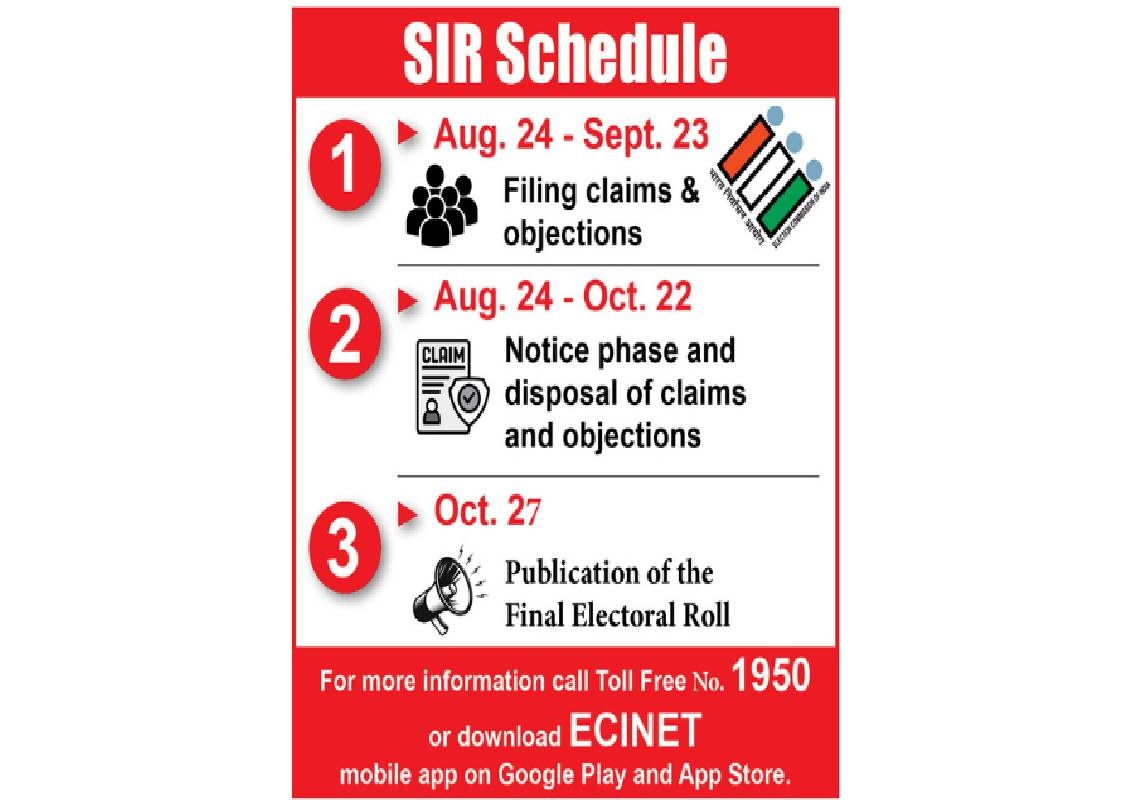


Mysuru: The Office of the Chief Electoral Officer (CEO), Karnataka, has published the draft electoral roll following the first phase of the Special Intensive Revision (SIR) exercise conducted across the State. Voters can now check their details and submit claims or objections between August 24 and September 23, 2026.
The draft roll was published after Booth Level Officers (BLOs) completed the first phase of the voter-verification exercise, which began on June 30 and continued until August 17.
The exercise is aimed at verifying voter details and identifying entries that may require correction, deletion or inclusion before the final electoral roll is published.
Draft electoral roll available for verification
Citizens can check their names and voter details in the draft electoral roll through the CEO Karnataka website.
The publication of the draft roll marks the beginning of the claims and objections period. Voters who find errors in their details or whose names are missing can approach the election authorities and submit the prescribed forms.
The claims and objections process will continue until September 23.
The disposal of claims and objections is scheduled to take place from August 24 to October 22. Following the completion of the process, the final electoral roll is scheduled to be published on October 27.
43.80 lakh voters to receive notices
Across Karnataka, the CEO’s office will issue notices to around 43.80 lakh voters who were unavailable during the verification process.
These voters will have time until September 23 to ensure that their names are included in the electoral roll and to make necessary corrections.
The notice process is part of the larger verification exercise and gives voters an opportunity to respond before the final roll is prepared.
27.99 lakh enumeration forms distributed in Mysuru
In Mysuru, the SIR exercise involved the distribution of 27,99,693 enumeration forms across 11 Assembly segments.
Of these, 22,42,452 forms have been digitised.
The remaining 5,57,241 voters have been categorised as ASDDO electors, referring to voters classified as absent, shifted, dead, duplicate or falling under other specified categories.
The 22,42,452 voters whose forms were digitised are included in the draft electoral roll, according to the information released by the authorities.
What is the ASDDO category?
The ASDDO classification covers electoral entries that require further attention because the voter was reported as absent, had shifted residence, was deceased, appeared to be a duplicate entry or fell under another category identified during the verification process.
The classification does not by itself mean that every such voter has been permanently removed from the electoral roll.
Those affected can use the claims and objections process to establish their eligibility and seek inclusion or correction where required.
New voters can apply through Form 6
The SIR process also provides an opportunity for eligible citizens who are not currently registered as voters to seek inclusion.
Those who did not submit their enumeration forms during the prescribed period can apply for inclusion by submitting Form 6 along with the prescribed Declaration Form during the claims and objections period.
This gives eligible residents another opportunity to have their names added before the final electoral roll is prepared.
Different forms for different voter requests
Voters have access to different forms depending on the change they want to make.
Form 6 is used for inclusion of a new voter, while Form 6A is meant for inclusion of an overseas voter.
Form 7 can be used to request deletion of a name from the electoral roll, while Form 8 is used for shifting residence, correcting entries, replacing an EPIC and marking a person as a person with disability.
The prescribed forms are available through the Election Commission’s voter services portal.
Documents required for inclusion
Voters who need to establish their eligibility may submit two indicative documents from the list prescribed by the authorities.
These include a birth certificate, passport, SSLC or other recognised educational certificate, Forest Rights Certificate, and caste certificate issued by the competent authority, among other documents.
The rules concerning Aadhaar will be governed by the Election Commission’s applicable directions.
Voters should ensure that the documents they submit contain accurate details and correspond with the information required for the particular application.
Political parties asked to create awareness
Ahead of the draft roll’s publication, Mysuru Deputy Commissioner G. Lakshmikanth Reddy held a meeting with representatives of political parties at his office in Siddarthanagar.
Political representatives were asked to create awareness among voters about the publication of the draft electoral roll and the process for filing claims and objections.
They were also briefed about the enumeration forms distributed and collected during the SIR exercise and the forms that voters can use for different types of electoral-roll changes.
Appeal mechanism available to voters
The electoral revision process also includes an appeal mechanism for voters whose names are excluded after a hearing.
If an Electoral Registration Officer (ERO) excludes a voter after hearing the matter, the voter can file a first appeal before the Deputy Commissioner within 15 days of the ERO’s order.
A second appeal can then be filed before the Chief Electoral Officer within 30 days from the date of the first appeal order.
This mechanism provides voters with an additional opportunity to challenge an exclusion from the electoral roll.
ASDDO list also published
The Office of the Chief Electoral Officer, Karnataka, has also published the list of ASDDO electors identified during SIR-2026.
Voters can check the relevant information and verify their status through the official electoral authorities.
Those who believe their names have been wrongly excluded or require correction can use the claims and objections window to raise the issue.
Final electoral roll due on October 27
The current draft roll is not the final list of eligible voters.
The claims and objections process will continue until September 23, following which officials will examine the submissions and take appropriate action.
The disposal process is scheduled to continue until October 22, with the final electoral roll expected to be published on October 27.
Voters therefore have several weeks to verify their details and raise concerns before the final list is prepared.
How voters can check their details
Citizens can access electoral-roll services through the Election Commission’s voter portal and the Karnataka CEO’s website.
The Election Commission’s voter services platform also provides access to the prescribed forms and other voter-related services.
Voters can additionally contact the 1950 toll-free helpline for information and assistance. The ECINET mobile application is also available for voter services.
Why voters should check the draft roll
The publication of the draft electoral roll gives voters an important opportunity to verify their information before the final list is released.
They should check details such as their name, address and other electoral information and report discrepancies within the prescribed period.
Those whose names are missing should also take timely steps rather than waiting until the final roll is published.
The SIR exercise is particularly significant because the verification process has resulted in a large number of entries being placed in the ASDDO category across Karnataka.
Conclusion
The Karnataka draft electoral roll has been published after the first phase of the Special Intensive Revision exercise, allowing voters to verify their details and raise claims or objections. The claims and objections window will remain open until September 23, while the final electoral roll is scheduled for publication on October 27.
In Mysuru, 27,99,693 enumeration forms were distributed across 11 Assembly segments, with 22,42,452 forms digitised and 5,57,241 entries classified as ASDDO.
Voters whose names are missing, whose details contain errors or who need to seek inclusion should use the prescribed forms during the claims and objections period. The process also provides an appeal mechanism for voters whose names are excluded after due proceedings.