







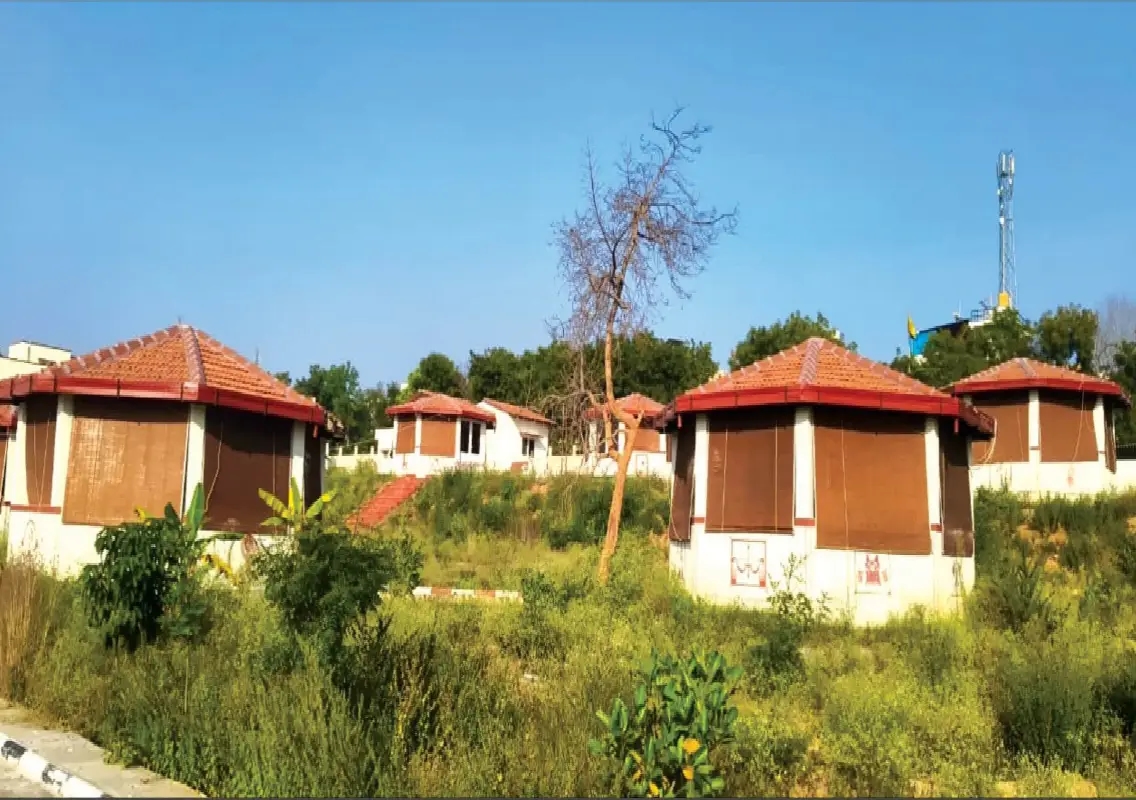


Mysuru: The new campus of Karnataka State Dr. Gangubai Hangal Music and Performing Arts University at Nadanahalli, built at a cost of Rs. 9.75 crore, remains largely deserted, with its eight cottage-style classrooms lying unused and academic activities shifted back to the university’s old premises in Lakshmipuram.
The campus, spread across 5.5 acres at Sardar Vallabhbhai Patel Nagar on the outskirts of Mysuru, was expected to provide a permanent home for the university and emerge as a centre for music and performing arts. However, the institution’s stay at the new facility proved short-lived, as students and faculty reportedly encountered several problems soon after classes began.
Nearly 16 years after the university was established, it finally moved into its permanent campus in 2025. Academic activities commenced at Nadanahalli on July 25, 2025, but the lack of essential infrastructure and other shortcomings soon made it difficult to function there.
The university has since returned to its heritage building in Lakshmipuram, leaving the new campus largely unoccupied. The old premises had also been proposed for development as a museum dedicated to legendary vocalist Dr. Gangubai Hangal.
Campus remains deserted after relocation
Established in Lakshmipuram in 2008, Karnataka State Dr. Gangubai Hangal Music and Performing Arts University functioned for years without a dedicated campus. The Mysuru Development Authority (MDA) allotted 5.5 acres of land at Nadanahalli for the new facility, which was constructed at an expenditure of Rs. 9.75 crore.
The campus comprises an administrative block, cottage-style classrooms and a library, besides other facilities intended to support academic and artistic activities. The Gurukula-inspired design was expected to create an environment conducive to traditional learning in music and performing arts.
However, the campus is now largely deserted. The eight learning cottages remain empty, while shrubs and wild vegetation have grown around the administrative block and classroom buildings. A security guard is among the few people seen on the premises.
Students and faculty members have expressed disappointment that a facility built after years of waiting has not been able to serve its intended purpose.
Lack of basic facilities affected academic activities
Students and staff members, speaking on condition of anonymity, told Star of Mysore that the absence of basic amenities made it difficult to conduct regular classes and other university activities.
One of the concerns reportedly involved the girls’ restroom, which did not provide adequate privacy. Problems with water supply and drinking water facilities were also highlighted. The campus reportedly lacked a proper electricity connection, adding to the difficulties faced by students and faculty.
The location has further compounded the problems. Situated away from the city, the campus has inadequate public transport connectivity. Students have reportedly struggled with commuting, while dust and the isolated surroundings have made the premises less conducive to regular academic activities.
There have also been complaints about stray dogs and the presence of snakes and scorpions on the campus. Students said these issues, along with the lack of adequate security, had caused concern.
A student also claimed that a female student had lost her gold chain in a theft on the campus. The incident, combined with the isolated location, reportedly heightened safety concerns and affected students’ willingness to attend classes there.
Cracks and construction quality raise concerns
Questions have also been raised about the quality of construction. Cracks reportedly appeared on the walls of the administrative building within a short period of its completion, necessitating patchwork repairs.
A lecturer said the roofing sheets over the parking area had been blown away by strong winds. The eight cottage-style classrooms were also described as too small to accommodate students comfortably, with some reportedly experiencing leakage during the rainy season.
Each classroom can accommodate around 15 to 20 students, according to the information provided. Faculty members have questioned whether these spaces are adequate for an institution that offers courses requiring both classroom instruction and practical training.
The absence of suitable space for Bharatanatyam practice and other performing arts activities has emerged as another major concern. A university dedicated to music and performing arts requires specialised spaces for rehearsals, performances and practical sessions, but the existing arrangements have reportedly failed to meet these requirements.
Critics have also questioned the pace of construction. Work reportedly began in February 2025 and was completed within five to six months. Allegations have been raised that plastering and painting were carried out in quick succession, prompting doubts about the quality of execution.
The suitability of the architectural design has also come under scrutiny. While the cottage-style structures were conceived around a Gurukula model, critics feel that conventional classroom blocks would have been more practical for the university’s academic requirements.
University plans new classroom blocks
In response to the concerns, the university has indicated that changes to the original project plan are being pursued to address the infrastructure shortcomings.
There had earlier been a proposal to construct a hostel building on the campus. However, it was subsequently decided that classroom blocks should be prioritised to meet the immediate academic requirements.
A letter has been sent to the executing agency seeking modifications to the project. Construction of the proposed classroom buildings is expected to begin shortly, according to the information provided by the university.
The university has stated that academic activities at Nadanahalli will resume after the new classroom buildings are completed. However, no specific timeline has been indicated for the resumption of classes at the campus.
Future of the permanent campus remains uncertain
The relocation back to Lakshmipuram has raised questions about the planning and execution of the Nadanahalli project. The campus was developed after years of waiting for a permanent facility, but the difficulties encountered soon after its inauguration have prevented it from functioning as intended.
The immediate priority is to address the shortcomings in water supply, electricity, sanitation, transport connectivity, classroom capacity and safety. The reported structural issues and concerns over construction quality also require attention before students and faculty return.
The decision to prioritise classroom blocks over the proposed hostel indicates an attempt to modify the campus according to the university’s actual needs. However, the effectiveness of these changes will depend on timely execution and the provision of essential facilities.
For now, the Rs. 9.75-crore campus remains largely silent, while the university continues to operate from its old heritage building. The institution’s return to Nadanahalli will depend on whether the promised improvements can transform the facility into a functional and suitable centre for music and performing arts education.