







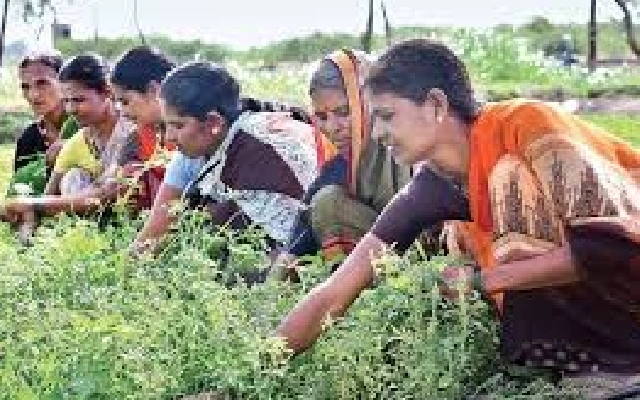


In Raichur district, women farmhands are finding innovative ways to sustain their income during the off-season by venturing into entrepreneurial activities, notably food processing. After working as agricultural laborers for six months in Jagir Pannur village, 38-year-old Shiromani has successfully established a business producing ‘kadak rotti’, a crisp jowar rotti with an extended shelf life.
A Shift to Food Processing
Shiromani showcased her culinary creations at a recent event held at St. Joseph’s University in Bengaluru, alongside five other rural entrepreneurs. She offered plates of jowar rotti served with various chutneys for Rs 100. With her children now in college, Shiromani can travel to sell her products, a venture she describes as rewarding.
“We grow the jowar ourselves, clean and dry it thoroughly to get a fine texture, and give it to the mill for grinding at Rs 10 a kilo,” she explained, noting that this was her second sales trip to the city.
Collaborative Efforts and Training
Shiromani’s neighbor, Reginamma, joined her, contributing gongura chutney and various dry chutneys. Reginamma shared that her chutneys have a shelf life of up to a month with refrigeration. Both women have seen their products gain popularity in major cities like Mumbai and Mangaluru.
The initiative is supported by the Loyola Centre for Social Concern, which collaborates with SBI’s CSR wing to train women agricultural workers in entrepreneurial skills. “Benefactors help us provide them with machinery,” said Fr. Don Prem Lobo, the director of the center. The machinery enables Shiromani to produce up to 400 kadak rottis for events.
Impact on Local Communities
These entrepreneurial ventures aim to curb migration by providing sustainable livelihoods. Fr. Lobo emphasized the importance of training local youth, stating, “People come to big cities as construction laborers and end up with endless problems. We train 100 youth each year and provide them with free marketing to help ensure their businesses thrive.”
By fostering entrepreneurship, the program not only empowers women like Shiromani and Reginamma but also helps strengthen the local economy and community resilience.
Read More: