







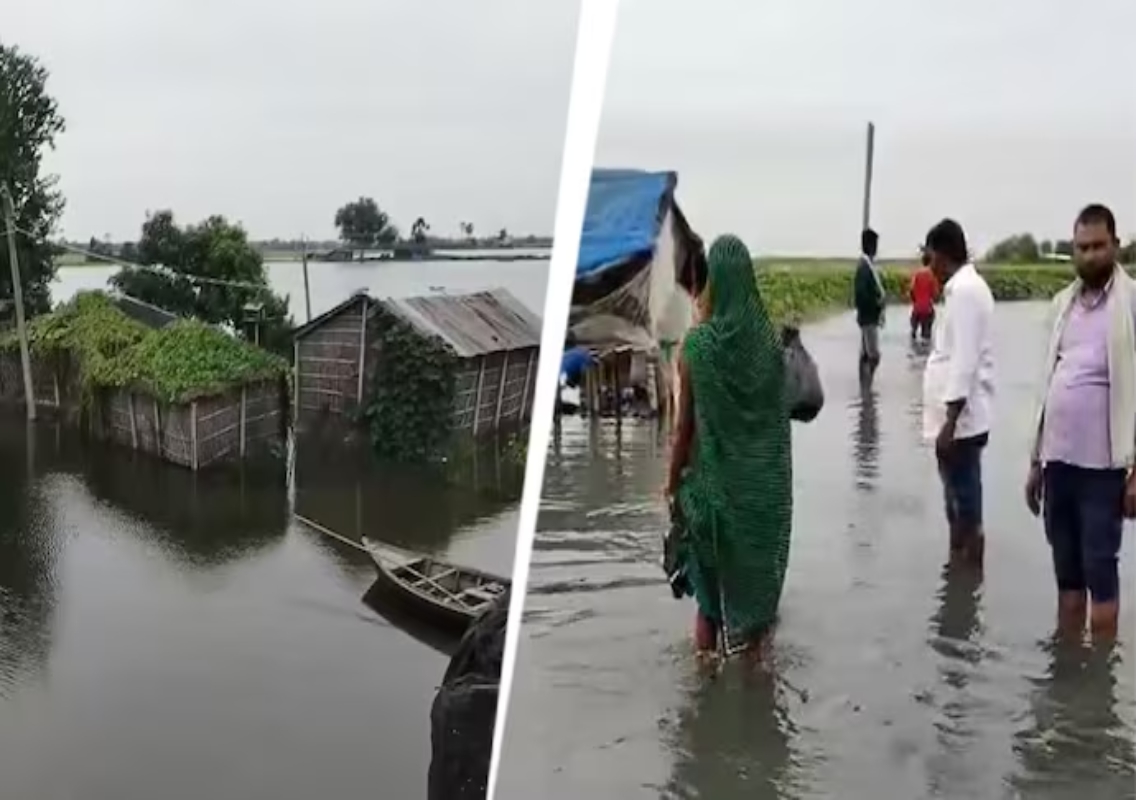


Saharsa: Several villages along the Kosi river in Bihar’s Saharsa district have been inundated following heavy rainfall in Nepal and increased water discharge through the Kosi Barrage, leaving residents inside the embankments struggling to access food, drinking water and fodder for livestock.
Residents living between the eastern and western Kosi embankments said floodwater had entered their homes and kitchens, while the rising current was making movement by boat increasingly difficult. Many families have remained inside their flooded houses, waiting for the water level to recede.
The flooding has renewed concerns in Bihar’s riverine districts as heavy rainfall in Nepal has increased flows in the Kosi and Gandak systems. The Bihar government has placed 17 north Bihar districts on high alert and directed officials to monitor vulnerable stretches and prepare for possible evacuations.
Water enters homes in Saharsa villages
Kedli village, located close to the eastern Kosi embankment, is among the areas affected by the rising water. Residents said water had entered houses and that the situation had continued to worsen as the river level rose.
People living in Rampur and other villages inside the embankments have reported similar difficulties. Residents said they were struggling to arrange basic necessities, including food, drinking water, firewood and fodder for cattle.
For families dependent on livestock, the shortage of fodder has emerged as a major concern. Floodwater has also soaked firewood stored by households, making it difficult to cook meals.
Vibha Kumari, a Jeevika worker from Barhara, told India Today that water had entered homes and kitchens, leaving some families struggling to prepare food. She said some residents were managing with only one meal a day.
The situation has particularly affected households that have chosen to remain in their homes rather than move to safer locations.
Residents seek more boats for evacuation
Residents have also raised concerns over the availability of boats to move people out of the flooded areas.
Several villagers said they had not seen enough boats despite assurances from the administration that evacuation arrangements were available. With water surrounding houses and roads becoming difficult to use, boats have become an important means of transport for people living inside the embankments.
Boatman Ram Kumar Mukhiya said the stronger river current was making navigation more difficult. Boats were sometimes carrying between 20 and 25 people at a time, he said, increasing the challenges involved in moving residents through the swollen river.
The district administration had already appealed to people living between the embankments to leave their homes and shift to higher ground because of the expected rise in water levels.
For residents who depend on cattle and other livestock for their livelihoods, evacuation also involves the difficult task of arranging space and fodder for animals.
Kosi discharge rises after Nepal rainfall
The latest flooding is linked to increased water discharge through the Kosi system following heavy rainfall in Nepal.
The Kosi originates in Nepal before entering Bihar and flowing through one of the state’s most flood-prone regions. Changes in water levels and discharge upstream can have a direct impact on communities living along the river in Bihar.
According to the Water Resources Department, discharge through the Birpur barrage on the Kosi reached 3.13 lakh cusecs at 6 am on September 26. The discharge later fell to 2.90 lakh cusecs by 2 pm. The department said the figure represented the highest discharge recorded at the barrage during the season at that point.
The Valmikinagar barrage on the Gandak also recorded high discharge, reaching 2.86 lakh cusecs by 11 am before rising to 3 lakh cusecs by 2 pm.
Both barrages recorded their highest discharge levels of the season, according to the Water Resources Department.
17 north Bihar districts on high alert
The Bihar government has placed 17 districts in north Bihar on high alert following the increase in water discharge from the Kosi and Gandak barrages.
The districts include Sitamarhi, West Champaran, East Champaran, Sheohar, Vaishali, Gopalganj, Saran, Madhubani, Darbhanga, Samastipur, Muzaffarpur, Saharsa, Supaul, Madhepura, Katihar, Khagaria and Begusarai.
Chief Secretary Pratyaya Amrit held a high-level review meeting at the Disaster Management Department headquarters. District magistrates from sensitive areas participated through videoconferencing.
The administration, Water Resources Department, National Disaster Response Force and State Disaster Response Force have been asked to remain on high alert and closely monitor the situation.
District officials have also been instructed to issue advance warnings in vulnerable areas through public announcements and keep residents prepared for evacuation if floodwaters enter their localities.
The state Disaster Management Department’s toll-free emergency number, 1070, has also been made available for assistance.
Nepal rainfall adds to downstream concerns
The latest rise in water levels comes about a month after severe flash floods struck Nepal on August 26. The disaster affected communities along the Bhote Koshi and Trishuli river systems and caused extensive damage to homes, roads, bridges and hydropower infrastructure.
Fresh heavy rainfall in Nepal in late September has raised concerns about additional water flowing into river systems connected to Bihar. India Today had earlier reported that Nepal’s weather authorities had forecast heavy to very heavy rainfall between September 25 and 27, with risks of flooding and landslides in vulnerable areas.
The renewed rainfall has therefore placed additional pressure on authorities monitoring the Kosi and other rivers flowing into Bihar.
However, the Bihar Water Resources Department said the possibility of a severe flood situation remained low at the time of its assessment because the Ganga’s water level had fallen and the river still had capacity to absorb additional water from tributaries such as the Kosi, Gandak and Bagmati. Officials said constant vigilance was nevertheless being maintained.
Villagers wait for water levels to recede
For people living inside the Kosi embankments, the immediate concerns remain access to food, safe drinking water, transport and livestock fodder.
Families whose kitchens and firewood have been affected by floodwater are finding it difficult to prepare regular meals, while those with cattle face the additional challenge of keeping animals fed.
The district administration has urged residents in vulnerable areas to move to higher ground, but evacuation remains difficult for people who need to protect their homes and livestock.
Authorities continue to monitor water levels and barrage discharge as the situation develops. The availability of boats, relief supplies and fodder is likely to remain important for communities affected by the flooding.
The Kosi flood situation in Saharsa also underlines the vulnerability of villages located within the river’s embankments, where even a rise in discharge can quickly affect homes and access routes.
For now, officials remain on alert across north Bihar while residents in affected Saharsa villages wait for the water to recede and for access to essential supplies to improve.