







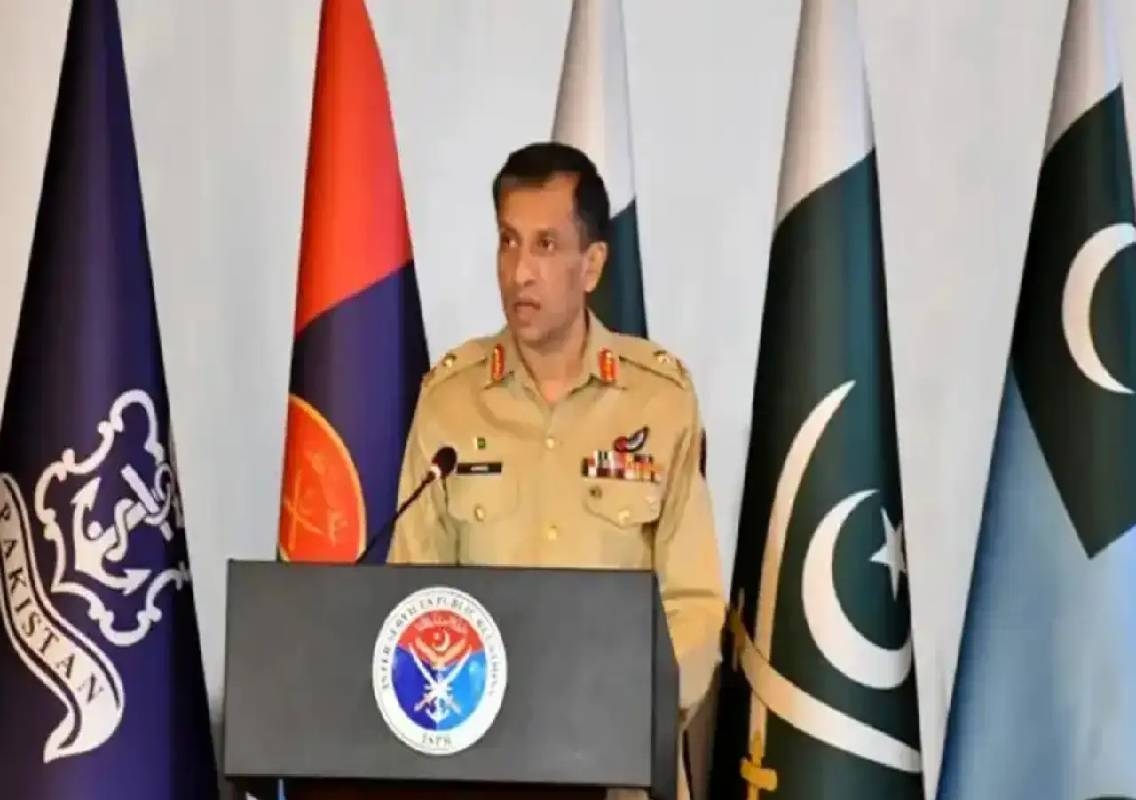


Islamabad: Pakistan’s military has launched a sharp public attack on Afghanistan’s Taliban leadership, accusing it of becoming subservient to India’s ruling establishment and abandoning Islamic values. The remarks by Pakistan Army spokesperson Lt Gen Ahmed Sharif Chaudhry come amid rapidly improving diplomatic and trade engagement between India and the Taliban-led government in Kabul, further straining already tense Pakistan-Afghanistan relations.
During a recent press briefing, Chaudhry criticised the Taliban regime over its relationship with India, claiming the Afghan leadership had chosen to align itself with what he described as “kafirs” (non-believers). His comments followed recent remarks by a senior Taliban minister praising India’s hospitality and describing India and Afghanistan as sharing the same “DNA.”
Pakistan army targets Taliban leadership
Responding to a question about growing India-Afghanistan engagement, Lt Gen Ahmed Sharif Chaudhry questioned whether the Taliban government represented Islamic values.
He criticised the Taliban’s governance, referring to its treatment of women, children and its issuance of religious decrees, before alleging that the Afghan regime had become closely aligned with India’s ruling BJP and the RSS. He characterised the relationship as one of “master and slave”, accusing the Taliban leadership of compromising its ideological principles.
Remarks follow Taliban minister’s India visit
The Pakistani military’s criticism comes after Afghanistan’s Agriculture Minister Mawlawi Ataullah Omari visited India last month to strengthen bilateral trade and investment ties.
Speaking during an India-Afghanistan business interaction in New Delhi, Omari said he felt “at home” in India from the moment he arrived. He added that India and Afghanistan shared the same “DNA”, remarks that were warmly received during the event and later circulated widely on social media.
Referring to those comments, Chaudhry argued that the Taliban leadership did not represent ordinary Afghans and claimed the Afghan people were themselves suffering under Taliban rule.
India and Taliban expand engagement
India has steadily expanded diplomatic engagement with the Taliban administration since it returned to power in Afghanistan.
While New Delhi has not formally recognised the Taliban government, both sides have increased cooperation on humanitarian assistance, trade and connectivity. Senior Taliban officials have also visited India in recent months for discussions on bilateral economic ties.
Pakistan-Afghanistan ties remain strained
Relations between Pakistan and the Taliban-led government have deteriorated significantly over the past year.
Islamabad has repeatedly accused Kabul of sheltering militants linked to the Tehrik-e-Taliban Pakistan (TTP), allegations the Taliban denies. Cross-border military operations and escalating rhetoric have further deepened tensions between the two neighbours.
Security analysts say Pakistan’s latest criticism also reflects growing concern over Kabul’s improving relationship with New Delhi, which Islamabad has traditionally viewed with suspicion.
Diplomatic significance
The latest remarks underline the increasingly complex geopolitical dynamics in South Asia.
As India continues to expand engagement with Afghanistan while Pakistan’s relationship with the Taliban remains under pressure, analysts believe regional alignments could continue to evolve depending on developments in security, trade and diplomacy.
Conclusion
Pakistan’s military has publicly criticised the Taliban over its growing engagement with India, describing the relationship in unusually harsh terms. The comments highlight worsening Islamabad-Kabul relations at a time when India is expanding economic and diplomatic contacts with the Taliban administration, signalling a further shift in the regional strategic landscape.