







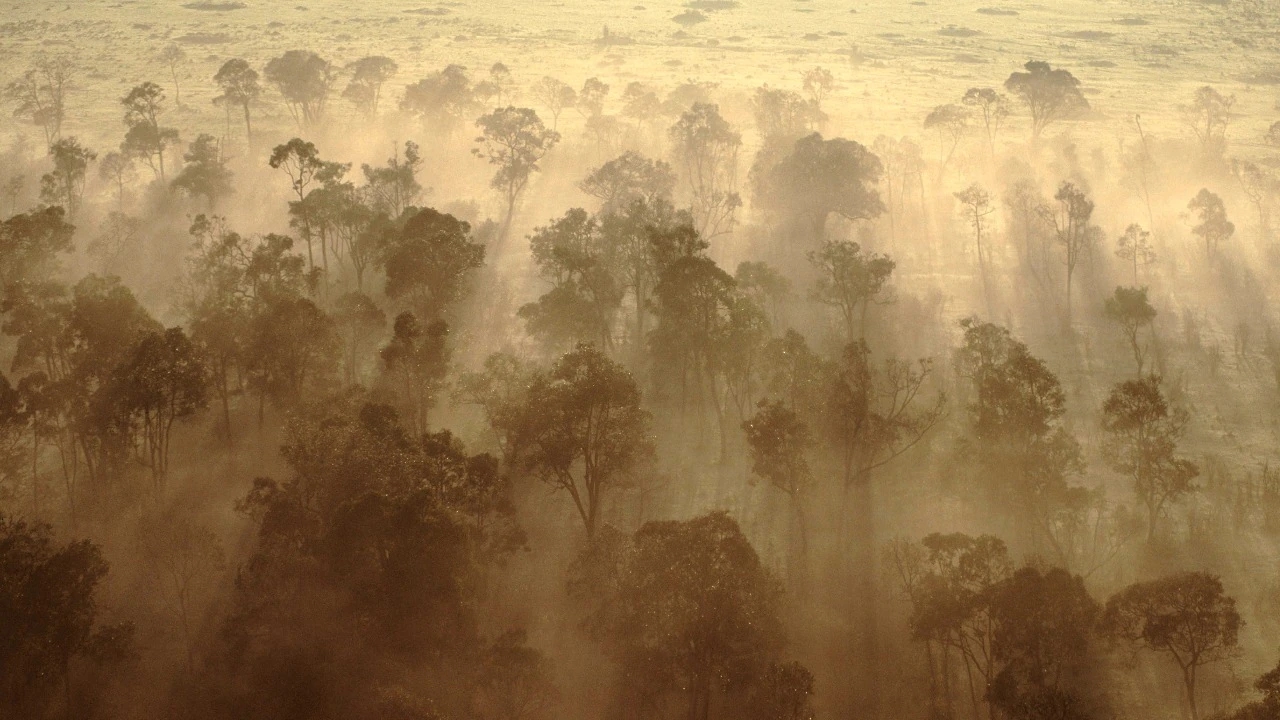


A new study published in Nature has delivered a stark warning: Africa’s forests and woody savannas, long regarded as powerful carbon sinks, have shifted into carbon sources. Between 2010 and 2017, these ecosystems released more carbon than they absorbed, reversing centuries of natural climate regulation.
Researchers from the National Centre for Earth Observation at the Universities of Leicester, Sheffield and Edinburgh used satellite data to track the continent’s carbon cycle. Their findings show that Africa’s forests—responsible for nearly one-fifth of global carbon removal—lost 106 million tonnes of biomass annually between 2011 and 2017, severely reducing their ability to absorb carbon.
The report calls this transition “profound”, noting that the change widens the global emissions gap and threatens the goals of the Paris Agreement, which aims to limit global warming to below 2°C.
Pressure from logging, farming and rising demand
The study identifies increased logging, agricultural expansion and infrastructure development as key drivers of forest loss. Growing populations and rising export demand, especially for timber and fuelwood, have intensified pressure on forest landscapes in regions such as the Democratic Republic of the Congo, Madagascar and West Africa.
These land-use changes disrupt the delicate balance that once allowed Africa’s forests to absorb vast amounts of carbon through photosynthesis. With fewer trees and degraded ecosystems, the carbon-storing capacity has sharply diminished.
According to the authors, the future of these forests will depend heavily on sustainable land management and improved governance.
For related environmental reporting, see climate action developments and ecosystem conservation stories.
Global forests under threat
Africa’s crisis mirrors concerns in the Amazon rainforest, where deforestation has similarly threatened one of the world’s largest carbon sinks. Although stronger enforcement in Brazil has slowed the Amazon’s decline, scientists warn that continued forest loss worldwide could have catastrophic consequences for climate stability.
Environmental organisations highlight that losing forest sinks would require even faster reductions in global fossil-fuel emissions. As co-author Prof Heiko Balzter explains, “If we are losing the tropical forests as one of the means of mitigating climate change, then we basically have to reduce our emissions even faster.”
A call for global responsibility
The report urges nations to strengthen forest protection programmes, including initiatives such as Brazil’s Tropical Forest Forever Facility, which aims to compensate countries for preserving ecosystems. However, current funding remains far below what is required to safeguard these critical landscapes.
Without urgent intervention, scientists warn the world risks losing one of its most important natural buffers against climate change.