







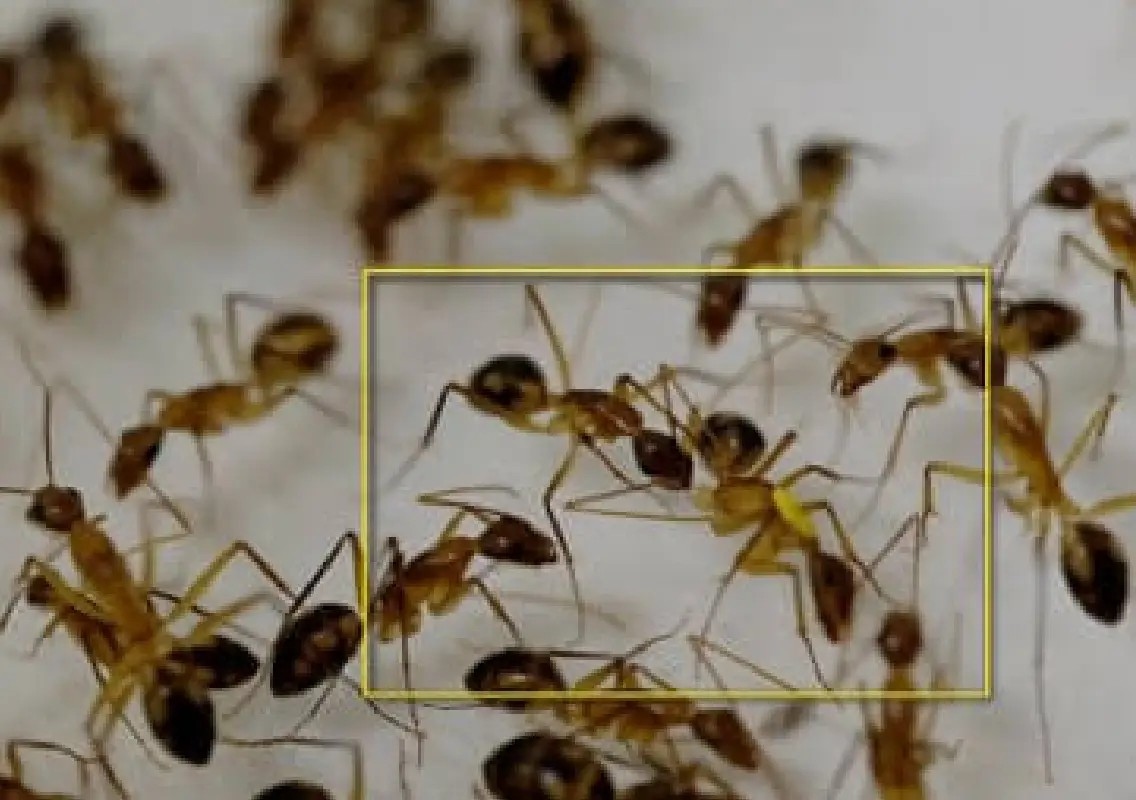


Florida carpenter ants have surprised scientists with an extraordinary form of wound care. When a nestmate suffers a leg injury, other ants assess the wound and appear to choose between cleaning it or amputating the injured limb.
Ants respond differently to different wounds
Research led by Dr Erik Frank of the University of Würzburg found that the ants’ response depends on where the injury occurs.
When an injury affects the lower part of the leg, near the tibia, nestmates repeatedly clean the wound using their mouthparts. They may continue the treatment for hours before leaving the injured ant to recover.
However, injuries higher up the leg, around the femur, trigger a dramatically different response.
Injured leg is bitten off
In experiments described in the July 2024 paper Wound-Dependent Leg Amputations to Combat Infections in an Ant Society, nestmates first cleaned the injury before moving towards the joint connecting the leg to the body.
They then repeatedly bit the injured leg until it was completely removed.
The process reportedly took about 40 minutes on average. After the amputation, the ants continued cleaning the resulting stump.
Researchers observed no attempts to amputate legs following tibia injuries, suggesting that the ants’ behaviour was not simply a general response to injury.
A remarkable survival strategy
The findings indicate that the ants may be able to assess the location of an injury and adopt a response suited to its severity and position.
For serious upper-leg injuries, removing the limb appears to provide an important defence against infection. For lower-leg wounds, prolonged cleaning may instead be sufficient.
The study offers a striking example of social behaviour in insects, showing how one ant’s actions can directly influence the survival of another.