







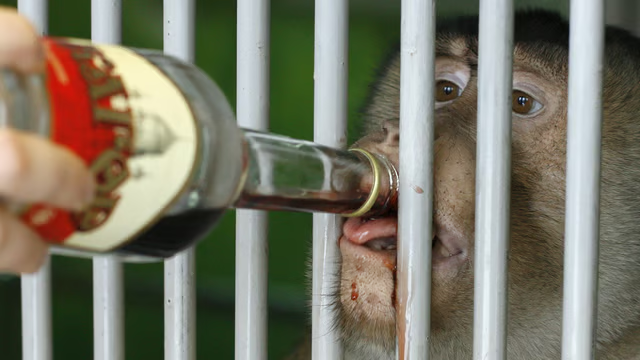


Humans are not the only species to encounter alcohol. In nature, fermentation occurs naturally when fruits, nectar or sap break down, producing ethanol. Several animals consume these fermented foods—sometimes deliberately, sometimes by accident—offering scientists valuable insights into evolution, metabolism and behaviour.
Researchers emphasise that this is not about animals “partying”, but about how species have adapted over time to environments where fermented food sources are common.
Fruit flies and fermented fruit
Among the most studied examples are Fruit fly. Fruit flies are naturally attracted to rotting fruit, which often contains measurable levels of ethanol.
Scientific studies show that fruit flies not only tolerate alcohol but often prefer it. Male fruit flies deprived of mating opportunities have been observed consuming more alcohol, a behaviour that researchers compare to stress-induced drinking in humans. Remarkably, fruit flies metabolise alcohol efficiently using enzymes similar to those found in the human liver, making them a key model for studying alcohol tolerance.
Vervet monkeys and learned drinking
On the Caribbean islands of St Kitts and Nevis, Vervet monkey have gained attention for their fondness for alcohol. Their exposure likely began during colonial times, when sugarcane plantations produced rum. Over generations, the monkeys developed a habit of stealing unattended alcoholic drinks.
Researchers have found that their drinking patterns closely resemble those seen in humans. Within groups, scientists have identified light drinkers, heavy drinkers and binge drinkers. While some vervet monkeys actively seek alcohol, others consistently avoid it, suggesting that individual preference plays a role even among animals.
Cedar waxwings and accidental intoxication
Cedar waxwing, sleek and social birds known for their fruit-based diet, sometimes consume fermented berries during winter. Freezing and thawing cycles cause natural fermentation, increasing alcohol content in fruits.
As a result, cedar waxwings have occasionally been observed behaving erratically—swaying on branches, struggling to fly straight or colliding with windows. Scientists believe this is accidental rather than intentional. Most birds metabolise alcohol quickly, and such incidents rarely cause lasting harm.
What this reveals about evolution
Experts note that tolerance to low levels of ethanol may offer evolutionary advantages, allowing animals to exploit calorie-rich fermented foods. Studying these behaviours helps scientists understand metabolism, adaptation and even aspects of human alcohol consumption.
Rather than novelty, alcohol in the wild is a reminder that fermentation has long been part of Earth’s ecosystems—and life has evolved alongside it.