







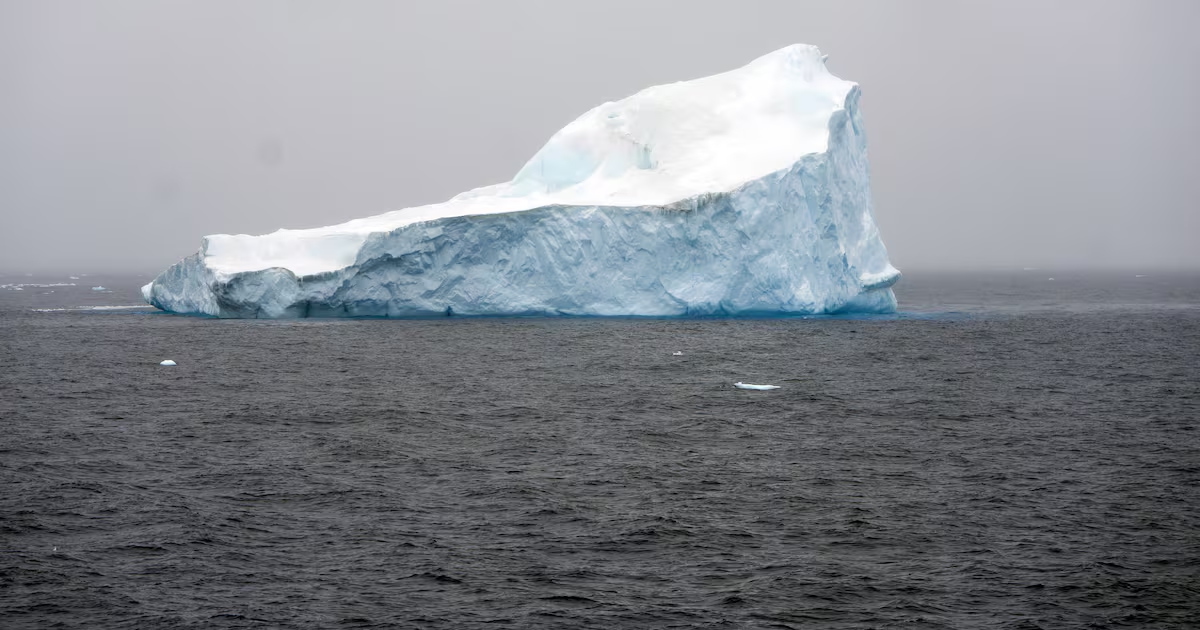


One of the world’s longest-tracked icebergs, Iceberg A-23A, is showing clear signs of advanced melting as it enters what scientists describe as its final stage of disintegration.
The massive iceberg broke away from the Filchner Ice Shelf in 1986 and has since remained under close scientific observation. At its peak, A-23A covered nearly 4,000 square kilometres. Recent estimates indicate it has now shrunk to about 1,182 square kilometres as of the first week of January 2026.
Blue ponds signal rapid melting
Satellite imagery reveals that the iceberg has begun turning a striking shade of blue — a key indicator of surface meltwater accumulation. According to scientists, blue melt ponds form when ice thins and water pools on the surface, accelerating structural weakness.
Images captured by NASA using the Terra satellite on December 26, 2025, show extensive meltwater ponds spread across the iceberg’s surface. Experts warn that the weight of this water is forcing existing cracks to widen.
Drifting into warmer waters
After decades of slow movement, A-23A is now positioned between South America and South Georgia Island, having drifted into warmer ocean currents. Scientists say this transition has significantly increased the rate of melting and fragmentation.
Breakup expected soon
Glaciologists believe the iceberg could break apart at any time due to rising ocean temperatures and warmer air conditions. While A-23A no longer poses a direct threat to human settlements, its breakup offers critical insights into how Antarctic ice responds to climate change.
Researchers note that long-surviving icebergs like A-23A act as natural laboratories, helping scientists better understand melting dynamics, sea-level rise, and the broader impacts of global warming.