







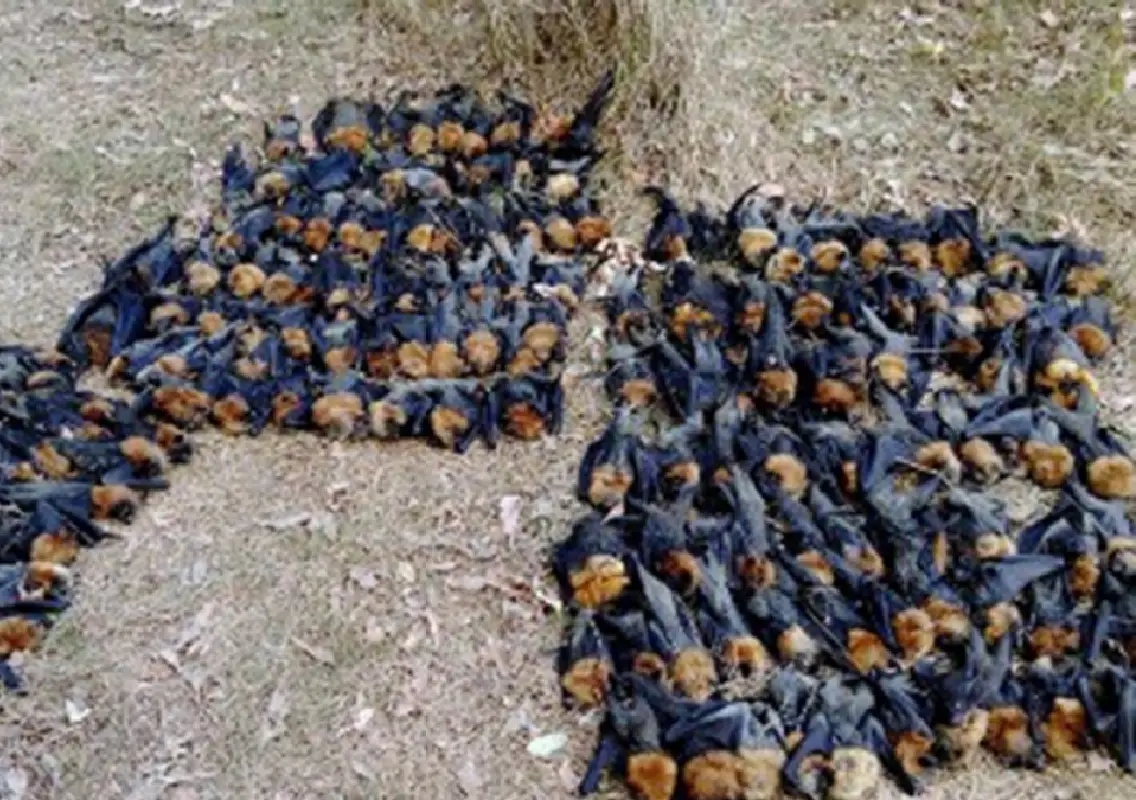


Thousands of flying foxes have died during an intense heatwave that swept across south-east Australia last week, marking the largest mass mortality event for the species since the devastating Black Summer bushfires of 2019–20.
Extreme temperatures affected flying fox camps across South Australia, Victoria and New South Wales, with grey-headed flying foxes — listed as vulnerable under federal environmental laws — bearing the brunt of the losses.
Camps overwhelmed by deaths
Tamsyn Hogarth, director of the Fly By Night Bat Clinic in Melbourne, said volunteers encountered thousands of dead bats at Brimbank Park, with hundreds more found at Yarra Bend and Tatura.
Volunteers rescued dozens of pups discovered clinging to deceased mothers. Without intervention, these orphaned pups face death from heat stress, starvation or predation. Hogarth said many adult bats also succumbed in exposed parts of colonies, particularly trees with limited shade and along sun-baked riverbanks.
Temperatures beyond survival limits
Researchers are still assessing the scale of the loss, estimating at least 1,000–2,000 deaths in South Australia, several thousand in Victoria, and up to 1,000 in New South Wales.
Professor Justin Welbergen from Western Sydney University said temperatures above 42°C are known to cause flying fox deaths on a massive scale.
“This is the most significant mass mortality event since Black Summer,” he said, noting that more than 72,000 flying foxes died during extreme heat events in 2019–20.
Wider warning for wildlife
Dr Wayne Boardman from the University of Adelaide explained that bats first show visible distress before dehydration and heat stroke make survival extremely difficult.
Wildlife authorities have urged the public not to handle bats and to contact rescue organisations instead. Experts warn that flying foxes act as “canaries in the coal mine”, signalling the growing threat extreme heat poses to Australia’s wildlife as climate change intensifies.