







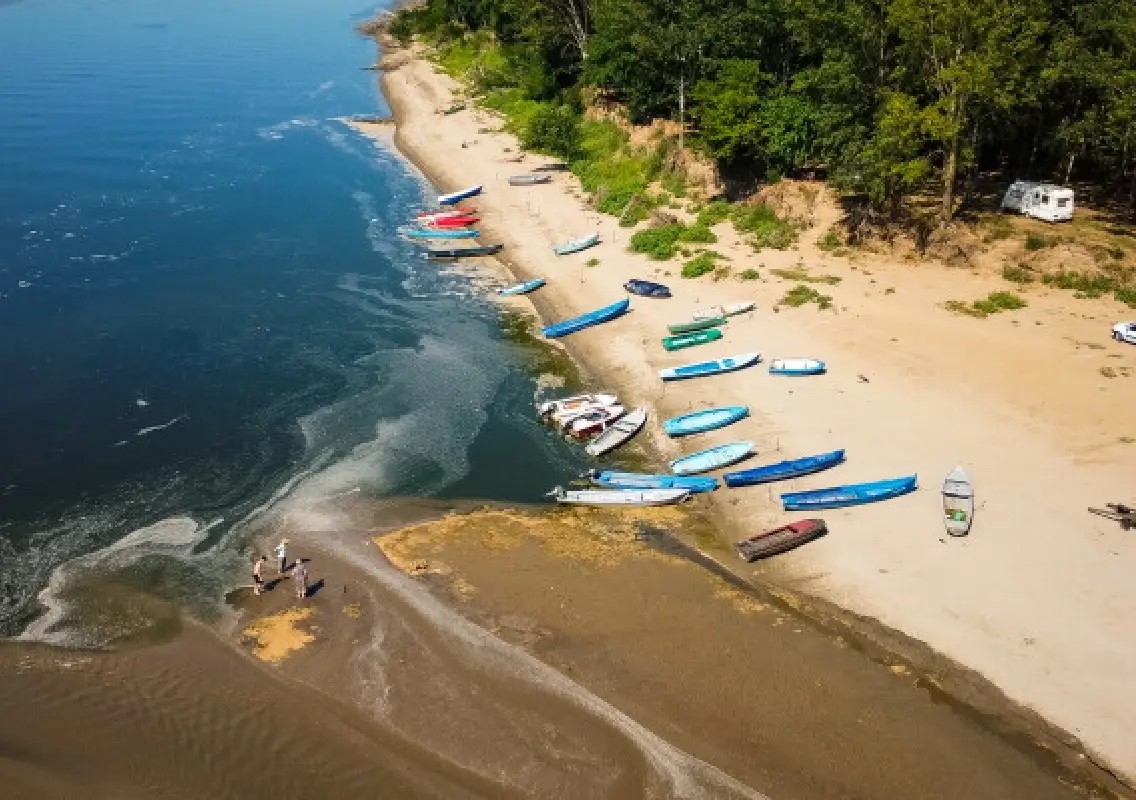


Budapest: A severe drought has transformed parts of the Danube, exposing riverbed stretches, damaging crops and leaving some communities struggling with access to drinking water. The crisis is unfolding across one of Europe’s most important waterways as prolonged heat and climate pressures intensify.
The Guardian’s journey along around 100 miles of the river documented the striking changes, from farmers facing major harvest losses to cyclists travelling across sections of exposed riverbed.
Crops bear the cost of the drought
Agricultural communities have been among the hardest hit. Around Pócsmegyer in Hungary, farmers have reportedly lost as much as 70% of their harvests as dry conditions damage crops and reduce water availability.
The drought is also affecting towns and ecosystems that depend on the Danube. In some areas, authorities have had to provide bottled water and pump water into nature reserves to protect wildlife and vegetation.
The ‘Rock of Starvation’ emerges
Exceptionally low water levels have revealed the historic ‘Rock of Starvation’, or Ínség-szikla, near Budapest’s Liberty Bridge. The sandstone formation traditionally becomes visible during severe droughts and historically served as a warning of poor harvests and hardship.
Its reappearance has become a powerful symbol of the scale of the current crisis.
Drought threatens energy and communities
The effects extend beyond farming. Low Danube levels have disrupted energy production, including nuclear power generation that depends on river water for cooling. Romania recently shut down its last operating nuclear reactor at Cernavoda because of record-low river levels.
The unfolding crisis highlights how extreme heat, prolonged drought and changing rainfall patterns can affect food production, drinking water, energy and ecosystems simultaneously.
For communities along the Danube, the shrinking river is no longer simply an environmental concern but an increasingly urgent question of everyday survival.