







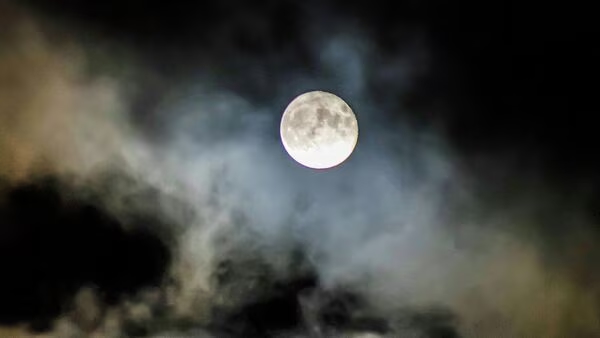


The year 2026 began with a striking celestial spectacle as the January full Moon — popularly known as the Wolf Moon — appeared as a supermoon, captivating stargazers across India and around the world.
The Wolf Moon reached its peak on January 2, shining brighter and appearing noticeably larger than a regular full Moon. As images poured in from different countries, social media was flooded with photographs of the glowing Moon framed against landscapes, monuments and winter skies.
What makes the Wolf Moon special
A supermoon occurs when the full Moon coincides with its closest approach to Earth in its orbit, known as perigee. During this phase, the Moon can appear up to 14 per cent larger and around 30 per cent brighter than an average full Moon, according to NASA.
The January Wolf Moon is the first of three supermoons expected in 2026, making it a particularly anticipated event for astronomy enthusiasts.
Rare timing adds to the spectacle
This year’s Wolf Moon gained additional significance as it appeared just a day before Earth reached perihelion — its closest point to the Sun — on January 3. The rare timing enhanced interest in the event, even though the two phenomena are not directly related.
Skywatchers in India reported clear views of the Moon rising large and luminous on the eastern horizon shortly after sunset.
Jupiter adds to the visual treat
Observers were also treated to a planetary pairing. As darkness fell on January 2, the bright planet Jupiter was visible just below the Moon. Over the course of the evening, the two appeared to drift closer together, creating a striking and photogenic alignment.
Astronomy enthusiasts noted that the pairing was easily visible to the naked eye, even from urban areas with moderate light pollution.
Why it’s called the Wolf Moon
The name Wolf Moon comes from Native American and European traditions, referring to mid-winter when wolves were often heard howling near human settlements. Over time, the term has become widely used to describe January’s full Moon.
Viral images from locations such as Kashmir, Glastonbury and city skylines around the world showed the Moon glowing dramatically behind landmarks, drawing comparisons to scenes from fantasy films.
More skywatching ahead
With two more supermoons expected later in the year, astronomers say 2026 promises to be an exciting year for skywatchers. Clear skies and minimal light pollution offer the best viewing conditions for future lunar events.