







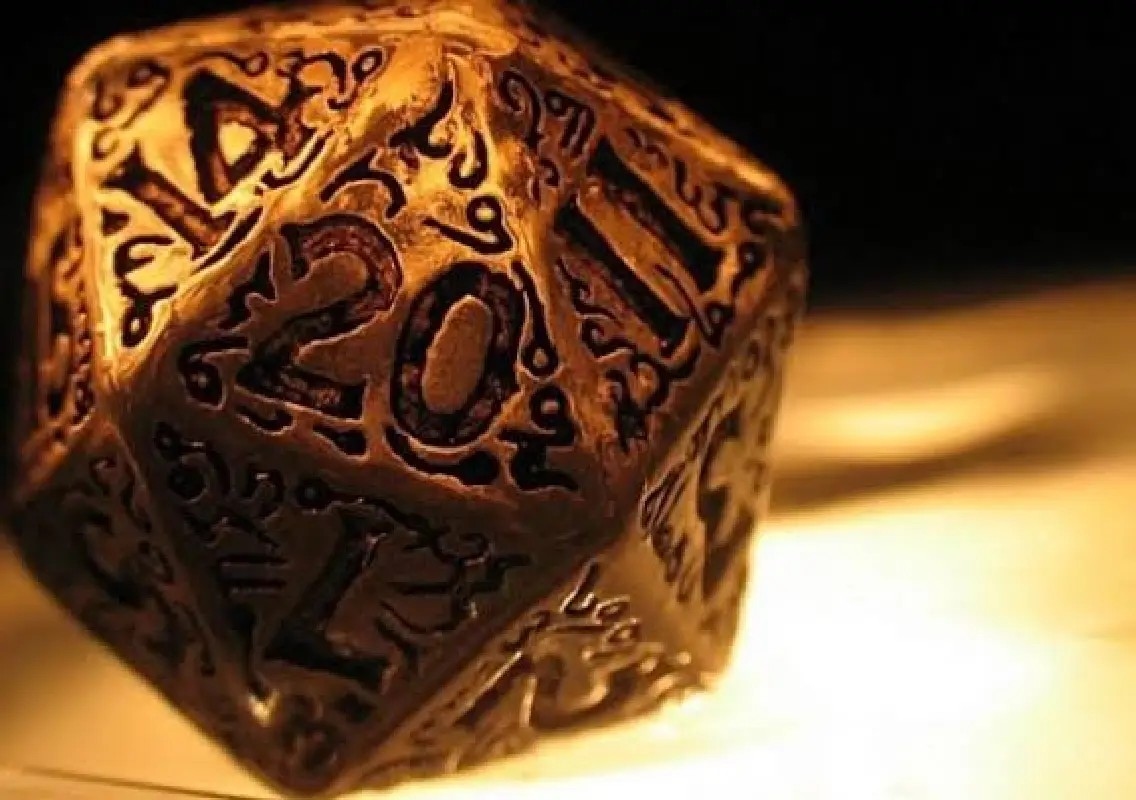


A question that began over dinner at a gaming convention has taken nearly 15 years to answer. Mathematician Eric Harshbarger and his colleagues have developed a set of dice designed to fairly determine who goes first in a five-player board game, while guaranteeing that nobody ties.
The unusual problem highlights how even a seemingly simple everyday question can lead to years of mathematical investigation.
A simple game-night problem became a puzzle
Harshbarger, a mathematician and senior lecturer at Auburn University, was asked in 2012 whether dice could give every player an equal chance of going first without producing a tie.
Solutions for two, three and four players were found relatively quickly. Five players proved far more challenging.
Researchers knew a mathematical solution existed, but turning the theory into a physical die was another matter. One early theoretical design required 1,440 sides, making it impractical to manufacture.
A breakthrough came after years of searching
Researchers eventually developed a five-dice solution using 120-sided dice. The breakthrough came when Canadian software engineer Paul Meyer joined the effort.
Using computational searches and patterns from earlier research, Meyer discovered a working design using five 60-sided dice. Harshbarger verified the result before accepting the solution.
The resulting Go First Dice are designed so that five players can roll simultaneously and produce a winner without a tie.
The puzzle is not quite over
The researchers are continuing to explore whether the number of sides can be reduced further. They know that 30 sides is the mathematical minimum currently established for a five-player solution and are also investigating whether similar designs could work for six players.
What began as a light-hearted gaming question has therefore become a long-running mathematical challenge, demonstrating how curiosity about an ordinary problem can lead to surprisingly complex discoveries. #Mathematics, #Dice, #BoardGames, #Science, #Innovation, #Puzzles