







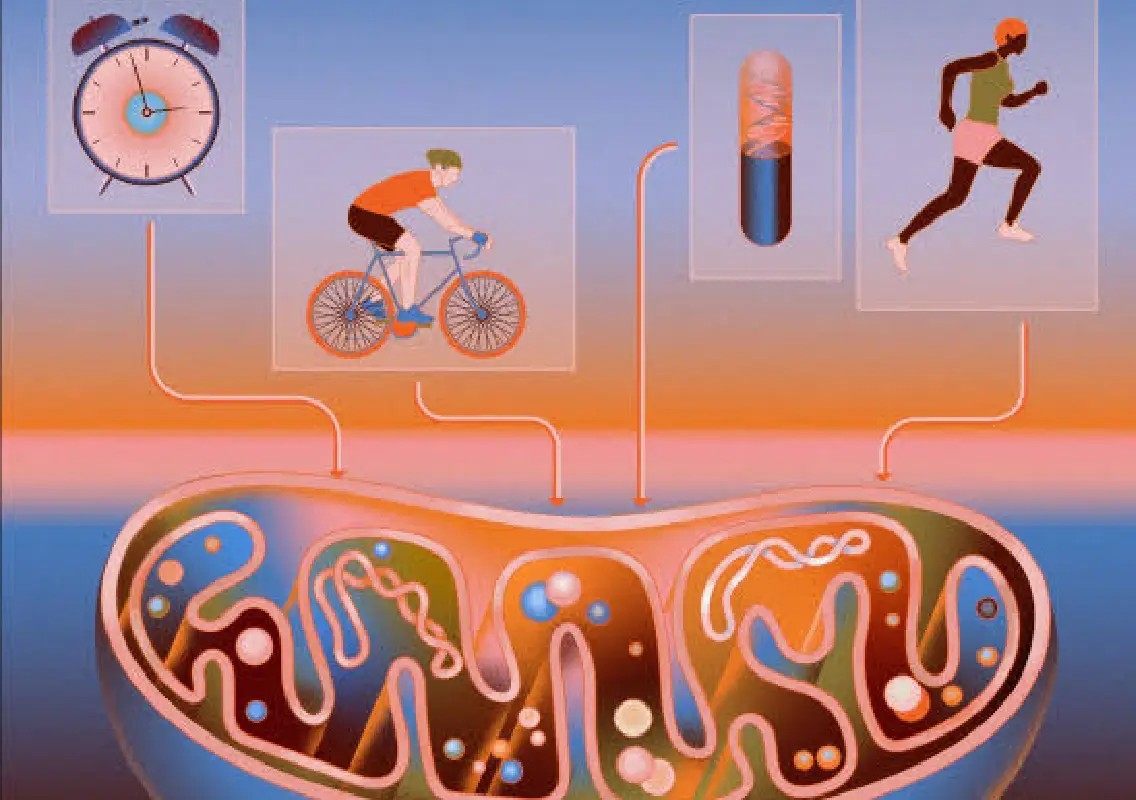


A newly published study has uncovered a surprisingly small molecular step that appears to have a major role in keeping human mitochondria functioning properly.
Researchers have found that the removal of a single amino acid from newly imported mitochondrial proteins can help maintain the stability of large protein complexes essential for cellular function. When this processing step is disrupted, mitochondrial protein assemblies can become unstable, break down into smaller units and impair energy production.
The findings, published on August 31 in Nature Structural & Molecular Biology, shed new light on how mitochondria maintain the quality and organisation of their proteins. The research also provides a possible explanation for how defects in mitochondrial protein processing may contribute to neurological, heart and kidney disorders.
Why mitochondria need such precise control
Mitochondria are often described as the powerhouses of cells because they play a central role in producing energy.
But their work is much broader. They are involved in metabolism, biosynthesis and signalling, and they depend on large groups of proteins working together in carefully organised structures.
Most mitochondrial proteins are actually produced from genes in the cell nucleus. They are first made outside the mitochondria and then transported into the organelle as precursor proteins.
Once inside, these proteins need to be processed correctly before they can perform their intended functions.
That is where the newly identified mechanism becomes important.
The missing piece is only one amino acid
The researchers focused on an enzyme called intermediate cleaving peptidase 55, or ICP55.
After a mitochondrial precursor protein enters the organelle, another enzyme first removes its targeting sequence. In certain proteins, ICP55 then removes one additional amino acid from the newly exposed end of the protein.
That may sound insignificant.
The study shows that it is anything but.
When ICP55 was removed from human cells, the additional amino acid remained attached to many mitochondrial proteins. The researchers identified 107 proteins that showed evidence of this single-amino-acid processing in normal mitochondria.
The study also identified two previously unrecognised amino acids — arginine and glutamine — as additional sequence features associated with ICP55 processing.
What happens when that amino acid stays behind?
The researchers found that retaining the extra amino acid can interfere with the way mitochondrial proteins interact with one another.
Instead of remaining within large, stable protein complexes, many proteins were found in smaller assemblies or as individual units when ICP55 was absent.
This effect was particularly important for complexes involved in the mitochondrial respiratory chain.
The respiratory chain is essential for producing energy in the form of ATP, which cells use to power many biological processes.
When ICP55 was removed, the researchers observed a reduction in respiratory-chain supercomplexes and increased instability of individual respiratory complexes. The cells also showed reduced mitochondrial respiration.
Restoring ICP55 reversed these effects, strengthening the evidence that the enzyme was directly responsible for maintaining the complexes.
A protein can be healthy but still fail as a team
One of the most interesting findings is that the problem was not necessarily that the affected proteins disappeared.
In many cases, the overall amount of a protein remained relatively stable.
The problem was how the proteins assembled.
Mitochondrial proteins often need to join with other proteins to form sophisticated molecular machines. If one component has a small structural alteration, the entire assembly can become less stable.
The study suggests that an additional amino acid at the end of certain proteins can interfere with these interactions.
In other words, the protein may still exist, but it may no longer fit properly into the molecular machinery it is supposed to join.
HSP60 reveals how a tiny change can matter
The researchers examined another important mitochondrial protein complex involving HSP60, a protein involved in helping other proteins fold correctly.
They found that HSP60 carrying the additional N-terminal amino acid was intrinsically less stable.
In laboratory experiments, the normally processed version formed stable oligomeric complexes. The version retaining the additional amino acid could initially assemble but subsequently broke down more readily into smaller units.
This provided direct experimental evidence that retaining just one additional amino acid can be enough to weaken a mitochondrial protein complex.
The finding gives a molecular explanation for what the researchers observed across the wider mitochondrial system.
The effect extends beyond energy production
The impact of losing ICP55 was not restricted to the respiratory chain.
Using large-scale complexome profiling, the researchers examined mitochondrial protein assemblies across the cell.
They identified widespread changes in protein-complex organisation, with many high-molecular-weight assemblies becoming less abundant and smaller assemblies becoming more common in cells lacking ICP55.
Metabolic protein complexes were also affected.
For example, the isocitrate dehydrogenase complex showed reduced levels of its fully assembled form, while smaller protein forms increased.
These findings indicate that ICP55 plays a broad role in maintaining mitochondrial protein architecture rather than controlling only one particular molecular pathway.
The findings could help explain disease
The study may also have implications for human disease.
Previous genetic studies have linked mutations affecting mitochondrial processing machinery, including ICP55, with serious conditions involving the nervous system, heart and kidneys.
The new findings provide a possible connection.
If mitochondrial protein complexes become unstable because proteins are not processed correctly, cells may gradually lose important mitochondrial functions.
Tissues such as the brain, heart and kidneys have high energy requirements, which may help explain why defects in mitochondrial function can have particularly serious consequences in these organs.
However, the researchers stress that further work is needed to establish how the findings observed in laboratory cells translate to patients.
Could this matter for ageing too?
The researchers raise another intriguing possibility.
Even relatively mild defects in mitochondrial protein processing could potentially contribute to mitochondrial decline over time.
Mitochondrial dysfunction is associated with several age-related conditions, but the exact mechanisms behind this decline remain an active area of research.
The study suggests that subtle defects in N-terminal protein processing could potentially contribute to this process.
That possibility remains a hypothesis rather than an established clinical finding, and researchers say patient-derived cells and animal models will be needed to investigate it further.
A tiny molecular cut with a much bigger role
The research changes the way scientists may think about mitochondrial protein quality control.
The removal of one amino acid might appear too small to have a major biological consequence.
Yet mitochondria depend on exceptionally precise protein structures, and even a minor change at the right location can affect how proteins interact.
The study suggests that N-terminal processing is not merely a finishing step after proteins enter mitochondria. It can determine whether those proteins become stable parts of the molecular machines that keep cells functioning.
The researchers describe ICP55 as an important safeguard of mitochondrial proteostasis — the system that helps maintain healthy, properly functioning proteins inside the organelle.
A new clue in the puzzle of mitochondrial health
The findings do not yet provide a treatment for mitochondrial disease.
But they offer scientists a new piece of the puzzle.
By showing that a single-amino-acid removal can influence the stability of numerous mitochondrial complexes, the study reveals a previously underappreciated level of control over cellular machinery.
It also demonstrates why the smallest molecular details can sometimes have the biggest consequences.
One amino acid may seem insignificant. Inside the highly organised world of the mitochondria, however, removing that single piece at exactly the right moment could help keep an entire network of molecular machines working together.