







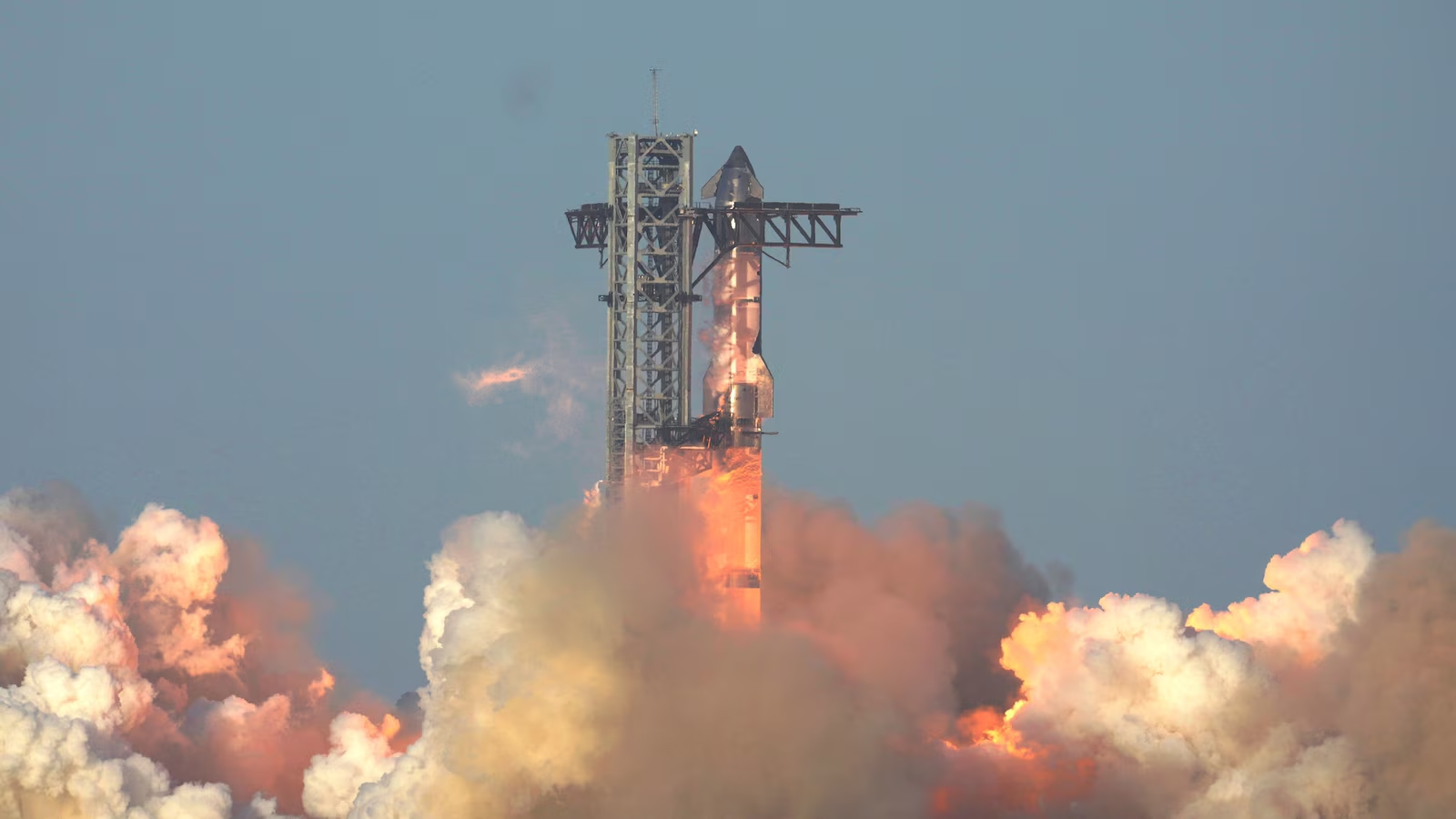


SpaceX’s colossal Starship rocket lifted off on Thursday but lost communication shortly after launch, spiraling uncontrollably before plummeting to Earth. This marks the eighth test flight, coming just two months after a prior explosion scattered burning wreckage over the Turks and Caicos.
Videos from Florida captured pieces of the spacecraft tumbling from the sky, sparking speculation over whether its self-destruct system had activated.
What went wrong?
The 403-foot (123-meter) rocket blasted off from Texas, with SpaceX successfully recovering its first-stage booster. However, the upper-stage spacecraft suffered multiple engine shutdowns as it soared eastward, aiming for a controlled descent over the Indian Ocean. Instead, it entered an uncontrolled spin, cutting off contact.
The spacecraft had reached an altitude of 90 miles (150 km) but never deployed its mock satellites. SpaceX later confirmed a “rapid unscheduled disassembly”, promising to analyze the data for improvements.
What’s next for SpaceX?
NASA has tapped Starship for upcoming lunar missions, while Elon Musk envisions it as humanity’s ticket to Mars. SpaceX has already redesigned key systems, and the FAA recently reapproved launches after the previous explosion.
Despite setbacks, each failed mission brings critical lessons—pushing the boundaries of space exploration.
Gold Prices Skyrocket Amid Wedding Season, Leaving Middle-Class Families Worried
World’s Most Powerful Rocket to Be Tested Soon for Mars Mission
#StarshipCrash #SpaceXFailure #ElonMusk #RocketTesting