







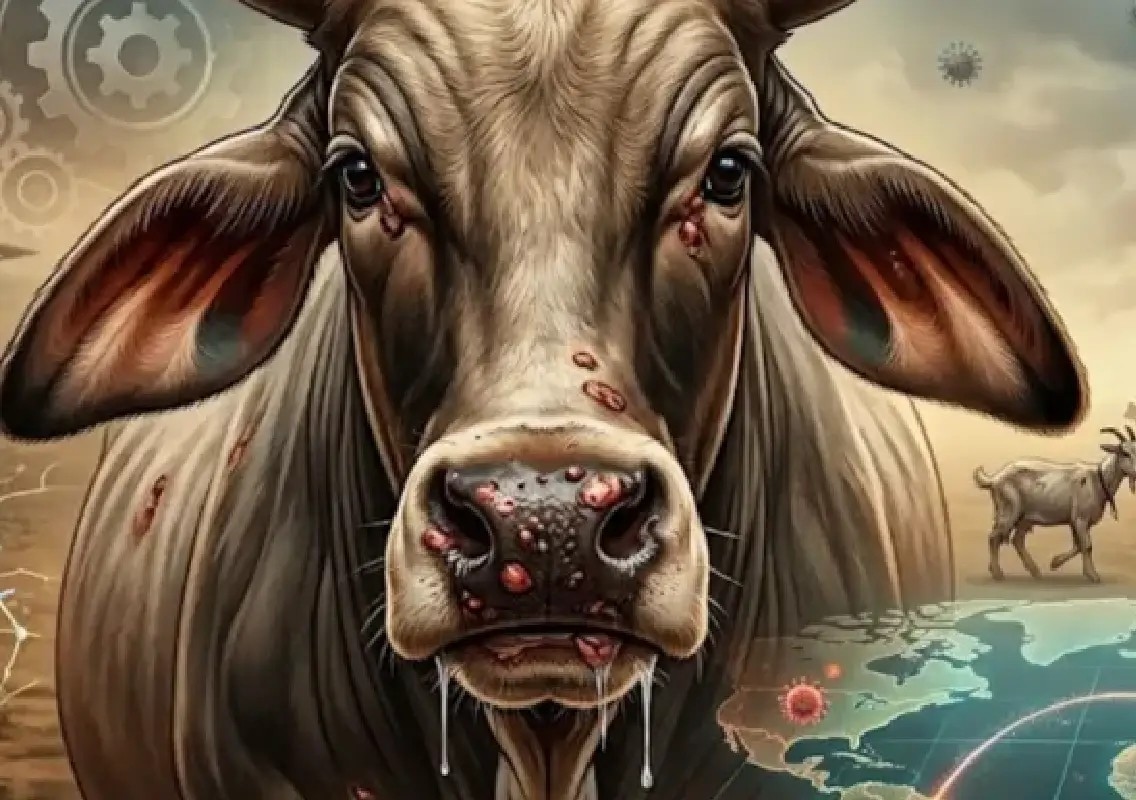


New Delhi : The return of SAT-1, a strain of foot-and-mouth disease (FMD), has raised concerns among animal-health authorities because of the potential impact on livestock, farming livelihoods and international trade. Recent outbreaks in parts of Europe and the Middle East have renewed attention on the disease and the importance of effective surveillance and vaccination.
Foot-and-mouth disease is a highly contagious viral disease affecting cloven-hoofed animals, including cattle, buffaloes, sheep, goats and pigs. While the disease is generally not considered a major human health threat, it can cause substantial economic losses in livestock-producing regions.
What is SAT-1?
SAT-1 is one of the recognised serotypes of the foot-and-mouth disease virus. The term SAT refers to the Southern African Territories, reflecting the region where these virus types were originally identified.
The FMD virus has multiple serotypes, and immunity against one serotype does not necessarily provide protection against another. This makes identifying the circulating strain important when designing appropriate vaccination and disease-control strategies.
SAT-1 is primarily associated with parts of Africa, although its detection outside traditionally affected regions can create significant animal-health concerns.
Why is its return concerning?
The re-emergence of SAT-1 in regions where it has not circulated recently is significant because livestock populations may have limited immunity against the particular strain.
When a new or previously absent serotype enters a susceptible animal population, it can spread rapidly if effective immunity is not available.
FMD spreads easily through infected animals and can also be transmitted through contaminated equipment, vehicles, clothing and other materials. Movement of livestock and animal products can further contribute to its spread.
Impact on livestock and farmers
Infected animals can develop fever, blisters and lesions around the mouth and feet, leading to difficulty eating and walking. Milk production can fall sharply, while young animals may suffer severe complications.
Even when adult animals survive, outbreaks can result in major economic losses for farmers because of reduced productivity, restrictions on animal movement and disruption to trade.
Countries affected by FMD may also face restrictions on the export of livestock and animal products, making disease control an important economic as well as veterinary priority.
Importance of vaccination and surveillance
Controlling FMD requires a combination of vaccination, early detection, movement controls, biosecurity and rapid response to suspected outbreaks.
Vaccines need to be appropriately matched to the circulating serotype. The presence of different FMD serotypes means that simply having vaccination programmes in place may not be sufficient if the vaccine does not provide adequate protection against the strain responsible for an outbreak.
Regular surveillance and laboratory testing are therefore essential for identifying changes in the virus and detecting its movement between regions.
Significance for India
Foot-and-mouth disease is particularly important for India because of the country’s large livestock population and the importance of cattle, buffaloes, sheep, goats and pigs to rural livelihoods.
India has implemented large-scale programmes to control and eliminate FMD, including systematic vaccination of susceptible livestock. Maintaining high vaccination coverage and monitoring for new or emerging serotypes remain important components of disease prevention.
The emergence of SAT-1 elsewhere also highlights the need for continued vigilance against the introduction of unfamiliar FMD strains.
A wider lesson for animal health
The renewed attention on SAT-1 demonstrates how animal diseases can have consequences extending beyond veterinary medicine. A livestock disease outbreak can affect farmers, food production, trade, rural economies and government resources.
International movement of animals and animal products makes cooperation between countries particularly important. Early sharing of information about outbreaks and effective disease surveillance can help authorities respond before infections spread more widely.
For livestock-owning communities, maintaining vaccination schedules, practising good farm biosecurity and promptly reporting animals showing suspicious symptoms remain important preventive measures.
The resurgence of SAT-1 is therefore a reminder that continued investment in animal disease surveillance, vaccination and preparedness remains essential to protecting livestock and the livelihoods that depend on them.