









Guangzhou: Scientists have reconstructed the ancestral karyotype of the banana family, offering new insight into how chromosome numbers changed during the evolution of one of the world’s most important tropical crops.
The study, led by researchers from the South China Botanical Garden (SCBG) of the Chinese Academy of Sciences (CAS) in collaboration with Sichuan University and other institutions, has traced the evolutionary history of the Musaceae family. Their findings show that the ancestral chromosome number was likely 17, before declining through a series of evolutionary changes to the base numbers of 9, 10 and 11 found among present-day members of the family.
The research, published in Current Biology, could have implications beyond understanding the evolutionary history of bananas. It may also help scientists identify genetic resources in wild banana relatives that could eventually support efforts to develop more resilient cultivated varieties.
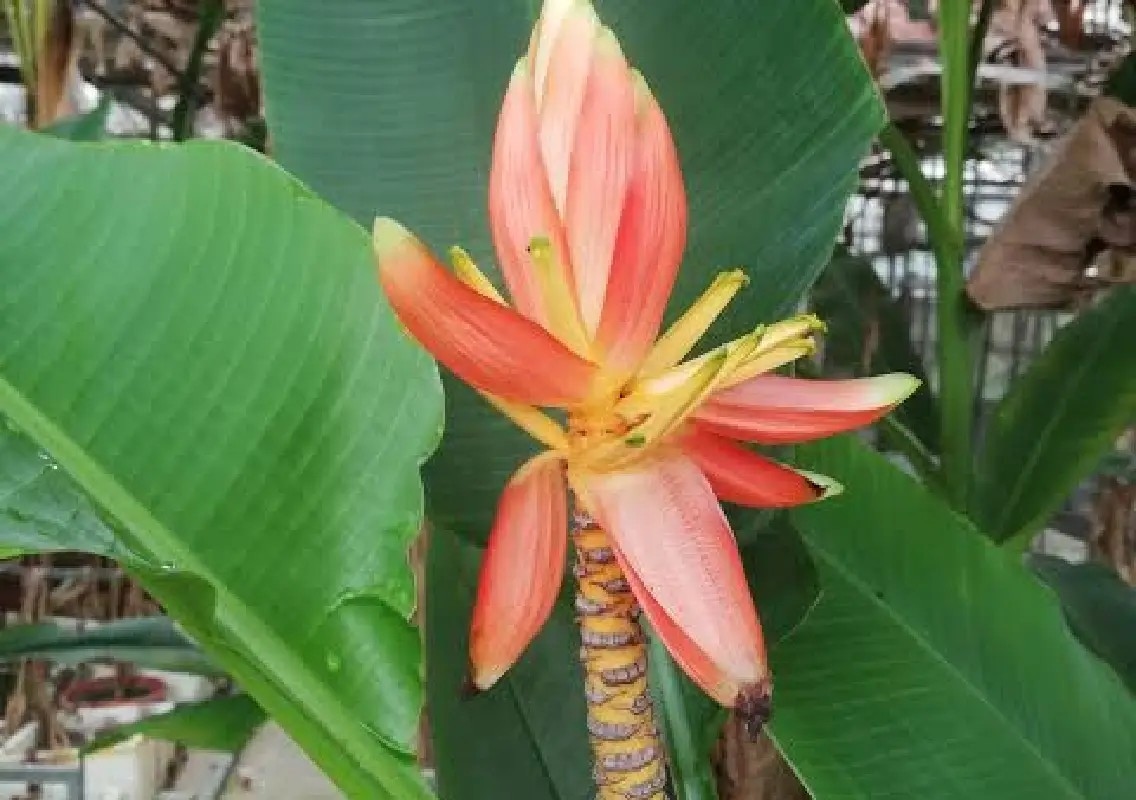
The banana family contains about 80 existing species, displaying considerable variation in chromosome numbers and characteristics such as bract colour. The cultivated banana (Musa species) is by far its best-known member and is an important food and commercial crop across tropical and subtropical regions.
Scientists trace chromosome changes
Chromosomes are structures that carry an organism’s genetic information. Changes in chromosome number and structure can play an important role in the evolution and diversification of plant species.
The new research has provided a reconstruction of the ancestral chromosome arrangement of Musaceae, allowing scientists to examine how the family’s genome changed over millions of years.
Researchers found evidence that the ancestral banana family had a chromosome number of 17. This number did not disappear in a single evolutionary event. Instead, chromosome numbers declined progressively, eventually producing the base numbers seen in modern banana relatives.
The researchers described the reduction as a stepwise evolutionary process, with present-day species possessing chromosome numbers of 9, 10 or 11.
Understanding this process can help scientists determine how different banana lineages diverged and how their genomes were reshaped as the plants evolved.
Banana family has remarkable diversity
The Musaceae family is relatively small compared with many other plant groups, containing approximately 80 extant species. Yet its members show substantial genetic and physical diversity.
One of the differences researchers have examined is chromosome base number. Species within the family can have base numbers of 9, 10 or 11.
The plants also differ in the colour of their bracts. Bracts are specialised leaves associated with flowers or inflorescences and can be an important visible characteristic in distinguishing plant species.
The diversity found among wild banana relatives provides scientists with a valuable source of genetic information.
While cultivated bananas have been selected for characteristics that make them useful as food crops, wild relatives have retained genetic traits that may have been lost or reduced during domestication and intensive cultivation.
These traits could become increasingly important as scientists seek to make banana crops more resistant to disease and better adapted to changing environmental conditions.
Cultivated bananas face genetic challenges
Bananas are an important food source for more than 400 million people, making the health of banana crops a significant food-security concern in many tropical and subtropical regions.
However, many modern cultivated varieties have a narrow genetic base.
One reason is their heavy dependence on vegetative propagation, in which new plants are produced from existing plant material rather than through conventional seed-based reproduction.
This method allows farmers to reproduce plants with desirable characteristics consistently. However, it can also limit genetic diversity within cultivated populations.
A genetically uniform crop can be particularly vulnerable when a disease or pest is capable of affecting the dominant varieties.
If a large proportion of plants share similar genetic characteristics, a pathogen that can overcome their natural defences may spread rapidly through plantations.
The researchers therefore emphasise the importance of studying wild banana relatives as potential sources of genetic diversity.
Wild relatives may hold valuable traits
Wild banana species contain genetic variation that could help scientists address some of the challenges faced by cultivated bananas.
These wild relatives may possess traits associated with resistance to diseases, tolerance to environmental stresses or adaptation to particular habitats.
The study’s reconstruction of chromosome evolution provides another way of understanding these genetic resources.
By examining how chromosomes have changed across the banana family, researchers can better understand relationships between species and identify genomic regions that may have played important roles in adaptation and diversification.
Such information can help guide future research into banana breeding and genetic improvement.
The aim is not simply to recreate ancient chromosomes but to understand how the evolutionary history of the banana family has shaped the genetic diversity available today.
Ancestral karyotype provides evolutionary clues
A karyotype refers to the number and appearance of an organism’s chromosomes.
Reconstructing an ancestral karyotype involves using genomic and evolutionary evidence from living species to infer what the chromosome complement of an earlier common ancestor may have looked like.
For the banana family, this provides scientists with a framework for studying the major chromosomal changes that occurred as different lineages evolved.
The discovery that the ancestral state likely involved 17 chromosomes is particularly significant because modern members of the family generally have lower chromosome base numbers.
The transition from 17 to 9–11 suggests that extensive chromosomal restructuring occurred during the family’s evolutionary history.
Studying these changes can reveal how plants tolerate major genomic rearrangements and how such changes may contribute to the formation of new species.
Research could support future banana breeding
The findings may eventually contribute to practical efforts to improve cultivated bananas.
Banana breeding is complicated by the biological characteristics of many cultivated varieties, including their reliance on vegetative propagation and, in many cases, complex chromosome arrangements.
Wild species can provide genetic material that is useful for introducing new traits, but researchers need to understand their genomes and evolutionary relationships before these resources can be used effectively.
The new study adds to that knowledge by examining chromosome evolution across Musaceae.
A clearer understanding of ancestral chromosome structures may help scientists interpret differences between wild species and cultivated bananas and identify potentially useful genetic variation.
This could become increasingly important as banana-growing regions face disease pressures and environmental changes.
Disease resistance is a major concern
The narrow genetic base of cultivated bananas is one of the major concerns surrounding the crop’s long-term sustainability.
Plant diseases can cause severe economic losses when they spread through genetically similar crops.
Scientists around the world are therefore exploring multiple approaches to improve banana resilience, including conventional breeding, the use of wild relatives and advanced genomic technologies.
The new research does not itself provide a new disease-resistant banana variety. Instead, it supplies fundamental information about the genetic and chromosomal history of the banana family.
Such basic research can form the foundation for later applied studies.
By knowing how chromosomes evolved and how different species are related, researchers can make better-informed decisions when searching for genetic traits that could strengthen cultivated varieties.
Evolutionary history offers a wider perspective
The findings also contribute to a broader understanding of plant evolution.
Chromosome-number changes are common across plant lineages and can influence genetic compatibility, reproduction and species formation.
The banana family provides an especially useful system for studying these processes because its members display clear variation in chromosome base numbers.
Tracing the evolutionary path from an ancestral complement of 17 chromosomes to modern counts of 9–11 allows researchers to examine how large-scale genomic changes accumulated over time.
It also demonstrates that present-day species can carry the legacy of ancient chromosomal events that are no longer immediately visible from their appearance.
Importance for a globally important crop
The significance of banana research extends beyond botany.
Bananas are consumed widely across the world and are an important source of food and income in many tropical and subtropical regions. In several countries, they are both a staple food and an important commercial crop.
Protecting the crop’s genetic diversity is therefore relevant to both agricultural sustainability and food security.
The researchers’ focus on wild banana relatives reflects the growing recognition that biodiversity can provide resources for addressing future agricultural challenges.
As cultivated varieties become increasingly exposed to diseases and environmental pressures, genes preserved in wild species could become essential for developing stronger crops.
A genetic roadmap for the banana family
The reconstruction of the ancestral karyotype gives scientists a new evolutionary roadmap for the banana family.
The discovery that chromosome numbers declined progressively from an ancestral 17 to the 9–11 found in modern species illustrates the extent of genomic change that has occurred during the family’s evolution.
It also highlights the importance of preserving wild banana species, which contain genetic information that may prove valuable for the future of the crop.
The study, published in Current Biology, combines evolutionary research with questions that have practical relevance for agriculture.
For consumers, bananas may appear to be a familiar everyday fruit. For scientists, however, the banana family represents a complex evolutionary story involving chromosome restructuring, genetic diversity and adaptation.
By unlocking part of that ancestral genetic code, researchers have taken another step towards understanding how bananas evolved and how their wild relatives might help secure the crop’s future.