







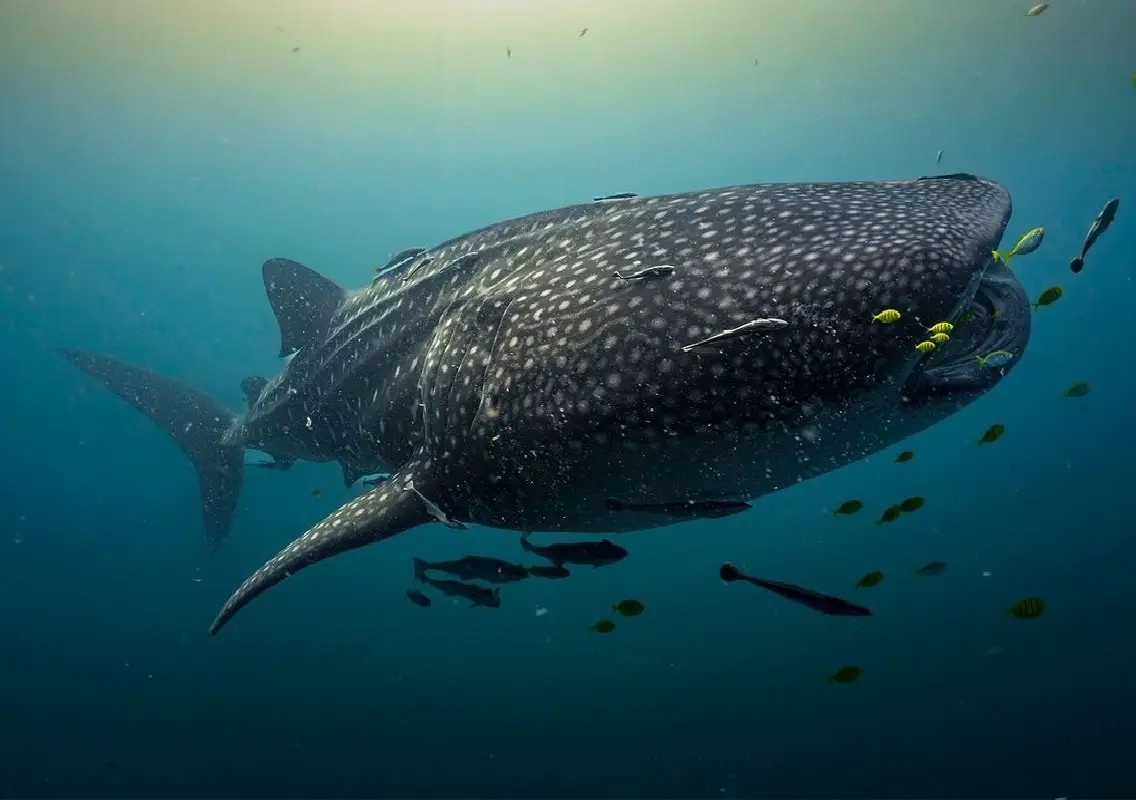


A four-month-old whale shark measuring about 5ft (1.5 metres) has given marine scientists a rare glimpse into the early life of the world’s largest fish species and raised hopes of identifying where these enormous animals are born.
The young whale shark was discovered in Saleh Bay on Indonesia’s Sumbawa island on September 6, 2024, after local fishers alerted scientists. The sighting was significant because it was the first recorded neonatal whale shark in Indonesian waters and one of only a few dozen documented by science.
A tiny giant in a sheltered bay
Saleh Bay is a sheltered cove surrounded by mangroves and rich in food such as krill, mackerel and squid. Scientists believe these conditions could make it an ideal nursery for young whale sharks.
The newborn was about one-tenth the length of a fully grown whale shark. Researchers suspect the bay could be a nursery or possibly a birthing area, although it remains unclear whether the shark was actually born there.
Scientists still have not seen one being born
Despite decades of research, scientists have never directly observed a whale shark mating or giving birth.
A major clue came in 1995, when a 10-metre female nicknamed ‘Megamamma’ was caught in Taiwan. Researchers found 304 fertilised eggs and embryos in her two uteri, confirming that whale sharks are ovoviviparous and give birth to live, free-swimming young.
Only 33 neonatal whale sharks have reportedly been recorded by science.
Hidden nurseries could protect newborns
Researchers are also examining whether newborn whale sharks deliberately use areas with very low oxygen to avoid predators. Such zones could provide young sharks with protection while also concentrating plankton for them to feed on.
Scientists believe finding and protecting these hidden nurseries could be crucial because whale shark populations have declined significantly.
In Saleh Bay, local attitudes are also changing. Whale sharks, once viewed by some fishers as competitors, are increasingly becoming an attraction for ecotourism.
Konservasi Indonesia is working towards establishing a marine protected area in the northern part of the bay specifically to protect whale sharks.