







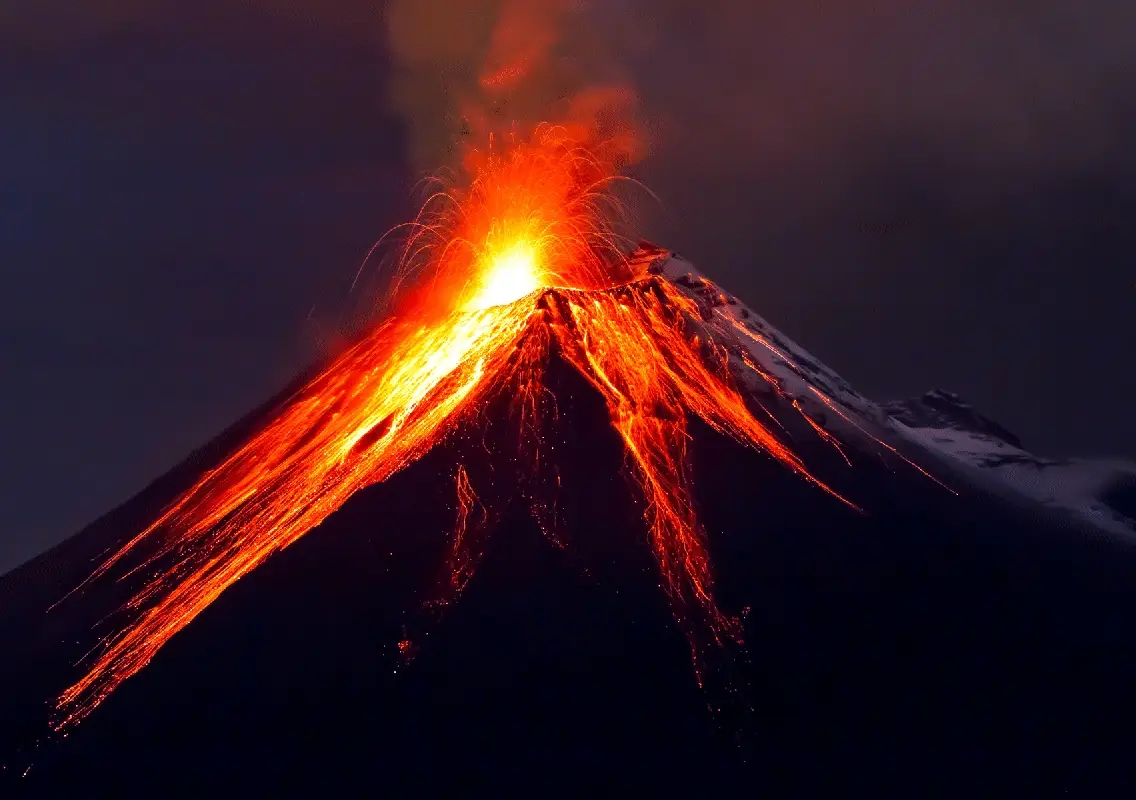


A new interdisciplinary study has uncovered a remarkable link between a 14th-century volcanic eruption and the catastrophic spread of the Black Death across Europe. Published in Communications Earth & Environment, the research suggests that climatic disturbances triggered by an unidentified eruption around 1345 CE may have created the conditions that allowed the plague to take hold with unprecedented intensity.
Climatic disruptions preceded the pandemic
The Black Death, which killed tens of millions across Europe in the late 1340s, has long been studied for its biological, economic, and social impacts. While the bacterium Yersinia pestis is known to have caused the disease, the reasons behind its rapid arrival and devastating spread have remained unclear. The new study, led by historians and palaeoscientists, points to a powerful but overlooked factor: a volcanic eruption that altered global climate patterns.
Using ice cores from Antarctica and Greenland, alongside tree-ring data and medieval documentary sources, the researchers identified an abrupt spike in atmospheric sulphur around 1345 CE. This level of sulphur strongly indicates a large tropical eruption. Its aftermath appears to have ushered in unusually cold, wet summers across southern Europe between 1345 and 1347.
These conditions disrupted agriculture across the region, hitting food production at a time when many European communities were already vulnerable. “We used climate proxy and written documentary archives to argue that a yet unidentified volcanic eruption contributed to cold and wet climate conditions between 1345 and 1347 CE across much of southern Europe,” the researchers note.
As crops failed, widespread famine followed. Malnutrition weakened populations, increasing susceptibility to disease and forcing European states to seek grain urgently from distant markets.
Trade networks became accidental conduits for plague
The climatic shock had a profound effect on medieval trade. Facing severe food shortages, the maritime republics of Venice, Genoa, and Pisa turned to the Mongol-controlled Golden Horde for grain shipments from the Sea of Azov. This redirection of supply chains, though necessary for survival, had unintended consequences.
The study explains that the grain cargoes carried rats and infected fleas thriving in the holds of ships. When these vessels reached Mediterranean ports—particularly Messina, Genoa, and Venice—they introduced Yersinia pestis into densely populated trading hubs already weakened by famine.
“This climatic anomaly and subsequent transregional famine forced the Italian maritime republics to reconfigure their supply network and import grain from the Mongols of the Golden Horde around the Sea of Azov in 1347 CE,” the authors observe.
From these ports, the plague rapidly radiated across the Mediterranean basin, before sweeping north into France, Spain, and the rest of Europe. The researchers argue that this chain of events—climate disruption, famine, desperate grain imports, and maritime transmission—formed a “perfect storm” that propelled the world’s most infamous pandemic.
A convergence of environment, economy, and disease
The study reframes the Black Death not only as a biological catastrophe but also as a complex ecological and economic event shaped by forces beyond human control. The volcanic eruption destabilised food systems; famine reshaped trade; and altered trade routes inadvertently transported the plague across continents.
“The unusual change in long-distance maritime grain trade prevented large parts of Italy from starvation and distributed the plague bacterium Yersinia pestis across much of the Mediterranean basin,” the researchers explain, underscoring how survival efforts unintentionally magnified the crisis.
The Black Death ultimately killed between one-third and one-half of Europe’s population. Its impact transformed labour markets, urban life, social structures, and cultural attitudes for generations.
This new research highlights how natural events—silent, distant, and often invisible—can intersect with human vulnerability to alter the course of history.