







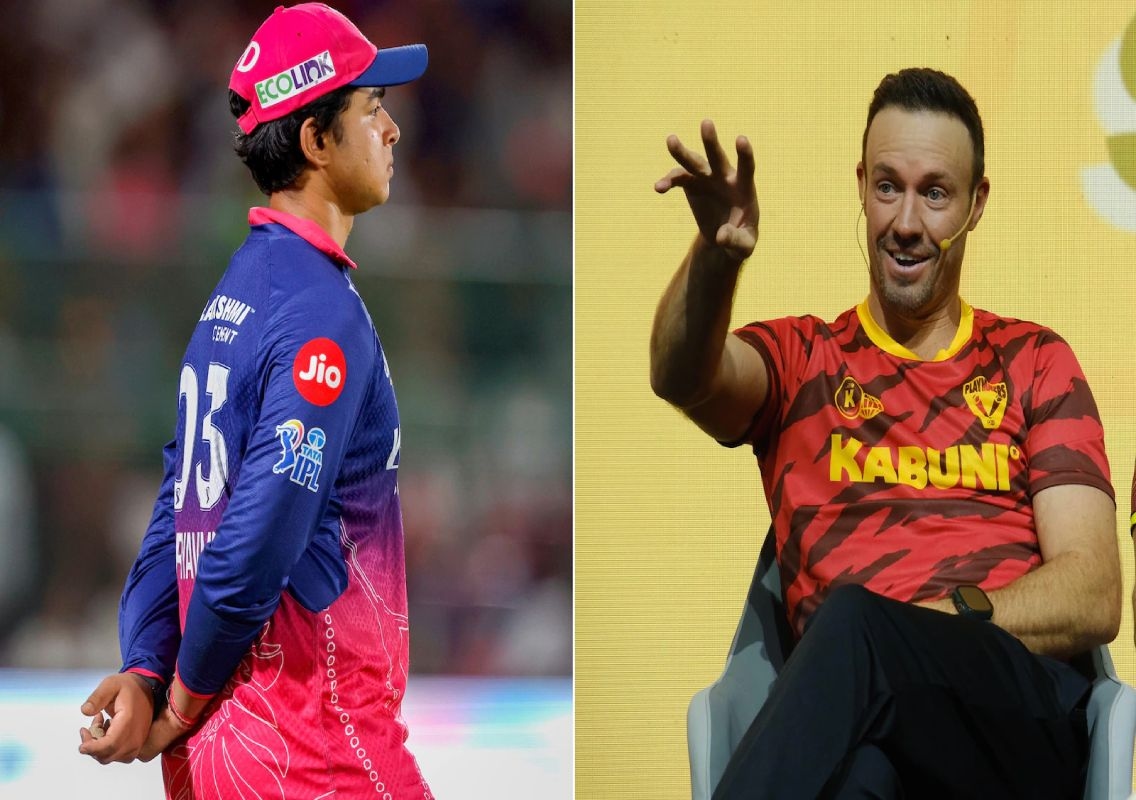


Mumbai: A new cricketing prodigy has emerged in India, but questions are already being raised about his long-term ambitions. Teen sensation Vaibhav Sooryavanshi, who lit up the Indian Premier League (IPL) 2026 with his explosive batting, has expressed his desire to represent India in all three formats of the game. However, former South Africa captain AB de Villiers has voiced doubts over whether the youngster will pursue the traditional longer format seriously.
Sooryavanshi, aged just 15, enjoyed a remarkable IPL season, amassing 776 runs at an astonishing strike rate of 237. His aggressive batting style and fearless approach against some of the world’s best bowlers earned him the Orange Cap, awarded to the highest run-scorer of the season. His performances have already fast-tracked him into India’s T20I setup, marking him as one of the brightest young talents in world cricket.
Despite his rapid rise, the conversation around his red-ball credentials has begun. While Sooryavanshi has publicly stated that he aims to play Test cricket and become an all-format player, de Villiers remains sceptical about whether the youngster truly intends to pursue that path.
Questions over red-ball commitment
Speaking at an event in Mumbai, de Villiers acknowledged Sooryavanshi’s immense talent but highlighted the uncertainty surrounding his interest in longer formats. According to the South African great, the key question is not about ability, but intent.
He noted that while Sooryavanshi certainly possesses the skill required to succeed in red-ball cricket, the demands of the format are significantly different from T20 cricket. Test cricket requires patience, temperament, and a strong technical foundation—qualities that take time to develop and sustain.
De Villiers further added that if the youngster chooses to play red-ball cricket, he will inevitably face challenges, but he has the ability to overcome them. However, he reiterated his doubt, suggesting that the modern cricketing landscape often draws players towards shorter formats due to their glamour and financial rewards.
Dominance in the shortest format
Sooryavanshi’s IPL campaign showcased his dominance in T20 cricket. He took on elite bowlers with confidence and consistently delivered match-winning performances. His ability to score quickly and adapt to different match situations has drawn comparisons with some of the most destructive batters in the game.
Facing top international bowlers, he demonstrated remarkable composure for his age. His shot selection, power-hitting, and innovative strokeplay have made him a crowd favourite and a valuable asset for his team. These performances have strengthened the belief that he could become a mainstay in India’s T20 setup for years to come.
However, the transition from T20 to Test cricket is not always seamless. Many players who excel in the shortest format struggle to adjust to the rigours of red-ball cricket, where consistency and endurance are crucial.
Technology shaping modern cricket
During the same interaction, de Villiers also spoke about the growing influence of technology and data analytics in modern cricket. He pointed out that advanced tools can help players make better decisions by analysing risk factors associated with different shots.
According to him, batting is often about managing risk, and players aim to keep that risk below 50 per cent while choosing their shots. With access to detailed data, including shot success rates and field dimensions, players can refine their strategies and improve performance.
De Villiers admitted that such technological advancements would have been beneficial during his playing career. He emphasised that while data provides valuable insights, instinct and on-field awareness remain equally important.
Rise of AI-driven coaching platforms
The discussion took place at the launch of Kabuni, an AI-powered global sports platform aimed at transforming cricket coaching. The platform promises to deliver personalised, real-time coaching to players across all levels, making high-quality training more accessible.
Kabuni has introduced a unique concept of “Super Coaches,” featuring some of the biggest names in cricket. These legends will guide young players through interactive challenges and training modules, helping them develop their skills more effectively.
The initiative reflects a broader shift in sports training, where technology is increasingly being used to bridge the gap between amateur and professional levels. By combining data analytics with expert guidance, such platforms aim to nurture the next generation of cricketers.
Conclusion
Vaibhav Sooryavanshi’s rise has been nothing short of extraordinary, and his talent is widely acknowledged across the cricketing world. However, as AB de Villiers pointed out, the decision to pursue excellence in all formats ultimately rests with the player himself.
While T20 cricket offers instant success and global recognition, Test cricket remains the ultimate measure of a cricketer’s skill and character. Whether Sooryavanshi chooses to embrace that challenge or focus on shorter formats will shape the trajectory of his career in the years to come.