







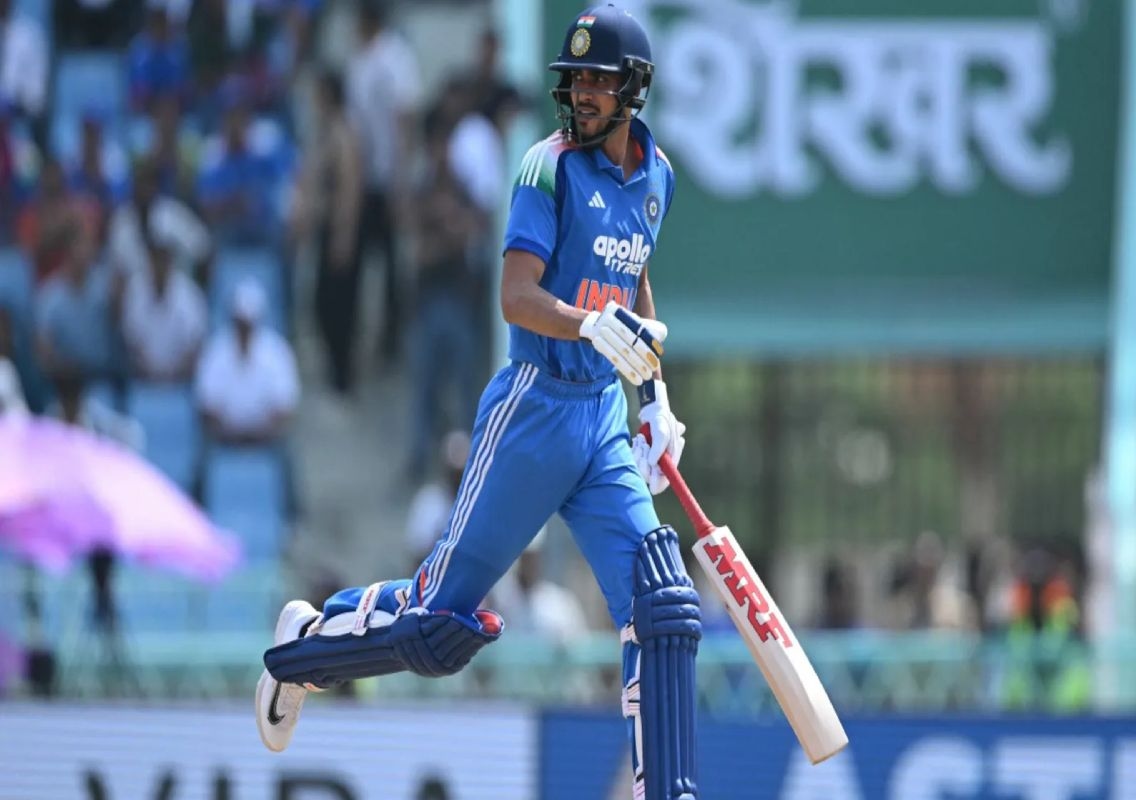


New Delhi: Former India captain Mohammed Azharuddin has criticised the Board of Control for Cricket in India for leaving out Shubman Gill from the T20I squad despite his consistent performances in One Day Internationals and Tests, sparking fresh debate over selection policies.
Gill, who has emerged as one of India’s most dependable batters across formats, was earlier serving as vice-captain in T20Is. However, he was dropped ahead of the T20 World Cup this year, a decision that has drawn criticism from several quarters, including Azharuddin.
Azharuddin questions selection logic
Speaking in an interview, Azharuddin expressed surprise at Gill’s omission, stating that the young batter has not only improved his individual performance but also handled leadership responsibilities effectively.
“He is handling the captaincy job very well. His individual performance has improved a lot. He is one of the finest players; I don’t know why they don’t select him for T20s,” Azharuddin said.
He further emphasised that Gill’s versatility makes him suitable for all formats of the game.
“He is a good player for all formats and should never have been dropped from any format,” he added.
Gill’s exclusion becomes more puzzling considering his steady run in ODIs, where he has been among the top contributors in recent series.
Domestic performers left behind
Apart from Gill, Azharuddin also raised concerns about the continued neglect of domestic performers like Sarfaraz Khan and Auqib Nabi.
Highlighting Nabi’s impressive record in red-ball cricket, Azharuddin pointed out that the pacer has delivered consistently in the Ranji Trophy over the past two seasons.
Nabi picked up 44 wickets in the 2024–25 season and followed it up with 60 wickets in 2025–26, yet he remains outside the national Test squad.
“Auqib Nabi is a great red-ball bowler and an excellent swing bowler. It is very disappointing that despite such performances, he does not find a place in the team,” Azharuddin said.
He questioned the value of domestic cricket if performances are not rewarded at the highest level.
“Everybody says players must perform in domestic cricket. But what is the use if those performances are not recognised?” he asked.
Format-specific selection needed
Azharuddin also stressed the importance of recognising players based on their strengths in specific formats. He pointed out that while Nabi may not be suited for T20 cricket, his skills make him a strong candidate for Test matches.
“You must understand which player is suited for which format. Nabi is not a T20 bowler, but he is very good for Test cricket,” he explained.
Call for more Test matches
The former captain reiterated the importance of Test cricket, urging the board to schedule more multi-day games to maintain the format’s relevance.
“There is no cricket without Test cricket. It is the ultimate test of a player’s skill, adaptability and temperament,” he said.
Azharuddin added that while the board is making efforts, more focus is needed on promoting longer formats of the game.
Views on current leadership and selections
Azharuddin backed Shreyas Iyer to grow into a capable T20I captain, praising his cricketing intelligence and leadership qualities.
“He has performed well and deserves the opportunity. He has a good cricketing brain and can become a strong leader,” he said.
At the same time, he supported the selectors’ decision to drop Suryakumar Yadav, despite his past achievements, including leading India to a T20 World Cup title.
“You have to perform consistently. You cannot rely only on past performances, especially with so many young players coming through,” he noted.
Retirement decisions remain personal
On senior players like Rohit Sharma and Virat Kohli, Azharuddin said retirement should always be an individual decision.
“It is a very personal choice. A player knows when he has had enough and understands his physical and mental condition,” he said.
He also acknowledged the immense contributions made by both players to Indian cricket, stating that they deserve respect for their service.
Conclusion
Azharuddin’s remarks have once again brought the spotlight on India’s selection process, particularly the balance between rewarding current form and planning for the future. With players like Shubman Gill delivering consistently and domestic performers knocking on the door, the pressure is mounting on selectors to ensure transparency and fairness. As Indian cricket continues to evolve, such debates underline the need for a clear and consistent selection policy across formats.