







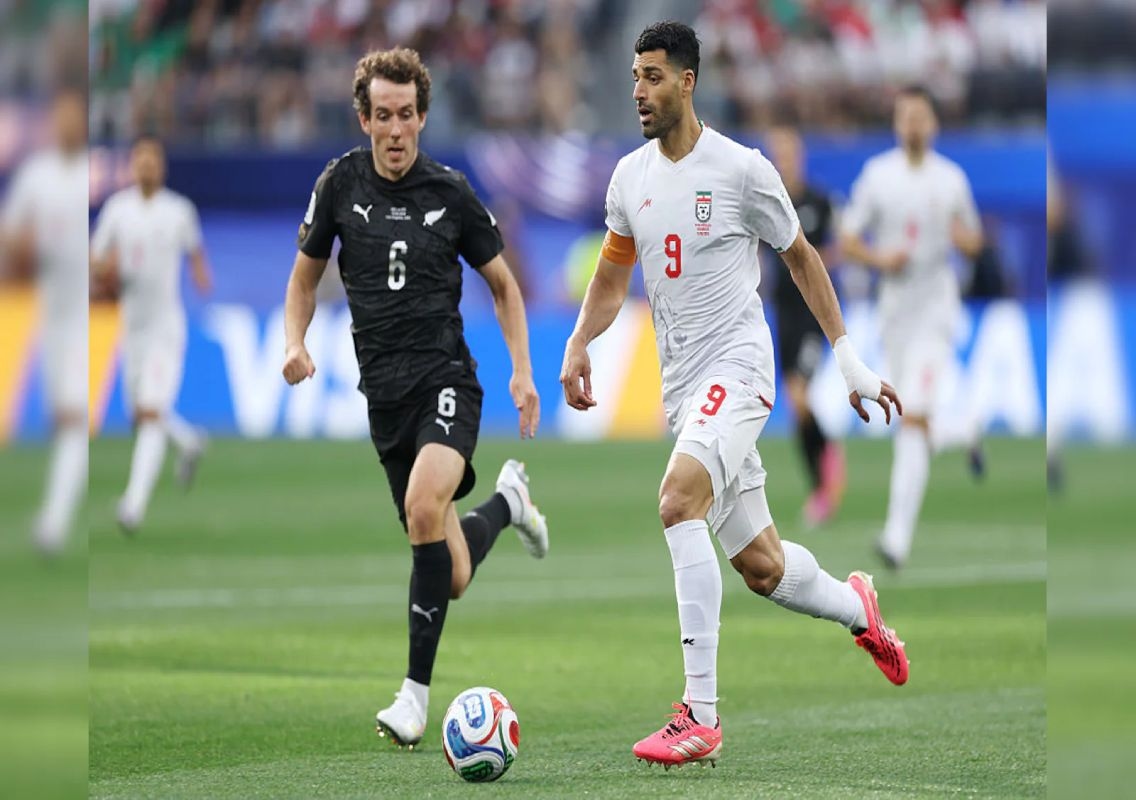


Los Angeles: Iran began their FIFA World Cup campaign with a tense and emotionally charged 2-2 draw against New Zealand, in a match overshadowed by geopolitical tensions, protests, and logistical challenges. Played at a packed stadium in Los Angeles, the fixture saw Iran twice come from behind to salvage a point against a determined New Zealand side ranked significantly lower.
The build-up to the match had been far from routine for the Iranian team. Months of military conflict involving their home nation and the United States had cast uncertainty over their participation. Visa delays, last-minute changes to their training base, and political demonstrations added layers of complexity to what would otherwise be a sporting occasion. Despite these distractions, the players stepped onto the pitch determined to focus on football.
Early shock from New Zealand
New Zealand stunned Iran early in the match with a well-executed counter-attack in the 7th minute. Veteran striker Chris Wood played a pivotal role, collecting a long ball before setting up Elijah Just with precision. Just, showing excellent composure and technique, finished with a powerful volley after a quick exchange involving Sarpreet Singh.
Iran attempted to respond quickly, with star forward Mehdi Taremi coming close in the 23rd minute. His long-range strike hit the post, signalling Iran’s attacking intent. The team continued to press, capitalising on a defensive error by New Zealand goalkeeper Max Crocombe, but failed to convert the opportunity.
Iran respond before half-time
Iran eventually found their equaliser in the 32nd minute through Ramin Rezaeian. The goal came after sustained pressure, with Rezaeian reacting quickest to a rebound following a blocked shot. The equaliser brought relief to Iranian supporters, many of whom had been vocally backing their team amid ongoing protests inside and outside the stadium.
Iran nearly took the lead before half-time when Ali Nemati headed the ball into the net, but the effort was ruled offside. The first half ended with both teams locked at 1-1, setting the stage for an intense second half.
Second-half drama unfolds
New Zealand regained the lead in the 55th minute, once again through Elijah Just, who completed his brace with a clinical finish. The goal stemmed from a turnover in midfield, with Liberato Cacace initiating the move. Just’s partnership with Wood proved effective, as the duo combined seamlessly to trouble Iran’s defence.
However, Iran showed resilience and responded once more. In the 64th minute, Mohammad Mohebi equalised with a well-timed header from a precise cross by Rezaeian. The ball glanced off the post and into the net, highlighting Iran’s persistence and attacking quality.
Political tensions and fan reactions
The match was not just about football. Hundreds of protesters gathered outside the venue, expressing opposition to Iran’s ruling regime. Inside the stadium, some fans displayed anti-government symbols, defying FIFA regulations that prohibit political messaging.
The Iranian national anthem was met with mixed reactions, including both cheers and boos, reflecting the divided sentiments among supporters. Despite the charged atmosphere, Iran coach Amir Ghalenoei had urged his players to stay focused, a message that appeared to resonate as the team battled back twice.
Missed chances and shared points
In the final 30 minutes, Iran dominated possession and created several chances but failed to find a winning goal. New Zealand’s defence held firm under pressure, ensuring they secured a valuable point.
The draw presents a setback for Iran’s hopes of advancing to the knockout stages for the first time in their history. However, with other Group G contenders Egypt and Belgium also playing out a draw, the group remains wide open.
For New Zealand, the result extends their wait for a first-ever World Cup victory, but the performance will provide confidence heading into their remaining matches.
Conclusion
The match highlighted both the unpredictability of football and the impact of external factors on the sport. Iran’s resilience ensured they avoided defeat, while New Zealand proved they could compete on the global stage. As the tournament progresses, both teams will look to build on this result in their pursuit of qualification.